

Why Is My Bearded Dragons Mouth Open?
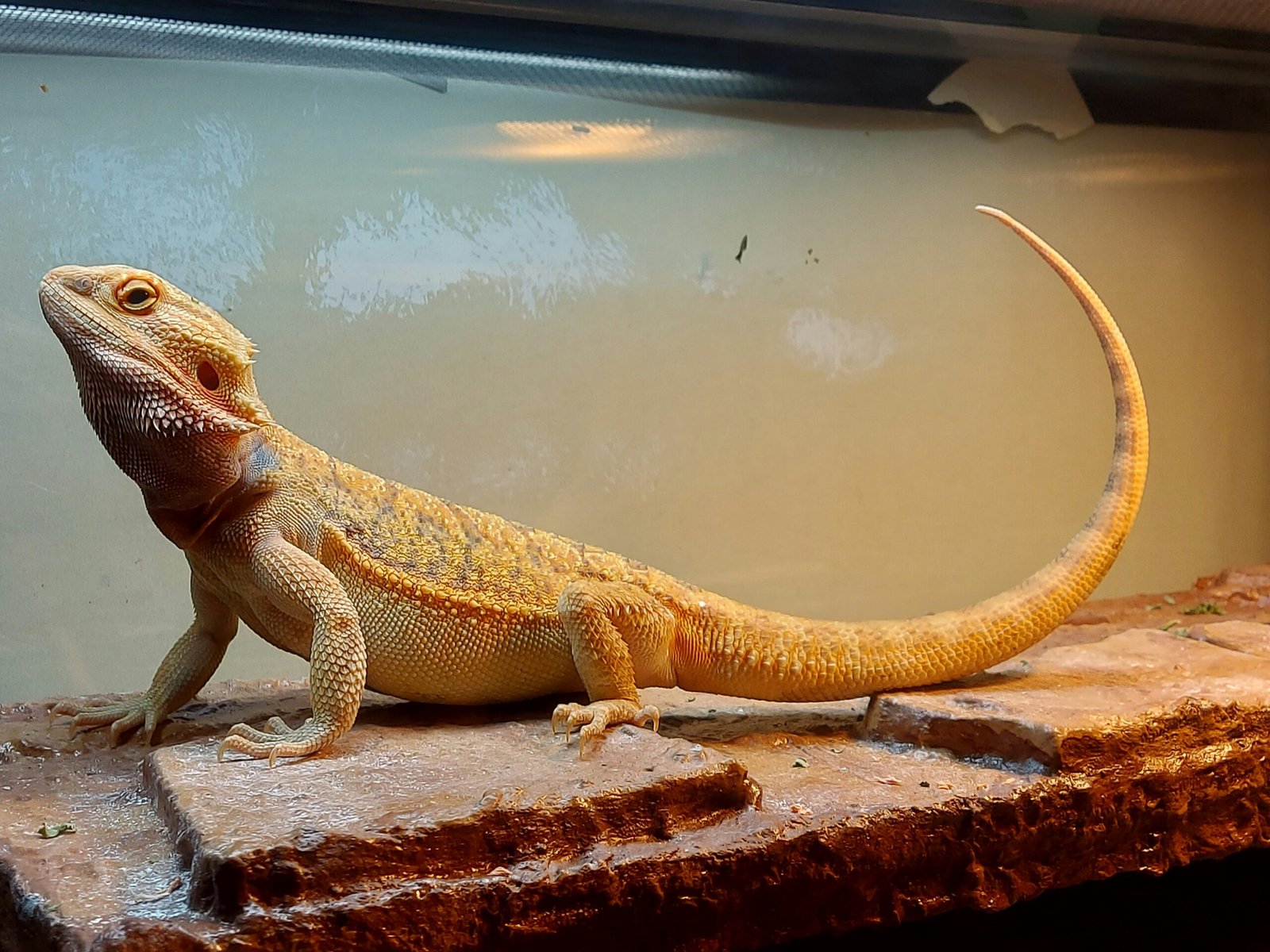
Seeing your bearded dragon with his mouth hanging open can be quite startling as it may seem like your pet is in distress. For the most part however, the open mouth is a behavior to cool the reptile off from their basking spot. Because they cannot produce their own body heat, bearded dragons rely on their surroundings to maintain temperature, and will often open their mouth to shed some body heat. This is known as gaping.
The key difference between acceptable open mouth behavior (gaping) and a problem is when the behavior is occurring and its duration. An occasional opening of the mouth under the heat lamp which stops, and is accompanied by normal activity may just be temperature regulation. A bearded dragon that keeps the mouth open outside of their basking spot, shows signs of having to exert themselves to breath, bubbles or mucus form, they have been lethargic, or have a decrease in appetite could be indicative of a respiratory or other illness.
By observing how long this Behavior persists, when it occurs and what else Your pet is up to, can indicate weather the next step of concern Is necessary or observation and increased heat will suffice.
What Does It Mean When a Bearded Dragon Opens Its Mouth?
If you’re wondering why is my bearded dragons mouth open, the most common explanation is thermoregulation. Unlike mammals, bearded dragons depend heavily on external environmental temperatures to maintain their body temperature. They move between warmer and cooler parts of their enclosure to regulate themselves.
Open Mouth When Basking When a dragon is basking, it might open its mouth on and off. This enables the heat to escape from the mouth and the airway instead of keeping the dragon under the heat lamps forever. This isn’t the same as distress breathing.
A healthy dragon will usually be seen lying directly or raised directly under the lamp with his mouth slightly open and eyes alert.
After he has absorbed as much heat as is comfortably possible he might close his mouth and either leave the lamp area to a cooler area.
If you’re wondering why is my bearded dragons mouth open, it is important to distinguish normal thermoregulation from open-mouth breathing associated with illness. This behavior may occur regardless of basking. The dragon may repeatedly breathe with its mouth open, stretch its neck, show nasal or oral discharge, produce bubbles, or appear weak. Respiratory infections in bearded dragons can cause open-mouth breathing along with rapid or shallow breathing decreased appetite and lethargy according to this bearded dragon respiratory disease guide
The context is therefore more useful than the open mouth by itself.
The Most Common Reason: Basking and Heat Regulation
Why gaping happens during basking
Bearded dragons are ectothermic which means that their body temperature depends on their environment making a proper bearded dragon care setup important for maintaining suitable warm and cool areas
If a Bearded Dragon is lying beneath a basking light, it is absorbing heat as its body heat up. The Bearded dragon needs to cope at being too hot if this happens.
If a Bearded dragon opens it mouth while the Bearded dragon is up in it temperature range then it is doing to dissipate some heat it absorbs.
Basking gaping refers to this behaviour. A veterinary care sheet produced by LafeberVet cites a desired optimum temperature zones for Bearded Dragons, with recommendations for a warmer basking zone and a cooler zone within the cage, the dragon must have the ability to access both zones, it is not appropriate for the entire home of the bearded dragon to be kept at a uniform temperature.
What normal basking gaping looks like
Normal gaping generally has a recognizable pattern:
- It occurs while the dragon is basking.
- The mouth is only slightly open.
- The dragon remains alert and responsive.
- There is no obvious mucus or discharge.
- Breathing does not look labored.
- The animal eventually closes its mouth or moves away from the heat.
- Appetite and normal activity remain intact.
Whether each dragon does that will depend on that individual, how often they do it during basking or whether they even do.
If they only do it when they are under the heat and fine the rest of the time, then open mouthed breathing under the heat sources will usually be far less worrying then all day breathing with their mouth open.
Could the Enclosure Be Too Hot?
Yes. An inappropriate enclosure temperature can complicate normal thermoregulation.
If you’re wondering why is my bearded dragons mouth open, proper temperature control in the enclosure is an important factor to consider. This comes in the form of two temperatures, not just one overall temp; bearded dragons should have access to multiple temps in their enclosure. Vet husbandry recommendations often suggest a relatively cooler section to lounge in and a very, very hot basking spot.
LafeberVet states, a suitable 80-88 degree F is suitable for general body temp and around 92-100 degrees F for the basking spot, with exact specs changing by age, design, measurement, vet and more. Remember your enclosure shouldn’t be heated entirely just for its own sake- you want your dragon to select how hot it prefers itself to be.
Check temperatures instead of guessing
One of the most commonly made, simple husbandry mistakes is to guess temperature either by hand feel, or just by the number on the heat bulb. Do proper thermometer readings for the warm and cool parts of the enclosure. It is the temp right on the spot where the dragon’s body is that counts.
Not elsewhere in the enclosure.
Measure basking surfaces too. The rock, branch, whatever may be the dragons “stage” can heat up considerably more than the air in the enclosure. As long as the enclosure is set up well, the dragon has places to retreat and cooler them selves when necessary.
When Open-Mouth Breathing May Mean a Respiratory Problem
The situation deserves more attention when the mouth stays open outside normal basking.
If you’re wondering why is my bearded dragons mouth open, respiratory disease is one of the conditions veterinarians may consider when a bearded dragon develops persistent open-mouth breathing. Signs of respiratory infections according to VCA Animal Hospitals can include mucus or other types of discharge from the nose or eyes, bubbles around the nose or mouth, fast or shallow respirations that are different from your pets’ normal breathing, open mouth breathing, decreased eating or a lack of appetite, and listlessness or lethargy.
Respiratory infections can be caused by either an individual, or groups of bacterial, fungal, viral, and / or parasitic disease processes. Environmental causes of respiratory disease will arise due to temperature, hygienic, ventilation or nutritive or husbandry mismanagement.
Therefore, to solve a suspected respiratory disease solely by turning the heat up or by replacing a bulb would not be sufficient.
Signs that make respiratory disease more concerning
Watch for combinations of symptoms rather than focusing on the mouth alone.
Concerning signs include:
- Open-mouth breathing while away from the basking area
- Rapid or shallow breathing
- Wheezing, clicking, or unusual breathing sounds
- Bubbles or mucus around the nose or mouth.
- Nasal discharge
- Reduced appetite
- Unusual weakness or lethargy
- Difficulty breathing
- Repeated stretching of the neck while breathing
Open-mouth breathing is a recognized sign of respiratory disease in reptiles, particularly when accompanied by discharge or other breathing abnormalities.
Mouth Problems Can Also Cause Abnormal Behavior
Not every mouth-related problem is respiratory.
If you’re wondering why is my bearded dragons mouth open, infectious stomatitis, commonly called mouth rot, is another condition to consider. VCA describes this as a bacterial infection affecting the gums and/or jawbone. Signs can include pinpoint hemorrhages on the gums, swollen gums, and excessive thick mucus.
A dragon with mouth pain may behave differently around food. It might hesitate to eat, drop food, chew abnormally, or show discomfort when the mouth is touched.
• Do not pry your dragon’s mouth open for examination if he’s extremely agitated. Discomfort makes any reptile prone to biting, and handling a sore mouth can only cause more distress and potential damage.
•If you see significant swelling, bleeding, strange tissue, thick discharge/mucus, an unpleasant smell, or continuing eating trouble, your best bet is to consult an experienced reptile veterinarian.
Stress Can Affect Breathing and Behavior

Stress can also manifest in posture and breathing and movement. Some examples of things that could be stressful include too much handling, new surroundings, other pets, changing enclosure frequently, lack of security / hiding areas or incorrect temperatures/lighting in the housing of the animal. Look for signs of muscle tension, flattening body, darkening beard, try to escape.
Do not use “stressed “ alone to account for constant open mouth breathing on any an animal; on a physical animal the same look may indicate something more serious the need for intervention over assumptions of simple anxiety/stress.
Maintaining a properly stable setup with correct temps and lighting will minimize most external stress.
How Humidity and Ventilation Matter
Bearded dragons are adapted to relatively dry environments, and enclosure ventilation matters for maintaining appropriate environmental conditions.
If you’re wondering why is my bearded dragons mouth open, poor ventilation combined with unsuitable humidity can contribute to respiratory problems. According to the Merck Veterinary Manual, an extensive repository of veterinary information, other husbandry factors including unsuitable temperature environments and poor environment sanitation are some potential predisposing environmental factors for respiratory disease in reptiles. This does not mean that gaping = humidity and all reptiles with this presentation have an issue. Basking gaping commonly occurs for a correctly setup terrarium.
The environment should be assessed as part of the full picture if a dragon is having repeat issues with its breathing.
Do not make drastic changes based on a comment from an online reptile forum; the ideal setup will vary by species, by enclosure size and configuration, ventilation style, enclosure features (heating equipment, substrate), and of course the individual pet itself.
A Simple Way to Check What Is Happening
If you’re trying to determine whether the behavior is normal, observe your dragon rather than immediately interfering.
Step 1: Note where your dragon is sitting
Is it directly under the basking lamp, halfway between warm and cool areas, or on the cool side?
If gaping occurs exclusively during basking, heat regulation becomes a more likely explanation.
Step 2: Measure the enclosure temperature
Use reliable thermometers to check both ends of the enclosure and the basking location. Do not assume the enclosure is correctly heated because the lamp is marketed for reptiles.
Step 3: Watch the breathing pattern
Look for smooth, regular breathing versus obvious effort. Persistent open-mouth breathing, rapid or shallow breaths, discharge, or bubbles are more concerning than occasional basking gaping.
Step 4: Check general behavior
Ask whether your dragon is eating, moving normally, basking normally, and responding to its surroundings.
A sudden change in normal behavior deserves attention. VCA recommends veterinary evaluation when a bearded dragon shows a significant change from its normal condition.
Step 5: Look for additional symptoms
Check for nasal discharge, mouth swelling, mucus, unusual sounds, appetite loss, weakness, or changes in stool.
A collection of symptoms gives a veterinarian much more useful information than the open mouth alone.
Common Mistakes Owners Make
Mistake 1: Assuming all gaping is normal
Basking gaping can be normal, but persistent open-mouth breathing is not something to dismiss automatically.
The location and circumstances matter. A dragon sitting under the basking lamp with a slightly open mouth is different from one sitting on the cool side with its mouth open and breathing rapidly.
Mistake 2: Turning up the heat without measuring it
Increasing heat because the dragon is opening its mouth can make an already warm enclosure excessively hot.
Temperature should be measured with appropriate equipment, and the animal must have access to a cooler area. Bearded dragons can become overheated if they cannot escape excessive heat.
Mistake 3: Treating a respiratory infection at home
Respiratory disease may require diagnostic testing and prescription treatment. VCA notes that diagnosis can involve radiographs, blood tests, and cultures or other samples, with treatment depending on the underlying cause.
Do not use leftover antibiotics, human medications, essential oils, or unverified respiratory remedies.
Mistake 4: Ignoring enclosure hygiene
Dirty environments can contribute to health problems. Regular cleaning, appropriate ventilation, and proper enclosure maintenance are basic parts of reptile husbandry.
Mistake 5: Focusing only on the mouth
A change in appetite, activity, weight, breathing, stool, or posture may provide more useful information than the mouth position itself.
What About a Bearded Dragon Opening Its Mouth at Night?
Let’s consider nighttime behavior separately. An open mouth while not on the bask or asleep away from the basking location, without more of an immediately obvious heat related explanation. Keep track of the open mouth behavior if possible to record a quick video that the animal cannot be alerted to at time of recording.
Let a note go in your calendar and be prepared to tell your veterinarian what temperatures the environment was, in which posture, breathing pattern and if there were any noises/secretions/etc.
If you note it happening chronically, especially with depression, loss of appetite, any excretions, difficulty breathing or open mouthed breathing where he is on the basking spot, then consult with a reptile vet. Don’t just leave your basking light on all night because you are worried about this phenomenon. Your dragon must have a day/night cycle, and heating principles should not be sacrificed so as not to get you worked up during sleeping hours.
What If Your Bearded Dragon Opens Its Mouth After Eating?
Occasional jaw movements following food does not mean an underlying problem. Bearded dragons will naturally manipulate food in their jaws or may just move normally after consuming a meal.
More concern is warranted if the creature repeatedly opens the jaw, in obvious discomfort, is struggling to swallow, vomiting food back up (regurgitation), the jaw swelling is present, or if food is rejected.
Sometimes a foreign object, or oral health issue, may be hindering being able to both eat and, or, swallow. Do not pull something from the rear part of the mouth in case the animal cannot close their jaw normally or appears to have problems breathing/swallowing, it is usually best left to a vet to assess.
When Should You See a Reptile Veterinarian?
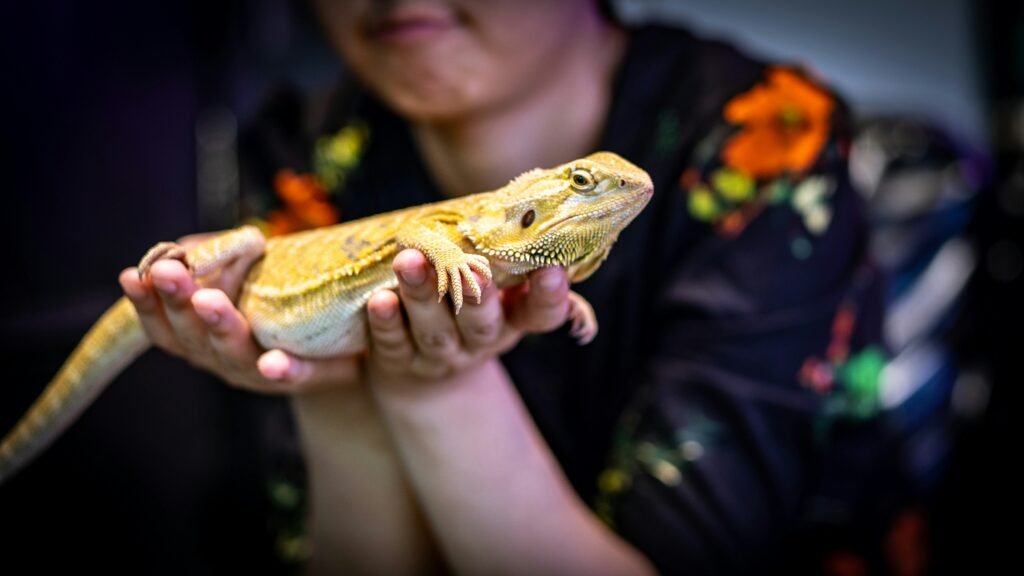
A veterinarian experienced with reptiles should evaluate persistent or unexplained open-mouth breathing.
Seek prompt veterinary care if the behavior is accompanied by:
- Difficulty breathing
- Persistent open-mouth breathing away from the basking area
- Nasal or oral discharge
- Bubbles around the mouth or nose
- Severe lethargy
- Loss of appetite
- Significant weakness
- Mouth swelling or bleeding
- Repeated abnormal breathing sounds
- A sudden and substantial change from normal behavior
Respiratory disease in reptiles can be very serious. VCA outlines open mouth breathing and other signs of respiratory disease as being indications for emergency veterinary attention for a bearded dragon.
Merck Veterinary Manual notes that open mouth breathing and nasal discharge are commonly seen clinical signs of reptilian respiratory disease.
If you notice breathing issues you should consider it to be an emergency situation rather than to wait and see if breathing will spontaneously cease.
What Will a Veterinarian Look For?
The vet will not only look at the physical signs of your dragon, but will also consider its environment and living conditions as well. A checkup may include; examination of the oral cavity, airways, body condition, hydration and behavior and, depending on what is believed to be wrong diagnostic testing including radiographs, blood testings, cultures and inspection of the airways will also be performed.
The veterinarian may also ask about:
- Enclosure dimensions
- Basking temperature
- Cool-side temperature
- Humidity
- Lighting and UVB setup
- Diet and supplements
- Cleaning routine
- Recent changes in housing
- Other reptiles in the household
- Appetite and weight changes
- Duration of the breathing problem
This information can help distinguish ordinary basking behavior from respiratory disease, oral problems, husbandry issues, or another medical condition.
How to Create a Healthier Environment

Unfortunately even the best husbandry doesn’t guarantee that illness won’t strike, but it does give your dragon the ability to maintain their thermoregulation and normal health. A well set up dragon requires: A usable temp gradient with appropriate heat for the basking spot, adequate UVB, proper ventilation, correct humidity levels, clean housing, and a good diet. In the veterinary world, it is commonly recognized that dragon’s need UVB to maintain normal calcium balance and that they require proper temperature parameters to thrive.
Test environmental parameters, don’t assume.
Don’t believe more heat is always good, as your dragon needs to escape to the basking spot for temperature regulation. If you have recently been changing out your bulbs, enclosure equipment, substrate, or feeding, let your veterinarian know about that if your dragon seems to be acting abnormally.
Frequently Asked Questions
1.Is it normal for a bearded dragon to sit with its mouth open?
Yes, occasional mouth opening while basking can be normal. Bearded dragons may gape to help regulate body temperature after warming themselves. The behavior is more concerning when it occurs away from the heat source or is accompanied by abnormal breathing, discharge, lethargy, or appetite loss.
2.How can I tell if gaping is normal or a sign of illness?
Look at the circumstances. Normal gaping usually occurs during basking while the dragon remains alert and otherwise healthy. Illness is more concerning when open-mouth breathing persists outside the basking area or occurs with rapid breathing, mucus, bubbles, nasal discharge, weakness, or reduced appetite.
3.Why does my bearded dragon open its mouth under the heat lamp?
The most likely explanation is temperature regulation. As the dragon warms up, opening its mouth can help release excess heat. A suitable enclosure should provide a warm basking zone and a cooler area so the animal can move away from the heat when needed.
4.Should I turn down the basking temperature if my dragon is gaping?
Not automatically. Gaping can be normal during basking, so the first step is to measure the actual enclosure temperatures and verify that the dragon has access to an appropriate cooler zone. If temperatures are outside the recommended range, correct the setup carefully rather than making a large change based on gaping alone.
5.Can respiratory infections make a bearded dragon breathe with its mouth open?
Yes. Open-mouth breathing is a recognized sign of respiratory disease in bearded dragons, particularly when accompanied by nasal discharge, bubbles, abnormal breathing, appetite loss, or lethargy.
6.Should I take my bearded dragon to the vet for open-mouth breathing?
If the breathing is persistent, occurs away from basking, looks labored, or is accompanied by other symptoms, veterinary evaluation is appropriate. Severe breathing difficulty should be treated as urgent. Respiratory infections can require diagnostic testing and targeted treatment.
Final Takeaway
If you’re asking why is my bearded dragons mouth open, the answer is often simple: your dragon may be gaping while basking to regulate its body temperature. Occasional mouth opening under the heat source, with normal appetite, activity, and breathing, is generally less concerning.
This situation may vary, though if your bearded dragon appears to be maintaining its mouth agape, particularly at some distance from the basking spot; if you have a bearded dragon with symptoms such as rapid or struggling respirations, mucous/bubbles, nasal discharge, lethargy and/or loss of appetite, this could indicate respiratory disease as well as several other issues that require medical intervention; consult a vet! The smartest move is to note it in conjunction with other events, check your temps, maintain appropriate husbandry, and see if the behavior is still “normal basking” the next day.
Conclusion
If you’re wondering why is my bearded dragons mouth open, the answer is often normal basking behavior called gaping, which helps your dragon release excess heat.Yet, if your dragon frequently keeps the mouth open without even being hot at the heat rock, it may be important not to let it go! Such things like a sound like that of awheeze, foam near your pet’s mouth or nose, any fluid excretion from its mouth or nose, you find it hard to breathe, or your dragon appears inactive, then something else may be wrong.
You may want to keep track of when this happens, check the temperature andhumidity levels of your terrarium and see if there are some other behavioral changes. If your bearded dragon keeps open mouth all the time or seems to be having breathing difficulty, make a quick call to your favorite reptilian vet!











