

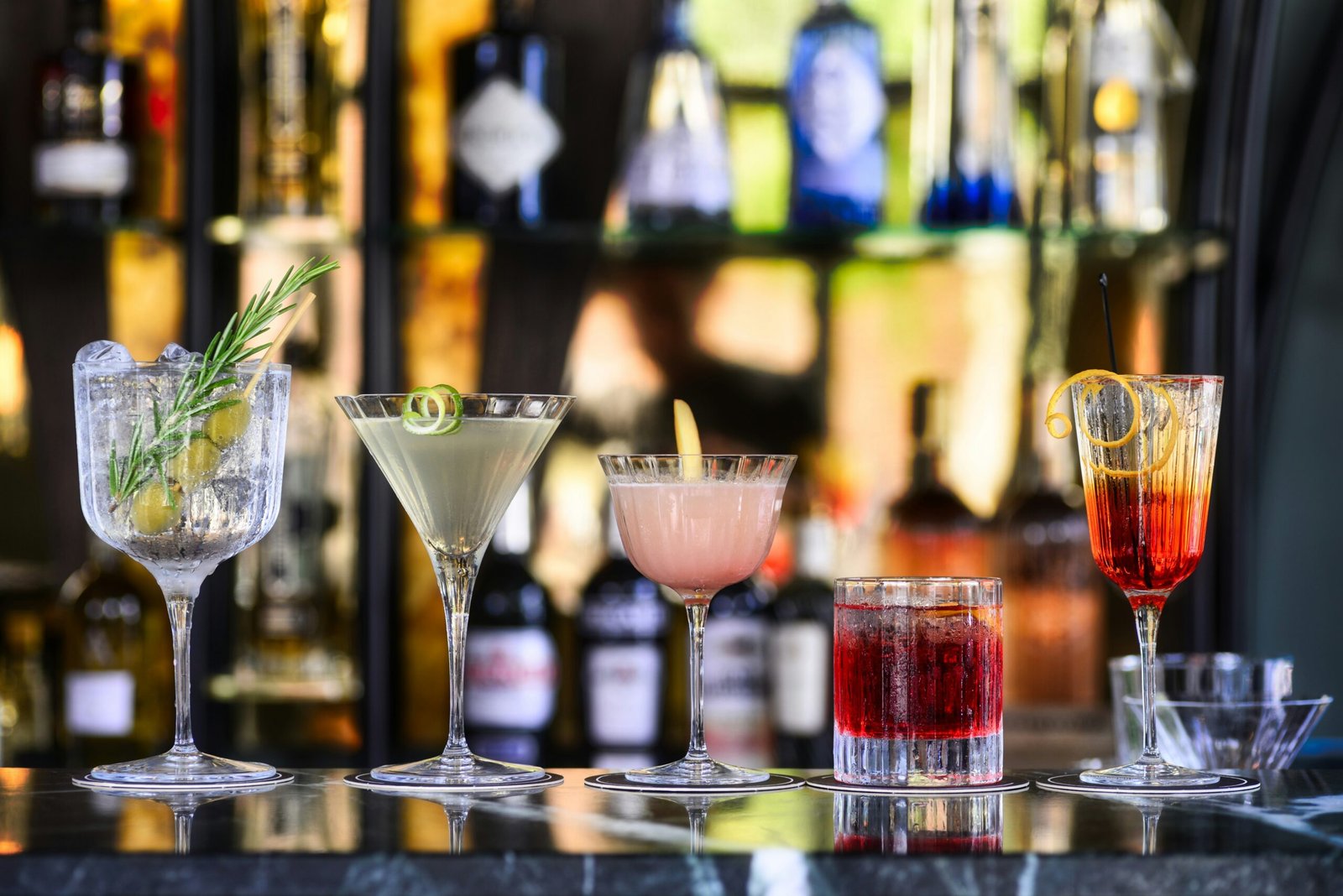
Most good nights out don’t rely on having the strongest drinks available on the menu. Most of us are looking for something in an alcoholic drink that is appropriate for the situation, that tastes nice and which can be drunk steadily without feeling too worse of for wear afterwards. That makes the answer to what is the best alcohol for a night out less straightforward than simply choosing beer, wine, or liquor.
Beer might work for a sit down dinner or informal get-together; wine for a restaurant meal or a relaxed night in. Cocktail ingredients vary more widely but a mixed drink could have far more alcohol than the look on its face suggested, so spirits also feature in nights out though a mixed drink may be higher in alcohol content than it looks. Ultimately knowing what you’re drinking and its alcoholic content, as well as rate of consumption. In the U.S., a standard drink represents approximately 14 grams of pure alcohol which translates into 12 fluid ounces of regular beer (5%), 5 fluid ounces of wine (12%) and 1.5 fluid ounces of 40% distilled spirits.
What Makes an Alcoholic Drink a Good Choice for a Night Out?
What beverage is considered “best” really is individual. Taste, length of the night, food selection, company, and alcoholic limit may each guide one’s decision.
A useful way to evaluate a drink is to look beyond its name.
Alcohol strength
The amount of alcohol in a drink is measured by alcohol by volume (ABV), abbreviated ABV. Visually two different beverages can hold quite different quantities of alcohol.
As one illustration, a 12 ounce beer at 5% ABV counts as one U.S. Standard drink, while a craft beer at a significantly higher ABV can have significantly more alcohol while held at the same quantity. NIAAA highlights that serving size alone does not reveal how much alcohol has been drunk.
Serving size
A drink from a big glass doesn’t always count as one drink. That can also be true of the wine pour or beer size. This is another factor making it easy to accidentally drink too much! The NIAAA advises that each drink can be one or more standard drinks and that a 750-mL bottle of 12% table wine has about 5 standard drinks.
Ease of pacing
Sippling a longer-lasting drink may be better for controlling your pace than quickly “knocking back” a shot of something strong. Don’t look for a drink that get’s you drunk as fast as possible. Slow drinking offers more time to check how you’re feeling and determine if you still truly desire more of that beverage.
Beer: A Straightforward Option for a Casual Night
Beer is often a practical choice for casual social settings because its serving size and alcohol content are usually displayed clearly on the container.
A regular beer around 5% ABV can provide a relatively predictable reference point. You can also find lower-alcohol beers, which may be useful for someone who wants the flavor and social experience without as much alcohol.
Beer tends to work naturally at:
- Casual bars
- Sports gatherings
- Outdoor events
- Barbecue-style meals
- Relaxed dinners
- Long social conversations
The main catch is that not every beer is close to 5% ABV. Craft beers, specialty ales, malt beverages, and stronger seasonal beers may contain significantly more alcohol. A 12-ounce beer at 10% ABV contains roughly twice the alcohol of a 12-ounce beer at 5% ABV.
So if you choose beer, check the label rather than assuming every bottle or pint counts as one standard drink.
Wine: A Good Fit for Dinner and Conversation
Wine is can a be a natural choice in a restaurant, on a date, with dinner or on a small get together. Red, white, rose or sparkling can all be a different flavor without requiring a complex cocktail recipe. One drink is equal to about 5 ounces of table wine.
At a little over 12%, that is how the one drink is measured.
If you are having wine for dinner you may pour from the bottle into a very large wine glass which might only serve as a 5-ounce standard drink, and if at an establishment with casual servers even that might be over. You would not want to be tracking a 5 ounce serving if it doesn’t seem accurate at the point you are pouring it. Wine can be a good pairing with food. Thus dining in a place that is centered around food, you may feel comfortable selecting wine in that scenario too.
Food alone will not cancel out or make a large amount of alcohol safe.
Cocktails: More Variety, Less Predictability
Cocktails are probably the most diverse category for a night out. A menu might include everything from a simple spirit-and-soda combination to elaborate drinks containing several ingredients.
That variety is part of the appeal, but it also makes alcohol content harder to judge.
A cocktail can contain:
- One type of spirit
- Multiple spirits
- Liqueurs
- Wine or fortified wine
- Flavored mixers
- Syrups and juices
- Carbonated mixers
A drink can be very sweet or have a refreshing flavor, even if the amount of alcohol in it is rather large. A cocktail can also be fairly light if designed that way by the recipe and the bartender who pours. NIAAA reports that Cocktail recipes frequently exceed the amount of alcohol in a standard drink, that one a and half times over. And cocktail should be evaluated by how its made rather than appearance.
Simple cocktails can be easier to understand
Ordering a cocktail, or a long drink, makes it simpler, if you wish to make an appraisal as to what it is you are consuming. Inquire of your bartender which spirits form it; if necessary, ask whether one or two measures were employed.
A potent concoction is by no means always necessary to be having an evening out. Having one whose taste you have time to savor is likely a more pragmatic suggestion than one engineered for rapid intoxication.
Spirits: Flavorful but Easy to Underestimate
Vodka, tequila, rum, gin, whiskey and comparable types of spirits are significantly more potent than beer or wine (table wine included). It is worth noting, a US standard drink is 1.5oz of any spirit that is 80 proof or has a 40% Alcohol by Volume content.
Spirits are typically taken on the rocks, neated (straight) or included within a cocktail or mixed drink and depending on these preparation factors, it greatly impacts the estimation level of your consumption.
A jigger/measured shot of 80 proof spirit is one standard drink, an approximately two standard drinks when poured with a drink containing a two-shot spirit (prior to all other variables being added to the mix).
This demonstrates why a decision to have “spirits” can have both stronger and lighter evening outcomes and simply, quantity and speed are more significant than the types of liquor.
If liquor makes up the preferred types of alcohol consumed, a neat measure accompanied by an alcohol-free mix will be simplest and most transparent. It is only critical to know the volume of the included alcohol.
How to Choose Based on the Type of Night
Instead of asking which alcohol is universally best, think about the kind of evening you are planning.
For a long dinner
Wine or a lower-ABV beer may fit naturally with a meal. A simple mixed drink can also work if you prefer spirits.
The main consideration is pacing. A night that lasts several hours can involve more total alcohol than expected if drinks are ordered continuously.
For a casual bar visit
Beer, a simple mixed drink, or a lower-alcohol option can all work. Look at the ABV and serving size rather than relying on the drink’s name.
For a cocktail-focused evening
Choose drinks based on flavor and complexity rather than alcohol strength. If you are unsure how much liquor a cocktail contains, ask.
For dancing or an active night
Alcohol can affect coordination, judgment, and reaction time, which can make certain activities unsafe. A nonalcoholic drink or alternating alcoholic beverages with water can make it easier to stay hydrated and remain aware of how you feel.
For a celebration
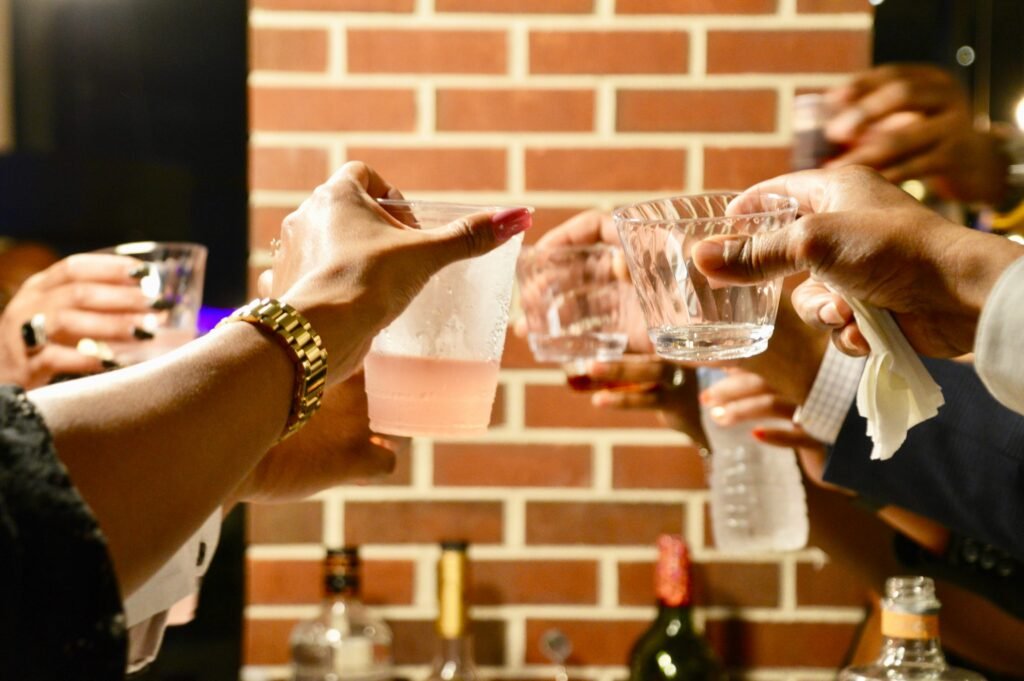
A toast does not require several rounds of alcohol. Sparkling wine, a single cocktail, beer, or a nonalcoholic alternative can all serve the social purpose without making alcohol the focus of the entire evening.
What Should You Eat and Drink Alongside Alcohol?
Food will not stop alcohol taking effect though, and drinking it on an empty stomach may cause the alcohol to be absorbed very quickly. The NIAAA says that when you drink alcohol on an empty stomach “Alcohol is absorbed into your blood stream much faster…and it can be the cause of higher blood alcohol levels”.
This is to say food or a very filling snack can be a perfectly good part of the evening if you do decide to drink, a meal rich in fats, proteins and carbohydrates would be a better choice than salty bar nibbles, and some water can also be a good idea for those long nights. An easy way to ensure the alcohol isn’t your “main drink” is to carry some water with you and sip it over the course of the evening.
A Simple Way to Pace Yourself
It is safest not to drink, and drinking less than your usual volume will reduce some risk to your health that is associated with drinking alcohol. You can moderate some of the health risks of drinking a lot if you are old enough to legally drink AND if you do drink. So the CDC notes that less is safer than more, and for that matter less is safer for health reasons, or safer than moderate amounts, too!
A practical approach to responsible drinking is:
- Eat before or while drinking. This can slow alcohol absorption compared with drinking on an empty stomach.
- Check the ABV. Stronger beverages may contain more alcohol than you expect.
- Pay attention to serving size. A large glass is not automatically one standard drink.
- Drink slowly. Give yourself time to notice the effects before deciding whether to have another.
- Include water or nonalcoholic drinks. This can help you avoid making every drink alcoholic.
- Keep track of what you consume. Counting actual standard drinks is more informative than counting glasses.
- Plan your transportation before drinking. Never drive after consuming alcohol.
This approach is more useful than trying to identify a particular beverage that will produce a desired level of intoxication.
Common Mistakes People Make on a Night Out
Perhaps the biggest oversight of all is thinking that any one glass, bottle, or cocktail must equal one drink. This simply is not the case. A large glass of beer, a higher alcohol content brew, a pour that is over the “standard,” or cocktail mixed with several spirits can equate to more than one official “drink.”
It’s not a good practice to just shift into other drinks without monitoring what you are drinking.
That “switching to cocktails after a couple of beers” tactic does not eliminate the alcohol from your system. Whatever it is, it’s alcohol your body is reacting to. Drinking fast is often cited as the top mistake people make; the faster your body absorbs alcohol, the faster blood alcohol concentration (BAC) goes up, and the higher your risk. Lastly, don’t assume coffee, a cold shower, exercise, or a walk outside outside will quickly sober anyone up; they will do nothing to reverse an alcohol overdose.
What About Lower-Alcohol and Nonalcoholic Options?
A night out does not have to revolve around high-alcohol beverages.
A reduced alcohol beverage, alcohol-free drink, mocktail, fizzy water, a slice of lemon in soda water or another non-alcoholic drink will give you something to carry and hold while socialising so that you are part of proceedings but don’t have to drink alcohol.
This choice is one worth considering if you are driving, taking prescription medicine that cannot be taken with alcohol, are cutting down on alcohol for your own personal reasons, or just do not want to be under the influence of drink. CDC guidelines suggest the groups who shouldn’t drink alcohol at all: if a woman is pregnant or thinks she may be, taking medication which has alcohol as one of its ingredients, having particular medical conditions, be suffering from, recovering or have an history of alcohol dependence or have lost the ability to limit alcohol consumption.
If you are in one of these categories the alternative drink that would be suggested would not be something of an alternative strength but not alcohol at all.
When Alcohol Should Not Be Part of the Plan
There are circumstances where not drinking alcohol is the better choice.
Don’t drink alcohol if you intend to drive, operate machinery or do anything else that will require your coordination or judgment. In fact, NIAAA states that individuals intending to drive or engage in activities that could cause you or another person harm should avoid drinking alcohol.
People who are pregnant, are not old enough to drink legally, or who have medical problems or health conditions which mean that they cannot drink alcohol safely, are also advised not to do so. And there’s a difference between occasionally having a drink and having no control over how much you’re having at that given time- if your continued or habitual drinking is affecting work, finances, relationships or personal safety, talk to your doctor about alcohol use.
Recognizing a Dangerous Drinking Situation
An all-out night could quickly turn into a night of catastrophe if someone starts ingesting mass quantities of liquor within seconds of each other. According toNIAAA, alcohol poisoning (or overdose) is a serious and life threatening condition. The symptoms associated with it are the person’s difficulty staying conscious, being confused, throwing up, experiencing convulsions, having shallow/irregular breathing, pale and/or cool skin, and abnormally low body temperature.
If you think someone is suffering alcohol poisoning/overdose, do not assume they can sleep it off and call emergency medical help.
Staying with a unconscious and potentially toxic person is dangerous to say the least. Also, another proof as to why attempting to find “the most efficient drinking device for inebriation as fast as possible” and determining that drink to be the greatest and calling the night a great one is a very backward definition.
So, What Is the Best Alcohol for a Night Out?
Even when choosing to drink as a responsible adult there really is no ‘best’ alcohol. Beer can be easy to drink quickly or can be savored in small doses, wine goes with food naturally. Cocktails are creative, spirits come in small doses, so it’s harder to drink too much too quickly. Lower alcohol and nonalcoholic drinks can also be a fantastic option when you feel like joining in but without imbibing many alcohol.
It might be best to instead ask Which drink will suit this environment I am in, which allows me to understand what is going into my body. Watch the alcohol percent of whatever you’re drinking. Watch how much you’re pouring or using from bottle. Try to eat something. Alternate drinks (one non alcoholic for each alcoholic one). Arrange safe transport.
Most of all-do not ever judge based on how many drinks it felt like you were having. Judge it by if this drink helped you have a good time without endangering you or anyone else. The CDC states that drinking less decreases risk in contrast to drinking more, in addition to abstaining from all alcohol is a reasonable option for the healthiest life.
A good time at an event is about people, the food, music, the conversations, the overall experience not how much I drank.
Frequently Asked Questions
1.What is the best alcohol for a night out?
There is no single alcoholic beverage that is best for everyone. Beer can be convenient for casual outings, wine can work well with dinner, and cocktails offer more variety. The better choice depends on the setting, your preferences, serving size, and alcohol content. Paying attention to ABV and the number of standard drinks is more useful than choosing a drink simply because it seems stronger or lighter.
2.Is beer or liquor better for a night out?
Neither is automatically better. A regular 12-ounce beer at about 5% ABV contains roughly one U.S. standard drink, while 1.5 ounces of 40% distilled spirits also equals about one standard drink. A cocktail containing multiple pours of liquor can contain more than one standard drink, so the recipe and serving size matter.
3.What is a good alcohol choice for a long night out?
A lower-ABV beer, a measured glass of wine, or a simple mixed drink may be easier to pace than a high-strength beverage. Regardless of the drink, consuming less alcohol is associated with lower health risk. Drinking water, eating food, and keeping track of your actual alcohol intake can also help you make more informed choices.
4.Are cocktails stronger than beer or wine?
They can be. A cocktail may contain one or more standard drinks depending on how much liquor and other alcoholic ingredients are used. For comparison, one U.S. standard drink is approximately 12 ounces of 5% beer, 5 ounces of 12% wine, or 1.5 ounces of 40% distilled spirits.
5.What should I drink if I want to avoid getting drunk quickly?
The safest approach is to drink less or choose a nonalcoholic beverage. If you legally choose to drink, selecting beverages with lower alcohol content, paying attention to serving sizes, and drinking slowly can help you better monitor your intake. Avoid using alcohol strength as a way to determine how quickly you should become intoxicated.
6.Is wine a good choice for a night out?
Wine can be a suitable option for dinner or a relaxed social gathering, but the actual pour matters. A standard U.S. serving is 5 ounces of table wine at about 12% ABV. A large restaurant or home pour may contain more than one standard drink, particularly with higher-ABV wines.
7.When should you avoid alcohol completely?
Alcohol should be avoided in situations such as driving, pregnancy, underage drinking, certain medication interactions, and some medical conditions. People who have difficulty controlling their drinking or are recovering from alcohol use disorder may also need to avoid alcohol altogether.
Conclusion
The answer to what is the best alcohol for a night out depends less on the type of drink and more on how much alcohol it actually contains, how quickly you consume it, and the setting. Beer, wine, spirits, and cocktails can all be reasonable choices for adults who legally choose to drink, but their alcohol content and serving sizes can vary considerably. Checking ABV, understanding standard drink equivalents, eating before or while drinking, pacing yourself, and including nonalcoholic beverages can help you make more informed decisions.
Again, there is no expectation to drink alcohol to have a great night out. Lower and no-alcohol drinks have proven that they are equally successful within these situations. If you are choosing to consume alcohol, your moderation and plan for getting home safely should be more important than the popular/ strongest drink on the market.











