

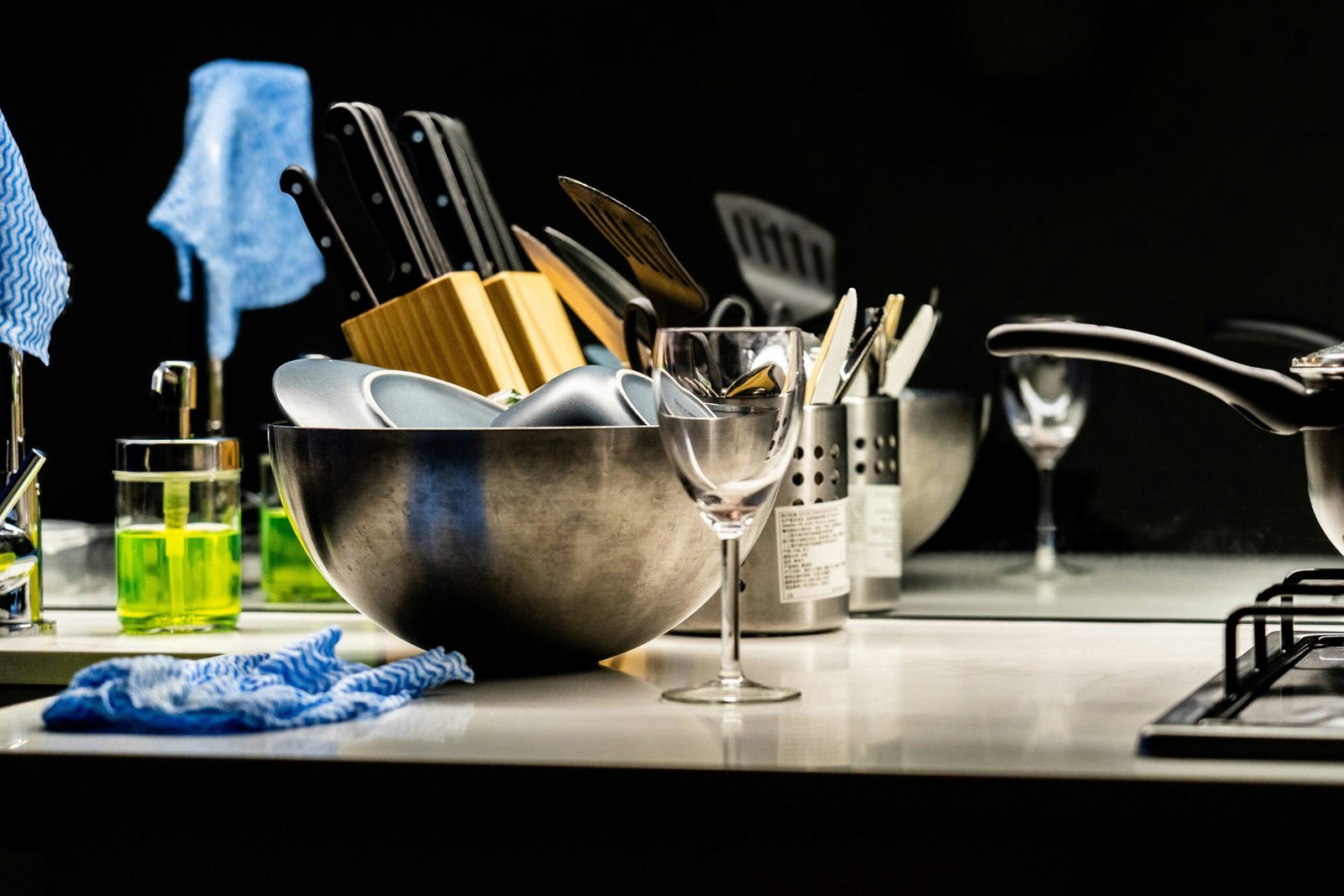
Stainless steel is strong and resistant to rust and is easy to maintain; however, its slippery surface shows scratches quite well. You can find slight marks on the surface of stainless steel appliances or surfaces such as dishwashers, range hood, sink, stainless steel refrigerator, or stainless steel countertop. Many light scratches can either become unnoticeable or are significantly less visible from simple home repairs and scratch removal techniques.
The repair procedure will vary depending on how the scratch occurred and to what surface on your stainless steel. Stainless steel that have “brushed” look has lines and one must be careful to always follow grain direction; mirrors/highly polished stainless steel may use a different polish type and technique. If an incorrect type of abrasive is used, rubbing against grain direction, or over-buffing it would result in a bigger scratch.
This article outlines steps of examining the scratch, applying them, working with grain and knowing when to try repairs versus calling professionals.
What Makes Stainless Steel Scratches Difficult to Remove?
A scratch isn’t really a “stain” sitting on the surface of stainless steel, making stainless steel surface care important when assessing the damage. It’s physical damage to the surface of the steel. This is important, as you’re generally not going to “clean” a gouge away.
If you’re learning how to get scratches out of stainless steel, it helps to understand the type of finish on the surface.The brushed-finish applied to most kitchen stainless steel appliances can be mechanically finished in the factory so the tiny scratches form very fine, parallel lines. That produces the satin look.
A light scratch will damage only tiny lines. It then might be possible to polish out the damage. Deeper scratch damage would remove too much metal and be more difficult to hide.
There are also stainless-steel surfaces with different finishes, including:
- Brushed or satin finishes
- Polished finishes
- Mirror finishes
- Textured finishes
- Fingerprint-resistant finishes
Anything that will work on a brushed refrigerator door will likely leave a hazy sheen on a mirror-polished panel. Recognize the finish, and evaluate the light reflection patterns of the surface before you attempt to use any abrasive.
A scratch is different from discoloration
Now, not all marks are actually scratches. Marks can be from leftover transfer, transfer metal, hardened cleaner, or even just surface scuff. Gently run a clean microfiber cloth over the suspected scratch and examine it with bright light.
If it moves and/or comes off, then the mark was not an actual scratch, only a deposit.
It will be too deep to be buffed out if you can distinctly feel the scratch with a fingernail: obviously this means an everyday clean-over will not fix the mark.
Before You Start, Identify the Grain
There is one single “unbreakable rule” when it comes to fixing brushed stainless steel. Work WITH the grain.
First, examine the panel you wish to fix in the light from various angles. You should be able to determine if there are extremely fine lines running either horizontally, vertically, or other in direction. Be warned that these lines can be difficult to see on a clean appliance.
When learning how to get scratches out of stainless steel, never begin rubbing randomly just because the scratch itself runs in a different direction. The objective is not merely to make the scratch disappear. It is to restore a consistent visual pattern across the affected area.
Vertical scratch on horizontally grained stainless steel, using a vertical rub might give rise to new noticeable pattern. Horizontal rub must be used on stainless steel.
Angle your torch at the surface to more easily define the direction of the grain. Comparing a damage section to an undamaged part of the same panel is another useful trick.
How to Get Scratches Out of Stainless Steel With a Mild Abrasive
If your stainless steel is brushed (as most modern versions are), there are compounds on the market that can sometimes help cover up or blend surface scratches through very minor abrasion. Commercial products are your best bet here, some are made specifically for brushed finishes, and include the very small abrasive to work against the finish. The point is to use the right product-not just any metal polish. Some metal polishes are for shiny chrome finishes and won’t necessarily affect brushed stainless steel to your liking.
Step-by-step method
1. Clean the surface first.
Remove grease, dust, fingerprints, and other residue using a mild cleaner suitable for stainless steel. Dry the area completely with a soft microfiber cloth.
2. Identify the grain.
Determine the direction of the fine lines surrounding the scratch.
3. Test an inconspicuous spot.
Before treating a prominent area, try the product somewhere hidden or less noticeable. Check the finish after wiping away the residue.
4. Apply a small amount of abrasive.
Use only what the product instructions recommend. Excess material does not necessarily produce better results.
5. Rub gently along the grain.
Use controlled strokes in the same direction as the existing brushed pattern. Avoid circular motions.
6. Check the surface frequently.
Wipe the area clean and inspect it under the same lighting. Stop once the scratch has been adequately blended.
7. Clean and dry the panel.
Remove remaining compound according to the product instructions, then dry with a clean microfiber cloth.
This approach is most appropriate for superficial scratches. If the groove is deep enough to catch strongly on a fingernail, repeated polishing may not remove it completely.
Using a Stainless-Steel Scratch Repair Kit
Scratch-removal kits can be useful because they often include abrasives of different grades and instructions for progressively refining the finish.
These kits are particularly helpful when the scratch is more noticeable than a simple scuff but not severe enough to require professional refinishing.
When learning how to get scratches out of stainless steel, a typical kit may include abrasive pads, polishing materials, or finishing compounds. The exact procedure varies, so follow the manufacturer’s instructions rather than treating all kits as interchangeable.
The fundamental principle generally is to use increasingly less abrasive. A coarser material can lessen the prominence of a deeper scratch, and then increasingly finer materials can restore a more uniform finish.
The risk, however, is that rougher abrasion may create an increasingly larger grayed area on either side of the original scratch. That is, rubbing a little scratch with a really course pad can give you a huge area that’s a different finish from anything else on the appliance.
For that reason, you can start with no more abrasive than what has a fair chance to smooth the scratch.
Can Baking Soda Remove Stainless-Steel Scratches?
Baking soda is some times suggested as household abrasive to polish Stainless steel. You should proceed with Caution on it. The powder is too fine to address to certain superficial marks or buildup, but they won’t remove scratch completely, you cannot just clean off the real groove by rubbing a paste of Baking soda on it, and if you try a mildabrasive paste on an actual stainless steel appliance, just gently apply a bit to where it’s scratched and rub it in the direction of grain rather than in circles and do not use any harsh force.
What is more there is an practical fact.
It’s possible that by making the scratches appear on much wider area and making it obvious. You must have to consider another factor in case it will be very bad. For an appliance which needs a good finish or an obvious surface panel on valuable appliance such as cook tops or refrigeration units, A polishing compound manufactured for finishing of stainless steel should be a safe and sound better choice rather than taking risk with pantry abrasives.
How to Deal With Deeper Scratches
Deep scratches require more care because the surface has been physically damaged beyond the level that light polishing can easily disguise.
If the scratch catches your fingernail firmly, exposes a noticeable groove, or remains highly visible after gentle polishing, stop increasing the pressure. More force is not necessarily the solution.
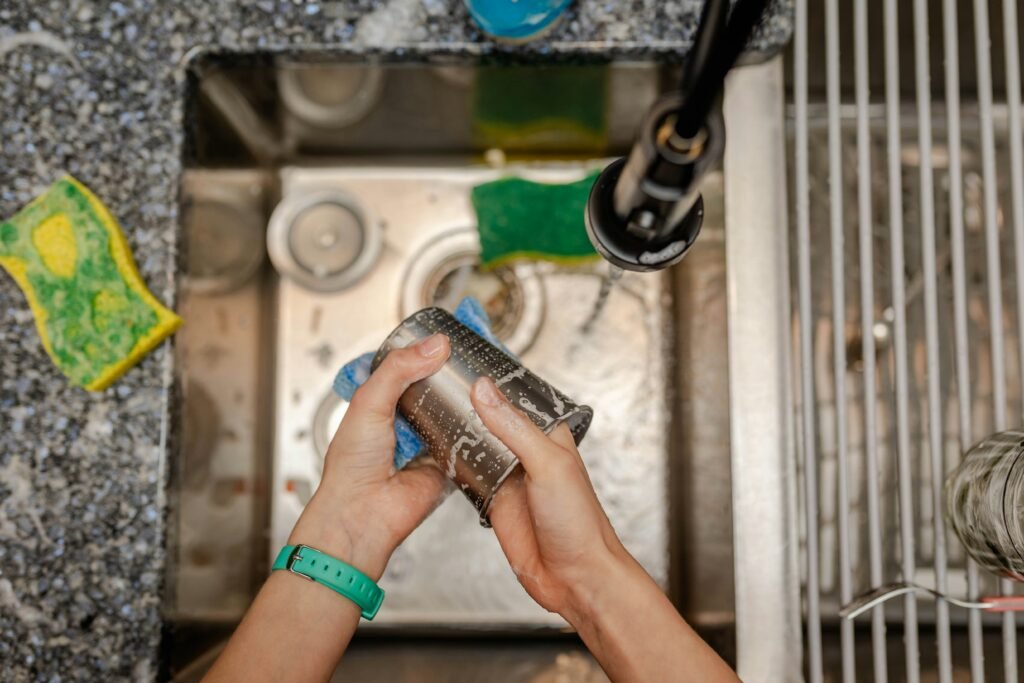
When considering how to get scratches out of stainless steel, a deeper repair may involve carefully sanding the affected area with increasingly fine abrasive materials. The challenge is not simply removing material from the scratch. You also have to recreate the surrounding finish so the repaired section does not look like a patch.
For brushed stainless steel, that means maintaining the original grain direction throughout the process.
Why sanding can go wrong
Suppose a refrigerator door has a fine horizontal finish and you aggressively sand a small vertical scratch. You may remove the original mark but create a visibly different rectangle around it.
The repaired area can appear shinier, duller, or more heavily brushed than the rest of the panel.
This is why deeper scratches are often better handled with a dedicated repair system or professional refinishing, particularly when the panel has a decorative or specialty finish.
What About a Magic Eraser or Steel Wool?
All of the above items can be found around the house, yet neither should be used as a stainless steel repair tool.
Melamine foam sponge (a cleaning eraser sponge available at most shops and supermarkets) provides some, if very light abrasion. While it can take off certain smudges or residual stains, it can do damage by scratching through or changing the overall sheen of a stainless steel finish if you are not gentle.
Steel wool is an even bigger problem because it can create additional metal surface scratches along with the original damage. You will create your own new scratches along with the old ones that you are intending to remove and the free-roaming particles of steel can become lodged onto the surface. Even though stainless steel is naturally corrosion resistant, you are not able to use any steel-based cleaners on it.
Rough scouring pads are also problematic as the pattern you rub onto your stainless steel likely will not match factory application.
Use a soft micro fiber cloth when proper stainless steel cleaning is being implemented. When scratching is unavoidable, find a tool for the particular stainless steel application.
Common Mistakes That Make Scratches Worse
Repairing stainless steel is often less about finding a powerful product and more about avoiding the wrong technique.
Rubbing against the grain
This is one of the easiest mistakes to make. Even if the scratch itself appears to run in another direction, repair work should generally follow the existing brushed pattern.
Using circular motions
Circular polishing can create swirls that reflect light differently from the surrounding surface. These marks may be more noticeable than the original scratch.
Starting with a coarse abrasive
A strong abrasive may remove material quickly, but it can also enlarge the damaged area. Begin with a mild approach whenever possible.
Applying excessive pressure
Harder scrubbing does not guarantee a better repair. Pressure can create uneven abrasion and make the finish inconsistent.
Skipping the cleaning step
Dirt and grease can interfere with polishing and may cause additional fine scratches while you work.
Treating every stainless-steel surface the same way
A brushed appliance panel, a polished sink, and a decorative stainless-steel trim piece may have completely different finishes. Always consider the surface before selecting an abrasive.
How to Prevent New Scratches
After reconditioning the look of your stainless steel, keeping it looking good is going to be much easier than rectifying another scratch.
For your appliances, make sure that you use a microfiber cloth, instead of one of those course tea-towels or scourers. Wipe along the grain, rather than going in circles or random shapes.
Take caution with what you put down next to your stainless steel surfaces; anything, including your seemingly innocent salt and pepper shakers, can leave a smudge if dragged across metal.
Stainless-steel sinks especially-don’t let abrasive grit sit on the sink surface while you move other pots around. This fine matter can perform like sandpaper when it grinds between the two things-your pots and the sink!
If a manufacturer’s guide recommends a specific type of cleaner/method of washing for the particular stainless-steel finish of an item of cookware, take care to follow those instructions. Some fingerprint-resistant finishes may be coated and should not be treated with abrasive treatments.
It also helps to rinse the surface regularly with plain water, because dried grease or other residue could be making it seem more scratched that it is.
When You Should Leave the Repair to a Professional
DIY polishing is reasonable for many light scratches, but some situations justify professional help.
Consider professional refinishing if:
- The scratch is deep and clearly gouged into the metal.
- The damaged area is large.
- The surface has a mirror or specialty finish.
- The panel has a coating that may be damaged by abrasion.
- You are dealing with an expensive appliance or decorative installation.
- Previous sanding or polishing has already created an uneven patch.
- Matching the original factory finish is especially important.
An expert can judge if the panel can be re-finished to give a uniformly smooth look, and to what depth.
Often, trying to polish out the almost non-existent scratch with ever finer grit abrasives is not the smartest option. Replacing a removable panel or trim section is often more practical if the amount of subsequent refinishing is high.
A Simple Decision Guide for Stainless-Steel Scratches
The condition of the surface can help determine how cautious you should be.
| Condition | Best starting approach |
| Mark disappears when cleaned | Use a suitable stainless-steel cleaner and microfiber cloth |
| Very fine surface scratch | Mild stainless-steel polishing method |
| Several light scratches | Scratch-removal product or appropriate repair kit |
| Scratch catches slightly on a fingernail | Carefully assess before using finer abrasive materials |
| Deep groove or gouge | Consider professional refinishing |
| Mirror-polished finish | Use a method specifically designed for polished stainless steel |
| Specialty or coated finish | Check manufacturer care instructions first |
The table is only a starting point. The finish, manufacturer instructions, and location of the damage all matter.
How to Get Scratches Out of Stainless Steel Without Creating a Bigger Problem
The safest approach here is to treat any scratch repair as finish-matching rather than simply scratch removal.
So if you rub out the mark but finish up with an obvious patch around it, you’re probably not better off. Stainless steel is very prone to reflect any textural inconsistencies even if the surface itself is spotless and physically undamaged.
Work on the smallest feasible area, apply little pressure and inspect very regularly. Don’t keep polishing just because you can still faintly see the scratch. There’s a point beyond which any further rubbing causes more surface damage cosmetically than the original mark.
It’s also worth checking the surface under domestic light conditions. A scratch repair that looks perfect under a powerful flashlight may look subtly different under kitchen lighting or daylight. Take a look from different angles before you make a decision as to whether you’re prepared to undertake more repair work.

Frequently Asked Questions
1.Can toothpaste remove scratches from stainless steel?
Toothpaste has mild abrasive properties, which is why it is sometimes suggested for superficial scratches. However, it is not specifically formulated for stainless-steel finishes. It may alter the sheen or leave residue, so a product designed for stainless steel is a more predictable choice.
2.Does WD-40 remove scratches from stainless steel?
WD-40 can improve the appearance of some stainless-steel surfaces by helping remove residue and adding temporary shine, but it does not repair a physical groove in the metal. If the mark is an actual scratch, polishing or refinishing is required to change the surface itself.
3.Can you use sandpaper on stainless steel?
Fine abrasive material can be used for some stainless-steel repair work, particularly when dealing with a brushed finish, but technique matters greatly. The abrasive must be appropriate for the finish, and the strokes should follow the existing grain. Coarse or careless sanding can create a larger visible area of damage.
4.Should stainless steel be polished in circles?
Generally, no. Circular motions can create visible swirl marks, especially on brushed stainless steel. Follow the existing grain with controlled strokes instead.
5.Can deep scratches in stainless steel be removed completely?
A deep scratch may require removing material from the surrounding surface to make the finish uniform. Complete removal is not always practical, particularly on thin panels or specialty finishes. Professional refinishing may produce a better result than aggressive home sanding.
6.Why does my stainless steel look cloudy after polishing?
Cloudiness can come from leftover product, uneven abrasion, residue, or a change in the surface sheen. Clean the area according to the product instructions and inspect it under good lighting. If the cloudy patch remains, further polishing may not be the answer; the finish itself may have been altered.
7.Is stainless-steel cleaner enough to remove scratches?
A cleaner can remove dirt, grease, and residue that may resemble scratches, but it generally cannot repair a physical groove. Light cosmetic marks may sometimes be blended with a suitable polishing product, while deeper scratches require more extensive surface work.
Final Takeaway
Learning how to get scratches out of stainless steel starts with identifying what kind of damage you actually have and what finish surrounds it. Light scratches and scuffs can often be improved with gentle polishing, while deeper grooves require a more careful approach. Always clean the surface first, identify the grain, use the least aggressive suitable method, and work in the same direction as the existing finish. Avoid steel wool, rough scouring, circular scrubbing, and unnecessary pressure. If the scratch is deep, widespread, or located on a specialty finish, professional refinishing may be the safer choice. The goal is not simply to erase one mark—it is to leave the entire surface looking consistent.
Conclusion
Scratches on stainless steel can typically be removed with the proper technique on light damages. First clean the surface and look for the direction of the grain, and use the least abrasive option that can treat the scratch. Always polish and rub along the grain direction, not against it.
Try not to use rough tools which will generate more scratches and look uneven, or try not to dig into the surface more by being rough.
Deeper scratches, special coating and large scratches need professional refinishing work done. Be patient and inspect as you go. By handling with caution and maintaining regularly, scratches can be buffed out and Stainless steel can restore its original look.











