

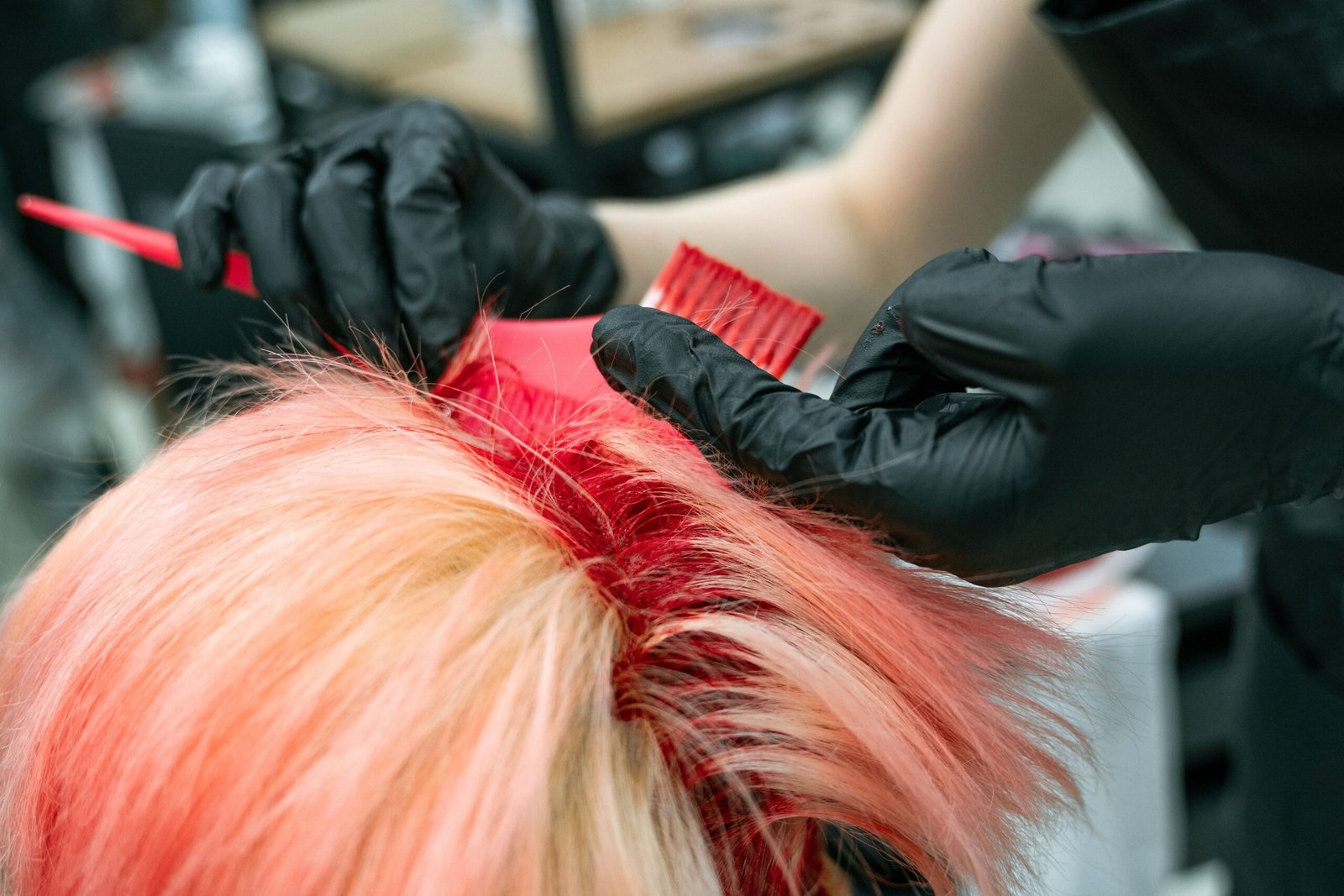
Learning how to get hair dye out of hair starts with understanding that different dyes behave differently. Temporary and semi-permanent dyes can usually be washed out gradually, but permanent color needs a little more strategic planning since its chemical structure has been changed inside your hair, making hair color correction more complex.Some techniques are more gentle, but take longer to work – others are quick, but may cause dry, damaged hair. This article shares the realities of how to fade old color, what to skip, and when to see a professional colorist.
What Happens When You Try to Remove Hair Dye?
Hair dye does not simply sit on the outside of every strand. Different coloring products work in different ways.
When learning how to get hair dye out of hair, it helps to understand the type of color you’re dealing with. Temporary color typically sits on the surface of the hair and is meant to last only a few washes. Semi-permanent color deposits into the hair without the chemical alteration that is part of permanent color. Demi-permanent formulas tend to last longer because they deposit deeper into the hair.
Permanent dye is more complex. It creates a chemical change to your hair’s natural pigment while creating new color molecules inside the hair strand, so simply washing the color out of the hair doesn’t always restore it to its original color.
This is an important difference when choosing a removers. A clarifying shampoo will remove a temporary color but only lighten a dark brown or black permanent hue to a small degree.
You don’t always want to strip away every spec of color. Many shades only need a one or two level reduction to make it easier to reshape your hair, whether you lighten or darken the color.
A simple rule to remember
The gentlest effective method should usually be tried first. Give the hair time to respond before moving to stronger chemical treatments.
Identify the Type of Dye Before Removing It
Try to identify the hair colour product that caused the color to be. Refer back to the original box, bottle, salon or product label. Look for words like temporary, semi-permanent, demi-permanent, permanent, direct dye, or color-depositing conditioner.
Temporary hair color
Temporary sprays, rinses, colored gels, and some wash-out products usually fade relatively easily. Regular shampooing may be enough, especially if the color was applied recently.
Semi-permanent color
Semi-permanent dyes can often be faded with repeated washing and products designed for removing or reducing artificial pigment. Results vary depending on the formula and the condition of the hair.
Demi-permanent color
Demi-permanent color may require more patience. Clarifying products can help loosen some excess pigment, but repeated aggressive washing may leave the hair dry before the color has completely disappeared.
Permanent hair dye
When learning how to get hair dye out of hair, remember that permanent color generally cannot simply be washed out. A dedicated color remover may reduce artificial pigment, while bleaching can alter both artificial and natural pigment. Because bleaching is significantly more aggressive, it should not be the automatic first choice.
Henna and other plant-based dyes
– Natural color need a bit more Care Which is why plant color should be used with extra caution. A product with henna or other plant-based color can have an unpredictable reaction when used with a subsequent chemical depending on what the next chemical was. If you don’t know what was in the color product, seeing a professional would be smarter than jumping right to bleach or another chemical.
Start With Gentle Washing
If the color is only slightly too dark or intense, repeated washing may be the simplest solution.
When learning how to get hair dye out of hair, use a regular shampoo first and observe how the color changes. If you need stronger cleansing, a clarifying shampoo can remove buildup and may help loosen some excess artificial pigment.
Forget the myth that harsher scrubbing will also make the colour come out faster. Hair is a fibre so over time, vigorous scrubbing will damage the cuticle and cause the hair to dry out more without removing the colour evenly. Wash in warm water, not boiling hot. Use conditioner thereafter for your lengths and ends.
If you have semi-permanent colour then you may see significant results after a few washes. If you colour is permanent you may find the appearance is softened after a few washes but the colour will not fade away.
Use a Clarifying Shampoo Carefully
Compared to many of your regular shampoos, a clarifying shampoo is much more aggressive in removing buildup. This method can help when you want the color to fade out a little more (and you just so happen to have short term semi-permanent color in your hair). You will want to, however, wash the affected areas and rinse completely, applying a conditioning treatment afterward (you can also repeat on another wash day if it is tolerated). There is no real reason to shampoo your hair multiple times in one session just because you are eager to see it change.
Who should be more cautious?
When learning how to get hair dye out of hair, keep in mind that people with bleached, highly porous, curly, chemically processed, or already-dry hair may notice more dryness from clarifying products. Porous hair can also hold onto certain pigments unevenly, so aggressive cleansing may produce a patchy result.
If the hair begins feeling rough, brittle, unusually tangled, or excessively dry, pause the removal process and focus on conditioning.
Try a Vitamin C Method for Some Semi-Permanent Colors
Vitamin C is sometimes used as a DIY approach for fading unwanted artificial color. It may help reduce the intensity of certain semi-permanent dyes, particularly when the color is relatively fresh.
When learning how to get hair dye out of hair, a common approach involves crushing plain vitamin C tablets and combining the powder with shampoo to create a paste. The mixture is then applied to damp hair for a limited period before being rinsed thoroughly and followed by conditioner.
These results are not assured. There are no changes in some formulas, some formulas show greater difference than others. All formulas will not work to remove a permanent hair color.
Ensure that you don’t become addicted to the process because it can dry out the hair when not done properly. Don’t try to color strip every week or with a huge batch of product as you might not get the results you wanted. Not any more product and much longer time is not necessarily effective.
Consider a Dedicated Hair Color Remover
When shampooing is not enough, a product specifically formulated to reduce artificial hair color may be the next step.
When learning how to get hair dye out of hair, it helps to understand that color removers are different from bleach. Some are designed to shrink or break down artificial oxidative dye molecules so they can be rinsed from the hair. They generally target artificial color rather than simply lightening everything indiscriminately.
That distinction makes a dedicated remover potentially useful when permanent dye has turned out too dark.
Color remover vs. bleach
Color remover: Primarily intended to reduce unwanted artificial oxidative pigment.
Bleach: Lightens natural and artificial pigment through a stronger chemical process.
The issue is a permanent dye that’s too dark – then grabbing the bleach first can make the result more dramatic than desired. It may also cause dryness and difficulty when correcting the color later on. Never use a color remover without following the instructions provided.
Wearing the product longer than directed will not necessarily get a better result.
Also, ensuring thorough rinsing will make a difference, as color molecules can sometimes appear darker if the hair isn’t rinsed as recommended.
How to Get Hair Dye Out of Hair Step by Step
The safest process is gradual. Start with the least aggressive option that matches your situation and reassess before moving further.
Step 1: Determine what color product you used
Find out whether the unwanted shade came from a temporary, semi-permanent, demi-permanent, permanent, or plant-based product. This determines which methods are likely to work.
Step 2: Check your hair’s condition
Look closely at how the hair feels. If it is already brittle, breaking, extremely dry, or heavily processed, avoid stacking multiple chemical treatments.
Healthy-looking hair can still become damaged during color correction, so condition matters even when the hair does not appear severely compromised.
Step 3: Start with normal shampoo
Wash the hair normally and allow it to dry so you can judge the actual color. Wet hair can appear darker and make it difficult to evaluate progress.
Step 4: Move to clarifying shampoo if appropriate
If the unwanted color is still too strong and your hair can tolerate stronger cleansing, use a clarifying shampoo according to its instructions.
Do not repeatedly wash in the same session simply to force the color out.
Step 5: Condition thoroughly
After cleansing, use a good conditioner and concentrate on the lengths and ends. This helps counter the drying effect of repeated washing.
Step 6: Reassess before using stronger products
Give the hair a chance to settle. If the color is now acceptable, stop. There is no advantage to continuing removal simply because some pigment remains.
Step 7: Use a dedicated color remover when necessary
For unwanted permanent oxidative color, choose a product intended for artificial dye removal and follow its directions precisely.
Step 8: Get professional correction if the result becomes uneven
If the hair develops bands, unexpected tones, or significant light-and-dark patches, stop experimenting. Correcting multiple layers of color can require careful formulation by a professional.
Why Some DIY Hair-Dye Removal Tricks Can Backfire
The internet is full of homemade color-removal suggestions, but stronger does not necessarily mean safer.
Baking soda and dish soap
They are traditionally suggested to do a color stripping job because they are so cleansing or alkaline. They can strip out a bit of surface build-up or cause some fading, but can also make hair feel coarse and dry.
Repeated use can make hair difficult to manage without truly assuredly removing the underlying synthetic dye.
Very hot water
Hot water can make washing feel more effective, but increasing the temperature is not a reliable substitute for an appropriate color-removal product. Extremely hot water can also make already-dry hair feel worse.
Repeated shampooing in one sitting
Washing the hair multiple times back-to-back may produce some fading, especially with fresh direct dye, but there is a point where additional washing mainly increases dryness.
Household chemicals
Do not use household cleaners, solvents, or other products that were not designed for hair. Hair and scalp are not appropriate surfaces for experimenting with industrial or household chemical products.
Special Situations That Need Extra Care
Not every head of hair should be treated the same way.
Bleached or highlighted hair
Bleached hair can become porous. It tends to pick up the pigments quickly and may retain particular colors for a long time, particularly cool ones or extremely intense ones. If you add a permanent dark dye to lightened hair and then attempt to remove it, you may see through the artificial pigment to the lightened base below.
Bright fashion colors
Blue, green, purple, pink, and similar direct dyes can behave differently from conventional permanent color. Some fade quickly, while others cling to porous areas and leave residual tones.
A color remover designed for oxidative dye may not work well on direct pigments. Product compatibility matters.
Dark permanent color
Dark brown or black permanent dye can be particularly challenging because removing the artificial color may reveal warm underlying tones. You might see red, orange, or gold instead of your original shade.
That does not necessarily mean the removal process failed. It can reflect the pigments underneath the artificial color.
Multiple layers of dye
If you have repeatedly colored your hair, the newest dye is only part of the picture. Older artificial pigment can remain underneath, making the outcome difficult to predict.
In these cases, a professional color correction is often more predictable than repeated home treatments.
What to Do If the Color Turns Orange, Red, or Brassy
Unwanted warmth is a common issue after dark color starts fading.
Pigments that exist below the surface will show through as darker hair is taken away or lightened. The undertones from your existing colour might be red, orange, yellow or a mixture of the three. Sometimes this isn’t always fixed with extra removal of colour. You may need to tone or recolour your leftover shade in a more targeted way.
Don’t jump straight in with a different permanent colour because you dislike the warm result. Building up your hair colour over an unpredictable base can complicate your subsequent correction.
If your colour is very patchy or far from where you want it to be, a colourist can evaluate your underlying pigment and determine whether the hair needs removal, toning or a different strategy altogether.
Common Mistakes to Avoid
One of the worst mistakes made is treating the same hair a couple of times a day. For instance, shampoos can be used multiple times, the product could be used, a home-made product could be added and then the hair is grabbing the bleach out of desperation due to the poor results. It can prove to be a strain for the hair.
Working out whether your growth is a success in the late stages of the process is another big mistake.
The hair will always appear a little darker when it is wet so it is best to wait until the hair is dry before you work out whether or not you need to add more remover. Taking note of the care label that comes on the coloring product is another vital tip to watch out for. Certain products will work best with specific types of artificial pigment, and if you use the wrong remover you will get little or no difference. If you apply a permanent colour immediately after failing to remove another, you may cause problems due to the new base material that will be created during the process of colour correction.
Damaged hair should not be confused with hair that simply needs a good wash as both will be different in appearance, but if the strands are snapping and very fragile, you should avoid continuing to process them chemically.
How to Protect Your Hair During Color Correction
Haircolor correction works best if you think a step further than the immediate color, especially when following professional hair coloring techniques to protect the condition of the hair. Condition regularly, reduce heat styling where it is not essential, and follow practical hair care tips instead of co-applying multiple chemical processes without professional guidance. Be realistic with your expectations.
If your present color is very dark, and you have a natural color you want to return to, you may not be able to lighten only to that natural level at one sitting.
What is underneath may need to be corrected to that same lightness first. A good idea is to photograph the hair initially and then compare this against subsequent treatments, in similar light, as a subtle color shift will be detectable. This can save you doing more treatments than you need to. If your scalp becomes painful or sensitive and you need to rinse, follow the product instructions, and discontinue use; do not continue to get the color lighter if your scalp is not happy.
When to See a Professional Colorist
Home fading can make sense when the color is only slightly too dark or when a temporary or semi-permanent shade needs to soften. More complicated situations deserve professional attention.
Consider seeing a colorist if:
- You used permanent black or very dark dye and want a substantially lighter result.
- Your hair has been bleached, highlighted, relaxed, or chemically processed.
- Multiple layers of artificial color are present.
- The color has become patchy or banded.
- You used an unknown or plant-based dye and plan to use strong chemical treatments.
- Your hair feels brittle or is breaking.
- You want to make a major change in one appointment.
A professional can evaluate the current color, underlying pigment, hair condition, and previous chemical history before deciding what can realistically be achieved.
Bring the names or packaging of the products you used if possible. Knowing exactly what has been applied can help a colorist choose a safer correction strategy.
Final Takeaway
Learning how to get hair dye out of hair is mostly about choosing the right level of intervention. Fresh temporary and semi-permanent color may fade with regular or clarifying shampoo, while stubborn permanent pigment often requires a dedicated color remover or professional correction. The condition and history of your hair matter just as much as the dye itself.
Take it easy at first, be patient for each method to work, and don’t overload your hair with multiple competing solutions at the same time. Kitchen remedies, over-washing, and leaving bleach on too long can produce dryness or a situation where toner can’t effectively undo the color. If the tone is way off, uneven, or the result of an over-processed base, a colorist can often help salvage things more predictably.
FAQs
1.Can you completely remove hair dye from your hair?
It depends on the type of dye. Temporary and some semi-permanent colors can fade significantly with repeated washing. Permanent color is more difficult to remove because it changes the hair’s pigment and deposits artificial color inside the strand. A dedicated color remover or professional color correction may be necessary.
2.Does clarifying shampoo remove hair dye?
Clarifying shampoo can help fade some artificial color, particularly fresh temporary or semi-permanent dye.It is less effective at removing permanent hair color.Because repeated clarifying can dry the hair, use it carefully and condition afterward.
3. How Long Does It Take for Hair Dye to Fade?
The timeline varies according to the dye formula, hair porosity, washing frequency, and the shade itself. Temporary color may fade within several washes, while permanent color will not simply disappear through normal shampooing.
4.Can vitamin C remove hair color?
Vitamin C is sometimes used to reduce the intensity of certain semi-permanent dyes. Results vary by product and hair type, and it is not a dependable way to reverse permanent color. The method can also leave hair feeling dry, so it should not be repeated excessively.
5.Is bleach a good way to remove unwanted hair color?
Bleach is a powerful lightening treatment rather than a simple color-removal solution. It can affect both artificial and natural pigment and may cause significant dryness or damage if used improperly. A dedicated color remover is often worth considering first for unwanted permanent dye.
6.Can you remove black hair dye without damaging your hair?
There is no guaranteed damage-free method for removing stubborn black permanent dye. Gentle fading may reduce the intensity, but substantial color correction can require stronger chemical processing. If your hair is already fragile or heavily processed, professional help is the safer option.
7.What should you do if your hair turns orange after removing dark dye?
Orange or reddish tones can become visible when dark artificial color is removed because underlying pigment remains in the hair. More color removal is not always the best solution. Depending on the situation, the hair may need toning or carefully formulated recoloring.
8.Should you dye your hair again immediately after removing color?
It is better to assess the hair and the remaining pigment before applying another color. Adding a new dye over an unpredictable or uneven base can create an unexpected result. Follow the color-removal product’s instructions regarding additional coloring, or consult a professional for complicated corrections.
Conclusion
By Roger Green Removing unwanted hair colour is best achieved by choosing a removal procedure which suits the specific dye and condition of your hair. Temporary and semi-permanent hair dyes are most likely to be amenable to frequent washes or clarifying shampoos, but you may need something more direct for permanent hair colour. Begin with the mildest treatment which is likely to work and do not overuse a harsh hair product to speed things up.
For bleached, damaged, or very heavily pigmented hair, or for any severely dark permanent colour you may want to seek advice on professional colour correction treatment to avoid damaging your hair unnecessaril.
The aim of color removal is to simply create a workable background for a re-application of colour.











