

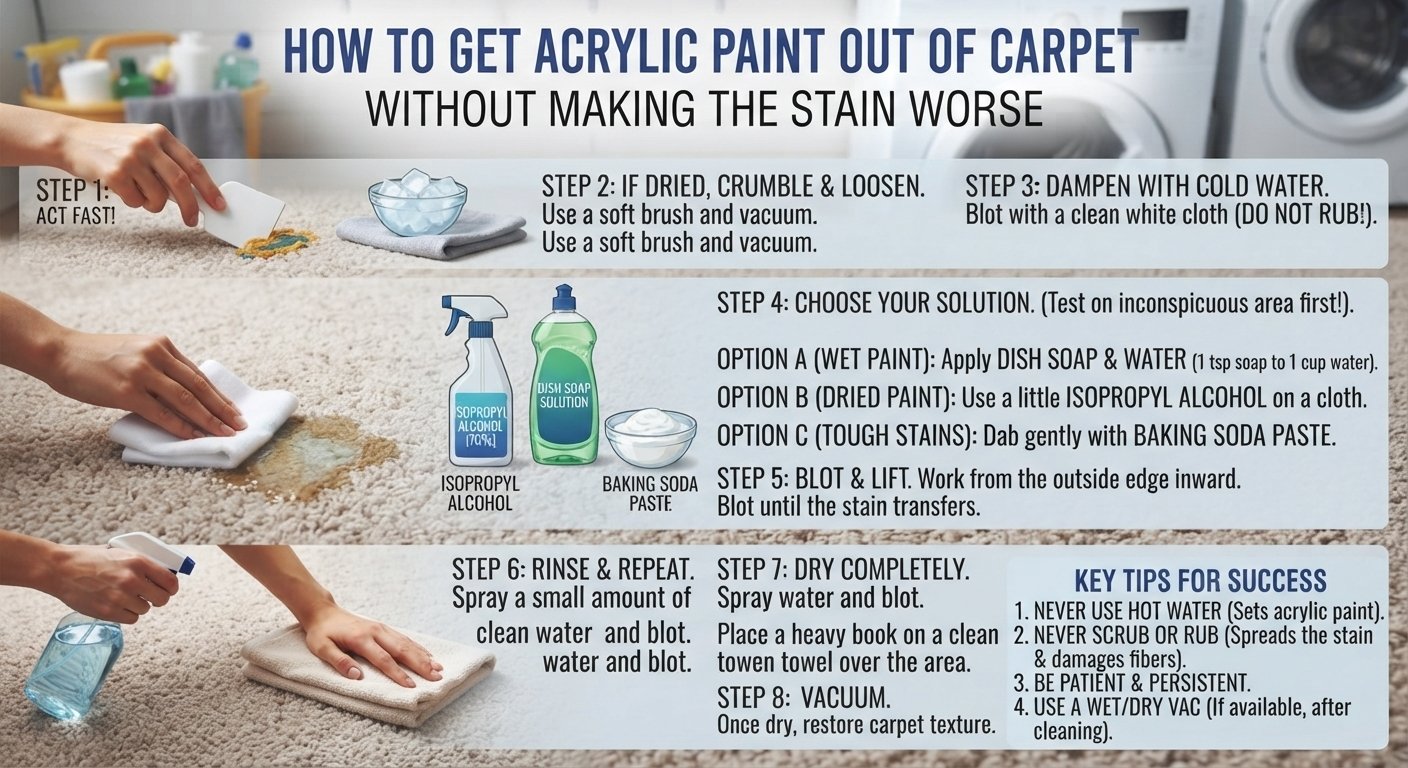
Acrylic paint can be rather stubborn when it comes to certain surfaces, and carpet is definitely among them. Since acrylic paint can bleed into and between carpet fibers and dry rapidly, there’s a good chance that your spill might be hard to get out unless you catch it early. It’s much easier to treat an acrylic paint spill when it’s fresh, so learn how to treat it without rubbing.
If you’re wondering how to get acrylic paint out of carpet, start by removing as much excess paint as possible without spreading it. Fresh water-based acrylic paints can usually be cleaned off with water and a little bit of dish soap. Older, dried paints may need to be softened for easier removal with abrasive techniques.
The appropriate cleaning method is determined by the age of the stain, the carpet type, and carpet color, and any special cleaning instructions given by the manufacturer.
What This Guide Covers In this article we discuss the best techniques to use for fresh and dried acrylic paint, which cleaners to use, the techniques that will damage your carpet and when you should call in a carpet cleaning professional.
What Makes Acrylic Paint Difficult to Remove From Carpet?
When learning how to get acrylic paint out of carpet, it helps to understand how the paint behaves. Is Acrylic Paint Water Based when Wet? Acrylic paint is water-soluble when it is wet, which is why a paint spill on a surface can sometimes be cleaned up simply by washing away paint with some warm water and soap. However, as the water evaporates, the acrylic paints tends to harden into a more permanent film that becomes attached to carpet fibers.
What makes acrylics hard to remove from carpets also has to do with the structure of a pile carpet versus a smooth countertop. The paint may remain on the surface, but a small amount may also penetrate into the fibers of the pile. In a high pile carpet, paint can also penetrate deep into the backing.
This creates two separate cleaning problems:
- Fresh paint: The priority is to lift and absorb it before it dries.
- Dried paint: The priority is to loosen or break up the hardened material without damaging the fibers underneath.
This makes a difference. That dry paint spot is best removed by gentle scraping, but that wouldn’t be a wise choice for removing a large pool of new paint. Similarly, rinsing a dried stain may not remove it and is an added annoyance in your carpet.
Before Cleaning, Identify the Carpet and Paint
Prior to use, turn to look at the carpet. The safest cleaning process could be quite different for each and every different kind of material. Review the care label (if present). Some styles of carpets, such as wool or natural fibers, delicate rugs and specialty carpets respond differently to many home cleaning items than traditional synthetic carpets.
When learning how to get acrylic paint out of carpet, the type of paint itself also matters. Most ordinary acrylic craft paints are water-based, but not every product sold as acrylic has exactly the same formulation. If you still have the paint container, check its label for cleaning instructions.
Test the cleaning solution first
Never assume that a cleaning solution is safe simply because it works on paint, and always follow proper carpet cleaning techniques for the specific material.
Choose a hidden area of carpet, such as a section underneath furniture, and apply a small amount of the proposed cleaner. Blot rather than aggressively rubbing the area, then check for:
- Color transfer
- Fading
- Bleeding
- Changes in texture
- Damage to the carpet fibers
Allow the test area to dry before judging the result. Some changes become easier to see once the carpet is completely dry.
If the carpet reacts badly during the test, stop and use a different approach or contact a professional cleaner.
How to Get Acrylic Paint Out of Carpet While It Is Still Wet
Fresh acrylic paint gives you the best opportunity for successful removal. The goal is to remove the bulk of the paint before introducing cleaning liquid.
1. Remove excess paint
Lift the solid portion of the paint with a tool such as a spoon or dull knife so you don’t smear the spill. Work from the edge of the spill toward the middle. Never push on the paint with the tool–this will push the paint down into the pile.
If liquid paint is abundant, blot the spill with an absorbent rag or paper towel, replaced as it picks up paint. The corner may be reversed if the paper towel is significantly black.
2. Blot rather than scrub
Scrubbing is one of the simplest techniques to increase a small paint mark into a big one.
Lay a clean white cloth on the area and apply some pressure. Remove the cloth, see how much paint you picked up and continue with a clean area.
A white towel is helpful because it allows you to see if any paint is actually coming up, and it reduces the chance of color bleeding from the towel onto the carpet.
3. Apply a small amount of soapy water
Mix a small amount of mild dish soap with cool or lukewarm water. Avoid making the carpet excessively wet.
Dampen a clean cloth with the solution rather than pouring the mixture directly onto the carpet. Blot the paint stain gradually, working from the outside toward the center.
The detergent can help loosen the water-based paint and lift residue from the carpet fibers.
4. Rinse carefully
Once most of the paint has been removed, use another cloth dampened with plain water to blot away remaining soap.
This step matters because leftover detergent can attract dirt or leave a noticeable residue after the carpet dries.
Use only enough water to remove the cleaning residue. Carpet should not be soaked unnecessarily.
5. Dry the area thoroughly
Press a dry towel over the cleaned area to absorb moisture. You can then allow the carpet to air-dry with good ventilation.
Avoid walking on the damp spot until it has dried as much as practical. Once dry, inspect the area under normal lighting to determine whether any color remains.
How to Deal With Dried Acrylic Paint
Dry acrylic paint needs a lot more patience, as water has evaporated from it and it’s solidified. If you attempt to scrub the paint off immediately it can tear at the carpet fibers and remove little to no paint. First, remove as much as you can physically.
Soften the dried paint first
Place a small amount of warm water on a cloth and hold it against the paint for several minutes. The objective is to soften the residue rather than saturate the carpet.
You may need to repeat this process.
Once the paint becomes more flexible, gently work at the softened material with a dull tool. Lift small pieces instead of scraping forcefully across the carpet.
Work in small sections
The dried stain might appear as a single, solid patch but it could have several layers of paint. Divide the area into sections. Tug slightly, then pull out the section, and evaluate the fibers underneath. This method puts you in charge of how much you remove and lessens the risk of pulling, fraying, or cutting the carpet fibers.
Using Dish Soap for Acrylic Paint Residue
Dish soap can break down any remaining amount of water-based paint and lift residual pigment from the fibers of the carpet. Mix a few drops of dish soap with water to create an easy cleaning solution. Note that it’s best not to make this solution too concentrated, or you’ll have to wait even longer for results.
Put the solution on a cloth and blot the stain. Do not pour a large amount of solution directly onto the carpet.
Use a different, damp cloth to soak up the soap and then blot with a dry towel. Dish soap is most effective when the amount of acrylic on the carpet is small and the paint is still fresh.
What About Rubbing Alcohol or Other Solvents?
Some dried acrylic paint may respond to an appropriate solvent, but this is where extra caution is necessary.
When learning how to get acrylic paint out of carpet, remember that rubbing alcohol and other solvents can affect carpet dyes, backing materials, adhesives, or synthetic fibers. The fact that a solvent loosens acrylic paint does not automatically make it suitable for your particular carpet.
If you consider using a solvent:
- Check the carpet manufacturer’s care instructions.
- Test the product in an inconspicuous area.
- Use a small amount rather than saturating the carpet.
- Work with ventilation.
- Blot rather than aggressively scrubbing.
- Stop if you notice discoloration, fiber damage, or an unusual reaction.
Don’t Mix Cleaning Agents Even if you want to use a stronger solvent, never combine them. Mixing cleaning agents might cause a reaction and it’s impossible to know what caused the damage. If you have a large spilled stain, an expensive area rug, or very delicate carpet, it’s better to have it professionally treated than to try a stronger solvent.
Common Mistakes That Make Paint Stains Worse
The first cleaning attempt can determine whether the stain gets smaller or becomes a larger repair problem. Several common mistakes are worth avoiding.
Scrubbing aggressively
Hard scrubbing can spread wet paint across surrounding fibers and work it deeper into the carpet.
Blotting and controlled lifting are generally better approaches.
Using too much water
Acrylic paint may be water-based, but that doesn’t mean flooding the carpet is the answer.
Excess moisture can penetrate into the carpet backing and padding. It can also make drying more difficult.
Use controlled amounts of moisture and extract or blot it out as you work, following practical carpet stain removal tips to avoid spreading the paint.
Using a sharp knife
A sharp blade can cut carpet fibers or create an obvious damaged patch.
Use a dull edge or another blunt tool to lift hardened paint. The goal is to remove the paint, not the carpet.
Applying heat
Heat can soften some materials, but using a hair dryer, heat gun, iron, or similar tool on paint is not a good first choice. Heat may alter the carpet fibers or make the paint more difficult to manage.
Gentle moisture and patience are preferable.
Repeatedly applying stronger chemicals
If the first gentle approach doesn’t do the trick, you may be tempted to jump right to aggressive chemicals. That solution could lift up the paint but also leave the carpet more than a little worse for the wear. Dial up the potency of the formula only if you’re sure the carpet can handle it.
Fresh Paint vs. Dried Paint: Which Method Is Best?
The age of the stain is one of the most important factors in choosing a cleaning strategy.
| Paint condition | Better starting approach |
| Fresh and wet | Lift excess paint, blot, then use mild soapy water |
| Partially dried | Gently soften, lift loose material, then blot |
| Fully dried | Soften gradually and carefully scrape or lift residue |
| Thick dried layer | Remove material in small sections before wet cleaning |
| Large or stubborn stain | Consider professional carpet cleaning |
Newly painted areas should be cleaned as soon as possible. A dried up paint usually needs to be cleaned in several consecutive brief sessions instead of one single intense cleaning session.
If a small smudge of color is left behind after the paint layer is gone, the mark itself might be the pigment, not the paint. You should then be very careful with further treatment.
Special Cases That Need Extra Care
Paint on light-colored carpet
Light-colored carpets highlight even a small amount of lingering dye. Use a neutral-colored cloth and a test cleaning solution. Don’t overdo it: sometimes the more you treat it the worse it gets! You might be trading one blemish of paint color for an even larger one.
Paint on dark carpet
Dark carpeting can hide some residue, but strong cleaners may create lightened areas. Pay close attention to dye stability during spot testing.
Paint on wool or natural-fiber carpet
Wool and other natural fibers deserve extra caution. Household solvents, excessive moisture, harsh detergents, and aggressive mechanical action can cause problems.
Follow the manufacturer’s cleaning recommendations and consider professional cleaning for significant stains.
Paint on a valuable area rug
A valuable, antique, handmade, or delicate rug is not the ideal place to experiment with household chemicals. The cost of repairing damaged fibers or dyes can exceed the cost of professional stain treatment.
How to Prevent the Paint From Spreading
Good technique is partly about controlling where the paint goes.
When learning how to get acrylic paint out of carpet, always work from the outer edge of the stain toward the center. Switch to clean part of the cloth often. If your painted cloth is using up, then using it anymore just piggybacks the color. Keep your cleaning solution away from your dirty cloth.
There is no need to rinse a new cloth in your paint contaminated wash water or cleaner.
Don’t clean the entire mess at once. After you have soaked up the maximum amount of the spill, then break down the rest of the remaining stains into manageable sizes. It seems tedious, but it’s actually far better to be able to see what you are doing and drastically reduces spreading.
When Should You Stop and Call a Professional?
Some carpet stains are worth attempting at home, particularly small fresh spills on durable, colorfast carpet. Other situations call for professional help.
Consider contacting a carpet-cleaning professional if:
- The spill covers a large area.
- The carpet is wool, silk, antique, or otherwise delicate.
- The paint has penetrated deeply into the pile or padding.
- Several cleaning attempts have failed.
- The carpet has started losing color.
- A strong solvent appears necessary.
- The rug is expensive or difficult to replace.
- You’re unsure which cleaning product is safe.
Professional cleaners have access to equipment and cleaning systems designed for different carpet fibers and types of staining, making professional carpet cleaning services a useful option for difficult or delicate stains. They can also assess whether the remaining discoloration is paint residue, dye change, or fiber damage.
How to Prevent Acrylic Paint Spills on Carpet
The easiest paint spill to clean up is the one that doesn’t end up in the carpet. Before you begin painting inside, cover your floor using a plastic or canvas drop cloth or any other suitable materials, and extend the covering beyond the work area since paint travels further than just drops, brushes and accidental splatters. Place your paint containers on a non-carpeted, stable surface rather than immediately adjacent to carpet, and if you have children working along with you, secure containers and use only small amounts of paint.
Keep towels and water on hand before you begin so you’re ready for action if a spill should occur.
If the paint does happen to land on the carpet, don’t wait for it to dry just because you don’t have all your supplies available yet; removing excess and stopping the bleeding is a good first step.
Final Takeaway
Knowing how to get acrylic paint out of carpet starts with identifying whether the spill is fresh or dried. Fresh acrylic paint is usually easier to manage: lift the excess, blot carefully, use a small amount of mild soapy water, rinse away residue, and dry the area thoroughly. Dried paint requires more patience, with gradual softening and careful removal rather than aggressive scrubbing.
Follow the labeling information for the fabric, color, backing, and guidelines for cleaning products. Do not use sharp objects, too much water, heat, or untried solvents. When dealing with a spot that’s large, ground-in or on an expensive or fragile carpet, a professional cleaning can stop what would otherwise be a temporary stain from turning into a permanent carpet stain.
Frequently Asked Questions
1.Can acrylic paint be removed from carpet?
Yes, acrylic paint can often be removed from carpet, especially when the spill is still wet. Start by lifting excess paint, then blot the area with a clean cloth and a mild soapy-water solution. Dried paint may require gentle softening and careful removal.
2.Does vinegar remove acrylic paint from carpet?
Vinegar is not usually the best first choice for acrylic paint. It may help with some residue, but it is not a reliable solution for a thick or dried paint stain. Test any cleaning mixture on an inconspicuous area first to make sure it does not affect the carpet’s color or texture.
3.How do you remove dried acrylic paint from carpet?
Start by gently softening the dried paint with a small amount of warm water. Once it becomes more flexible, carefully lift the softened material with a dull tool. Follow with a mild detergent solution and blotting. Avoid aggressive scraping, which can damage carpet fibers.
4.Can I use rubbing alcohol on acrylic paint in carpet?
Rubbing alcohol may loosen some dried acrylic paint, but it can also affect certain carpet dyes, fibers, or backing materials. If you consider using it, test a small hidden area first and use only a limited amount. For delicate or expensive carpet, professional cleaning is a safer option.
5.Will dish soap remove acrylic paint from carpet?
Dish soap can help loosen and lift fresh acrylic paint because many acrylic paints are water-based. Mix a small amount with water, apply it to a clean cloth, and blot the stain rather than scrubbing it. Afterward, use a separate damp cloth to remove soap residue.
6.Should I scrub an acrylic paint stain?
No. Scrubbing can spread wet paint and push it farther into the carpet fibers. It can also roughen or damage the carpet. Blotting, gentle lifting, and working from the outside of the stain toward the center give you better control.
7.Can dried acrylic paint permanently stain carpet?
It can, particularly if the paint has remained in the carpet for a long time or has penetrated deeply into the fibers. Even after the paint is removed, pigment may leave discoloration. Prompt treatment gives you a better chance of restoring the carpet’s original appearance.
8.When should I call a professional carpet cleaner?
Professional help is worth considering if the stain is large, deeply embedded, or located on wool, silk, antique, handmade, or expensive carpet. You should also stop experimenting with household cleaners if the carpet begins to fade, change texture, or show other signs of damage.
Conclusion
Removing Acrylic Paint From Carpet In most cases, it is actually easier to remove acrylic paint from carpets before it is dry. If working quickly, it’s best to gently blot and scrape up excess, then treat the remaining stain with a mild soapy water solution. For dried acrylic paint, it is a matter of softening then lifting out the soapy solution rather than vigorous scrubbing and scraping.
Never use more heat, water or scrapers than necessary, and always test paint removers in an inconspicuous patch before treating the apparent area.
In some cases, it’s just better to leave it to professional cleaners, especially if there is a large stain or the carpet is delicate or valuable.











