

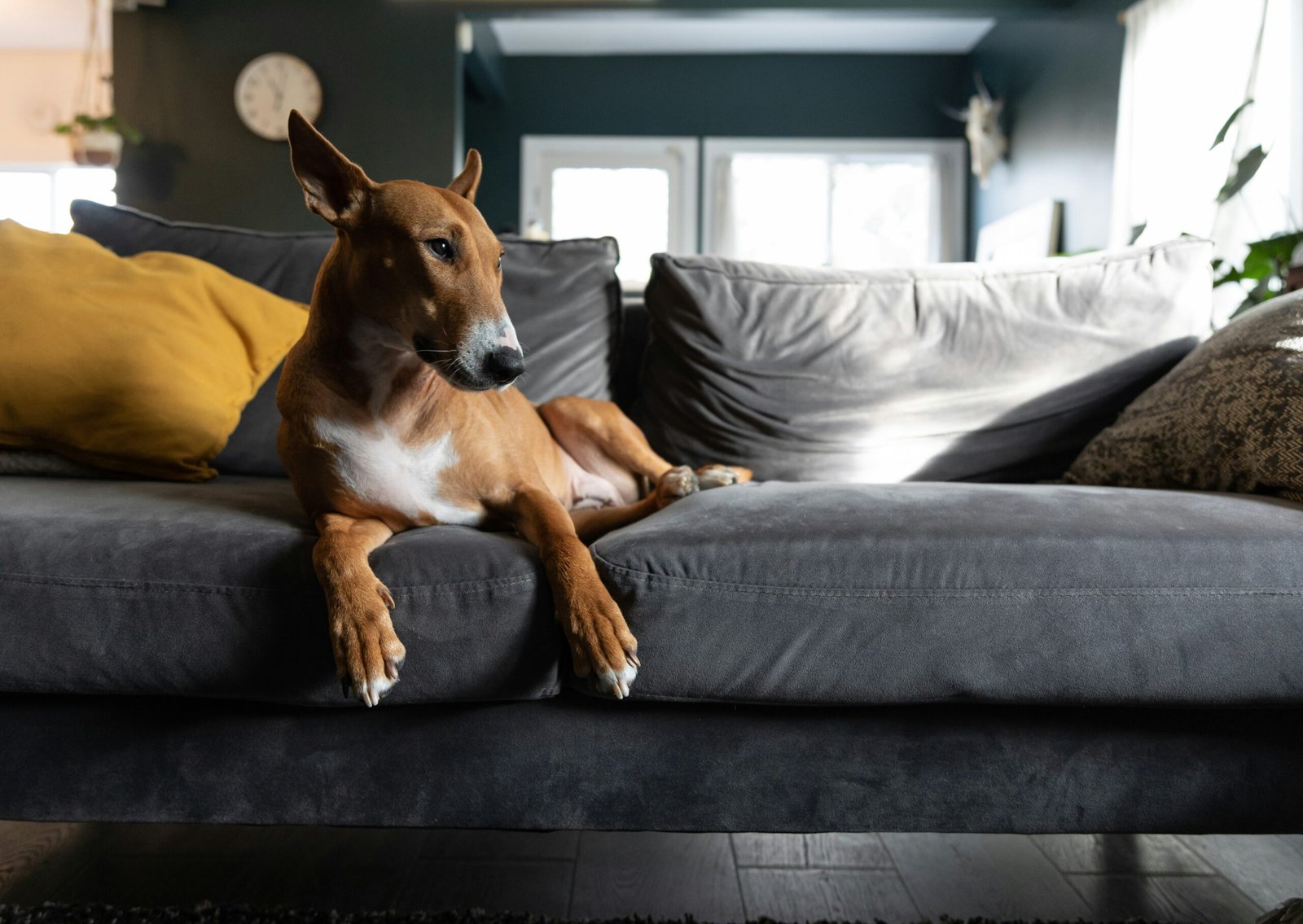
You might not detect any fresh trace of a urine smell on a couch at the time you have cleaned the urine spot but you might find the smell lingers on the couch. The urine may stain or soak through the fabric and come into contact with the stuffing or foam, the seams of the couch or the frame. Only cleaning the top side or exterior of the couch may make it smell good for a while but the smell will still come back when it dries out or gets humid again.
If you’re trying to figure out how to get urine smell out of couch, the most effective approach is to address both the odor and the material underneath it. First, soak up as much liquid as you can, evaluate how deep the urine has penetrated and then apply a suitable, upholstery safe cleaning agent. Enzymatic compounds work extremely well to treat any residual organic urine provided they are safe to use on the fabric upholstery type.
Why Urine Smell Can Stay in a Couch
Urine odor is difficult to eliminate because the liquid does not necessarily remain on the upholstery surface, making upholstery odor removal more challenging. A couch has multiple layers, and each can absorb moisture.
When learning How to Get Urine Smell Out of Couch, it helps to understand how liquid can move through upholstery. It’s very easy for the outer fabric to get the first layer of the liquid, but the filling beneath it absorbs the liquids that penetrate the first. Foam stuffing is a hard one, they have small air-filled holes in them that trap in germs and moisture deposits.
As the material dries, the chemicals in urine can leave behind the compounds that cause smell and they tend to dissipate for a period of time before returning, which, when it is rainy or damp, make the smell return. This is why you can spray any kind of air freshener on the sofa the whole day but the smell returns.
Surface Odor vs. Deep Odor
A mild smell confined to the fabric is generally easier to address than an odor that has reached the cushion insert.
When learning How to Get Urine Smell Out of Couch, it helps to consider how long the accident has been there. If the accident occurred recently and you managed to get to it promptly, a quick soak will keep a lot of the liquid from moving farther in. An older accident will need more serious treatment, as the residue has already dried inside the upholstery.
Check the Couch Before Applying a Cleaner
Before using water, vinegar, detergent, or an upholstery product, inspect the couch’s care label.
Upholstered furniture often has a cleaning code that indicates what type of treatment is appropriate. Depending on the manufacturer, you may see designations such as:
- W: Water-based cleaning may be appropriate.
- S: Solvent-based cleaning is generally recommended.
- WS: Both water- and solvent-based methods may be allowed.
- X: Vacuuming or professional cleaning may be the safest approach.
Be sure to identify the precise meaning and label to look for in your solution (also the actual name of a product if possible), and follow the manufacturer’s directions when a guide is provided. Keep in mind the nature of the upholstery.
Always Perform a Spot Test
Identify a concealed part of the sofa-like the bottom of a seat cushion or behind a piece of furniture. Use a small amount of the product you intend to use, following the directions. When the test is dry, observe whether the test area changes in color or texture, becomes hard or stiff, or transfers dye to the cloth.
How to Get Urine Smell Out of Couch Step by Step
For a typical fabric couch that permits water-based cleaning, the process should focus on removing residue rather than simply masking the odor.
1. Remove Cushions and Covers if Possible
If you’re able to remove the cushion from the couch, remove it and flip it over on all sides. Does it have a zipper on the cover? You can clean and wash the cover, but don’t just put it in the wash, the label may tell you how to wash the cover.
If the urine seeped into the foam, removing the cover will help you realize if it’s fabric only or if you will need to clean the foam as well.
2. Blot Fresh Urine Immediately
If it is a new accident, try white towels, or paper towels that are clean. Press down on the spill and don’t wipe. Continue to replace the towels that are wet and keep pushing down till you aren’t getting very much fluid on the towel from the pillow.
Blotting is way better than brushing because if you scrub you are actually dragging the fluid from the surface to deeper into the pillow. If the urine has soaked to the bottom of the pillow check there as well. Don’t end the treatment on the top just because you feel the rest of it is getting dry.
3. Use an Upholstery-Safe Enzyme Cleaner
There are enzyme cleaners for odors in urine. Many of these work on organic deposits and are labelled for either pet or carpet cleaning deals with. Make sure you opt for one labelled ‘upholstery’ and follow the manufacturer’s instructions.
If you feel that you can get it done more quickly with a giant rag and inexpensive solution – think again.
Too much liquid is actually problematic because the padding will become saturated with a million other gross things and the cleaner needs to be in contact with the padding – that does not necessarily mean sloshing around a large amount of it!
4. Give the Product Time to Work
Some cleaning products need to sit a certain time. Follow the directions rather than wiping it up immediately.
This makes a difference because cleaning is not only about getting the surface wet. It needs to have time to work on the residue that’s creating the odor.
If the label indicates a certain way to use the product or dry it, do so.
5. Blot or Extract Excess Moisture
Remove any remaining moisture once treatment is complete as per product guidelines. For light moisture on upholstering, a clean towel may suffice. Where the fabric is bonded to a foam cushion, and the cushion is not negatively affected, a suitable upholstery extraction machine is preferred for heavier saturation. Do not use extraction equipment on fabrics for which extraction is not recommended by the manufacturer.
6. Dry the Cushion Completely
Drying is one of the most overlooked parts of proper upholstery care and odor removal.
Stand cushions on their edge if the construction allows it, and provide good air circulation. A fan can help move air around the damp upholstery.
When learning How to Get Urine Smell Out of Couch, avoid returning a wet cushion to the couch and covering it with blankets or other materials. Trapped moisture can prolong drying and create an environment where additional odors develop.
Do not rely only on the surface feeling dry. Thick cushions can remain damp inside after the exterior appears normal.
What If the Urine Smell Is in the Foam?
A whole new level of difficulty arises if a removable cushion has become heavily soiled, and the foam should be checked after removal of the cover. If the strongest evidence of its source of the odor is the insert, then a fabric-only approach is unlikely to be effective in the long term. For those fabrics that are safe to wash and for foam and upholstery systems for which the manufacturer allows it, the use of an appropriate enzyme cleaner as directed on the bottle may be used.
However, this can be challenging – too little and it is ineffective, too much and the item will be oversaturated and difficult to dry.
Be cautious about oversaturating foam without further detail about whether and how it can be safely cleaned and dried. If the foam gets very pungent again, then the solution might be to remove and replace the insert altogether rather than continue using chemicals.
Can Vinegar and Baking Soda Remove the Smell?
Vinegar and baking soda are popular household cleaning suggestions, but they are not appropriate for every couch.
White Vinegar
Some odors in your home may clear with diluted white vinegar, but cushions will vary in their response based on the fabric, stain, finish and cleaning code. Don’t take it for granted that you can put plain vinegar on a couch. Look for care instructions from the manufacturer, then do a test in a hidden spot.
And vinegar doesn’t eliminate the need for urine cleanup.
A powerful smell may just be replaced by the smell of vinegar.
Baking Soda
Baking soda can absorb some odors and moisture from suitable surfaces. If used on upholstery, apply it only when the material and manufacturer’s instructions permit it.
Allowing a powder to sit on the surface does not necessarily address urine that has penetrated deep into cushion foam.
Vacuum the powder thoroughly afterward. Avoid using household powders as a substitute for cleaning the actual contaminated material.
How to Deal With an Old Urine Smell
Old urine odors can be more challenging because the residue has had time to dry and penetrate the upholstery.
Begin by locating the strongest area of odor. Check the cushion, underside, seams, and surrounding fabric instead of assuming the visible spot is the entire affected area.
Vacuum loose debris before beginning treatment. Then use an upholstery-safe product designed for organic odors, following the label carefully.
When learning How to Get Urine Smell Out of Couch, you may need more than one treatment, but allow the couch to dry between treatments when the product instructions require it. Repeatedly wetting a cushion before it has dried can make the situation worse.
If the odor disappears while the couch is wet but returns once it dries, the source may be deeper in the cushion or frame.
Common Mistakes to Avoid
Covering the Smell With Air Freshener
Air fresheners and scented sprays can make a couch smell different without actually removing the urine residue.
They may also create an unpleasant mixture of fragrances and odor.
Using Too Much Water
More water is not automatically better, as excessive moisture can create upholstery cleaning problems. Excess moisture can spread contamination, soak foam, and make drying difficult.
Use only the amount of product recommended for the upholstery.
Scrubbing the Fabric Aggressively
Hard brushing can damage upholstery fibers and spread the affected area.
Blotting and controlled treatment are generally safer.
Mixing Cleaning Chemicals
Never mix cleaning products simply because each one is supposed to help with odors. Certain combinations can produce harmful fumes or unwanted chemical reactions.
Use one compatible product according to its label.
Ignoring the Cushion Insert
If the urine reached the foam, cleaning the removable cover alone may leave the main odor source untreated.
Inspect the inside before deciding that the job is finished.
What If the Smell Keeps Coming Back?
A returning smell is a clue that the source has not been fully addressed.
The residue may be inside the foam, beneath the upholstery, along a seam, or on the couch frame. Repeated surface spraying may temporarily reduce the odor without reaching that material.
When learning How to Get Urine Smell Out of Couch, another possibility is that there has been more than one accident in the same area. This can happen with pets, especially if the location retains an odor that attracts repeated marking or urination.
At that point, identify the exact source rather than repeatedly treating the entire couch.
A professional upholstery cleaner may be able to determine whether deeper extraction is appropriate for the furniture.
Special Considerations for Leather and Delicate Upholstery
Avoid the same cleaning method on all couches. Leather, suede, velvet, silk, antique upholstery, and specialty fabrics often need very different care. Water-based cleaning solutions that work well on some fabric couches may stain, discolor, or otherwise alter the surface of sensitive materials.
Choose products made specifically for leather furniture and the specific type of leather, and follow any care instructions supplied by the manufacturer.
Leave restoration to a professional if antique or special-occasion furniture is concerned.
How to Prevent Future Odor Problems
Once the couch is safe and dry, a little prevention can make other future accidents much less arduous. For families with pets or small children, washable waterproof covers can be an extra shield for removable cushion covers. These covers are a helpful addition for upholstered furniture with heavy traffic areas.
If a pet urinates on the same couch spot multiple times, cleaning up the visible stain may not be enough.
You also need to neutralize the smell and the cause of multiple accidents. For a new accident, keep some absorbent towels and an upholstery-safe cleaner at the ready. Take quick action to ensure less moisture reaches the cushion core.
When Professional Cleaning Is the Better Option
Professional help is worth considering when the odor is severe, widespread, or located inside expensive furniture.
Seek professional upholstery cleaning when:
- The couch is made from a delicate or specialty material.
- The furniture has sentimental or high replacement value.
- Urine has deeply saturated the cushions.
- The odor returns after careful cleaning.
- The couch cannot be safely cleaned with water.
- You cannot identify where the smell is coming from.
- The affected area includes the internal frame or padding.
- Multiple cleaning attempts have failed.
Professional equipment may provide deeper extraction than household towels or small upholstery machines, but even professional treatment depends on the construction and condition of the furniture.
How to Know When the Couch Is Actually Clean
Don’t evaluate your success until the couch is dry. Some cleaning agents will temporarily mask an odor and new upholstery always smells different when it’s wet versus dry. Wait for the piece to air out and dry.
Smell the washed space, then bring your nose to the surrounding upholstery and compare the two.
Lightly press on the cushion and then smell it again. If the odor appears under pressure, it may be lingering. Your aim isn’t to release a soothing, scented fog, but merely to restore a fabric to its original, neutral state.
Frequently Asked Questions
What is the best way to remove urine odor from a couch?
For suitable fabric upholstery, begin by blotting fresh urine and then use an upholstery-safe enzyme cleaner according to its instructions. Treat the affected material thoroughly enough to reach the residue without unnecessarily saturating the cushion, then allow it to dry completely.
Will the urine smell disappear on its own?
It may become less noticeable as the area dries, but that does not necessarily mean the urine residue has been removed. Odor can return later, particularly when the cushion becomes damp or humid.
Can I wash a couch cushion cover in the washing machine?
Only if the manufacturer’s care label says machine washing is appropriate. Some covers can shrink, lose their shape, or become damaged by unsuitable washing conditions.
How do I remove urine odor from couch cushions?
Remove the cushion cover if possible and determine whether the odor is confined to the fabric or has reached the foam. Treat the affected material with a suitable upholstery cleaner and dry the cushion thoroughly before returning it to the couch.
Does baking soda get rid of urine smell?
Baking soda may help absorb some surface moisture and odors, but it may not reach urine residue deep inside upholstery foam. It should not be considered a complete solution for heavily contaminated cushions.
Why does my couch still smell after cleaning?
The odor may be coming from material below the surface, such as cushion foam, batting, seams, or the couch frame. It can also persist if the cleaning process did not remove enough residue or if the upholstery was not allowed to dry completely.
Final Takeaway
The best method for treating a urine-smelling couch is to treat the cause, not just mask the smell. Act quickly on new accidents, ensure you are following the sofa upholstery washing instructions and apply a cleaner appropriate to the furniture’s fabric. Enzymes can help to break down any remaining urine deposits if this is compatible with your upholstery. If you need to treat a cushion with heavy urine contamination, consider addressing the foam as well as the fabric.
Avoid using excess water, trying to scrub the surface aggressively, using any chemicals you haven’t tested in an inconspicuous spot, or mixing cleaning products together. Most importantly, allow the sofa to dry thoroughly, and don’t rush to decide if the problem has been solved. If the odour persists or if you have a fragile or high-value piece, professional upholstery cleaning may be the safest and most effective option.
CONCLUSION
What gets rid of urine smell on a couch than simply spraying on perfume-scented deodorizer? Dab up the excess liquid, turn to the upholstery care tag, and apply the right cleaner to break down the residues and neutralize the odor. For a fabric sofa, try an upholstery-safe enzyme cleaner, applying it carefully and only according to the product instructions.
When the urine penetrates the foam core of the cushion itself, the inside must also be cleaned.
Avoid using too much water, making scrubbing motions, and combining cleaning solutions. Make sure each application is thoroughly dry before assessing whether the odor is still noticeable. Odor that comes back or a sofa made of fragile or costly material is better treated by a professional.











