

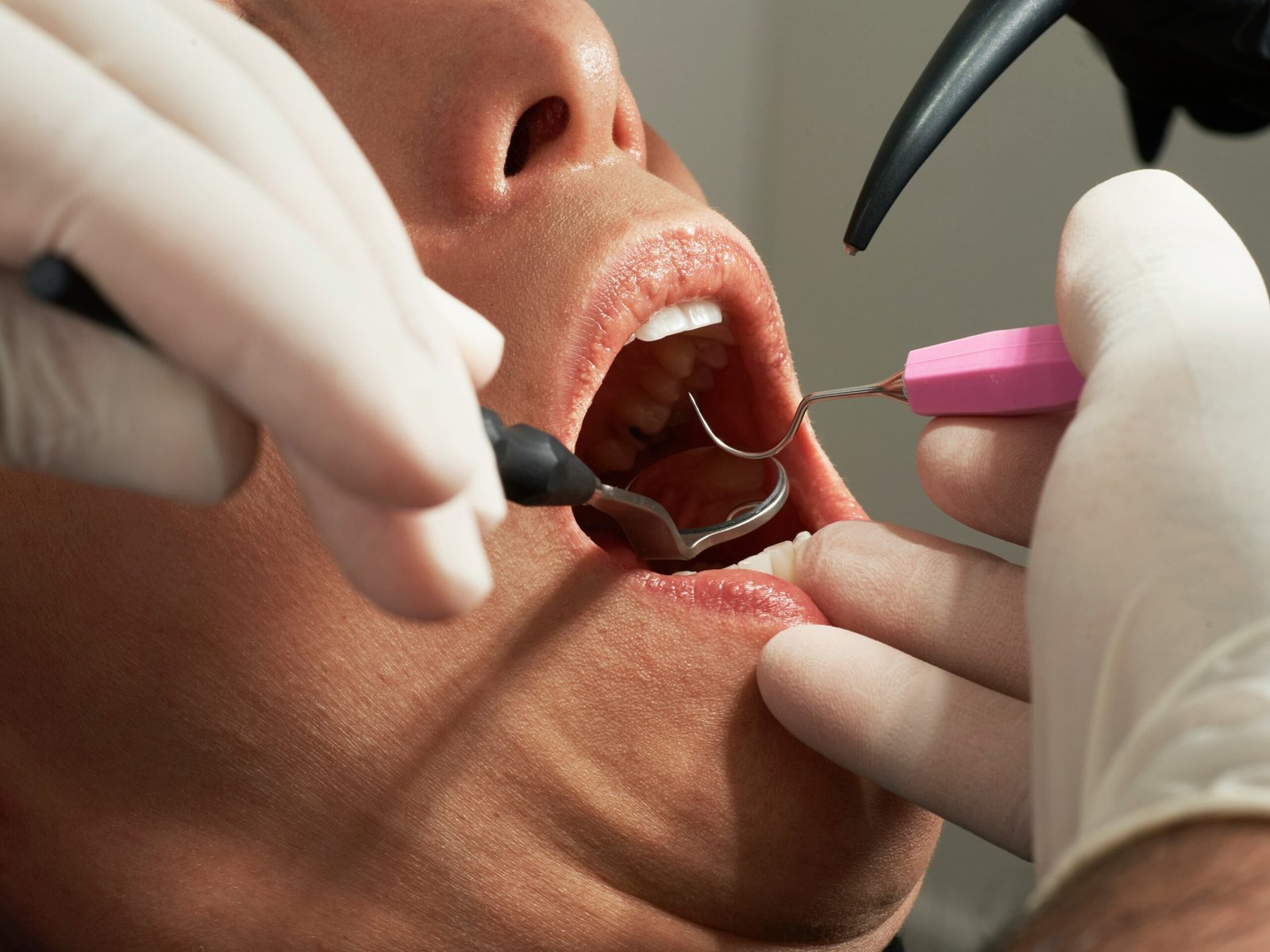
If you are searching for how to squeeze out salivary gland stone, You’re likely suffering from an unpleasant lump, swelling, or pain that gets worse when you eat. The obvious first question is whether you can just press the stone out by yourself.
Occasionally, a small salivary stone can be passed naturally and a practitioner might be able to gently milk out a stone close to the end of the duct. But this is quite different from squeezing, piercing, scraping or probing the area yourself. The NHS says to avoid extracting salivary stones yourself with sharp objects because you can cause damage and infection.
It’s always best to diagnose the type of blockage you may be dealing with, follow measures that are milder and stimulate saliva production, and know when the issue warrants a professional dentist, doctor, or ENT visit.
Can You Squeeze Out a Salivary Gland Stone?
It varies depending on the size of the stone, where it is located and how it affects the duct from which it has become blocked.
If the stone is located near the duct’s opening, it may sometimes come out naturally without intervention.As stated in Harvard Health, if the stone is near the end of the duct, a doctor can probably roll it out with a light pressure. For stones further in, a procedure is necessary.
That distinction is important when researching how to squeeze out salivary gland stone at home. A healthcare professional can look at the duct and see if it’s possible to access the stone. Do not attempt to do this with force at home.
Do not attempt to puncture the tissue, cut around the stone, scrape it with an instrument, or repeatedly apply pressure. The duct is fragile and trauma may aggravate swelling and inflammation.
A more prudent goal is to promote normal salivary flow through proper oral care and permit a small, accessible stone to pass.
What Is a Salivary Gland Stone?
If you’re wondering how to squeeze out salivary gland stone, Salivary gland stone – also known as a salivary duct stone or sialolith – is a mineral that forms in a gland, or duct, in the mouth.
Your major salivary glands are constantly making saliva and passing it into the mouth through tiny channels. Major glands: the parotid glands in front of your ears, the submandibular glands under your jaw, and the sublingual glands under your tongue.
Salivary stones can develop inside the glands that produce saliva or within the ducts that carry saliva from these glands into the mouth.Salivary stones usually develop in the submandibular glands.
Not all salivary stones cause symptoms. A small stone may go unnoticed until it obstructs the flow of saliva.
What Does a Salivary Gland Stone Feel Like?
Symptoms vary depending on the stone and the degree of blockage. Common symptoms include:
- Discomfort or sensitivity affecting the mouth, jaw, or facial area
- Swelling around the affected gland
- A lump or hard area beneath the tongue or around the jaw
- Pain that becomes stronger during meals
- Dry mouth
- Difficulty opening the mouth or swallowing in some cases
Perhaps the most distinctive symptoms of a salivary stone are pain while eating. Eating causes your body to produce more saliva, and if the ducts aren’t clear, the saliva has nowhere to go. The saliva may cause more pressure on and around the gland. Both Medline Plus and Harvard Health mention that the pain can be particularly pronounced while eating.
A lump or swelling in the mouth or neck does not always indicate the presence of a salivary stone.Continued so-called “fiddling” with unexplained or recurrent lumps should be investigated.
Why Does a Salivary Stone Hurt More When You Eat?
This happens because eating naturally triggers your salivary glands to release more saliva.Picture a small bit of clogging the drainpipe and when extra is added, pressure racks up behind the clog. The same thing could happen when a salivary stone blocks the saliva being carried out of your saliva gland.
For instance, you may start out feeling pretty good before a meal but then experience swelling and pain fairly quickly after starting to eat. That may be a clue that saliva is not flowing freely.
The NHS mentions that a stone can be so large that it totally blocks a salivary gland, and cause sharp pain when eating.
Can a Salivary Stone Pass Naturally Without Treatment?
Yes, there are some small salivary stones that can pass, so no procedure is required.
However, there is no specific timeframe for when it will pass.The size and position of a stone come into play, and a larger or more distant stone may sit in the body until a doctor takes it out.
The NHS states you may occasionally pass small stones by yourself and that small stones may pass without you noticing but larger ones tend to stay put until they are removed.
Don’t keep attempting more vigorous treatments just because the stone does not pass in a reasonable time.
A simple decision guide
| Situation | What it may mean | Appropriate next step |
| Mild symptoms and suspected small stone | The stone may pass naturally | Hydration and conservative care |
| Pain or swelling repeatedly occurs during meals | Saliva flow may be obstructed | Arrange a medical or dental evaluation |
| Stone remains present | It may be too large or too deep to pass | Professional assessment |
| Increasing redness, swelling, or pus | Possible infection | Prompt medical attention |
| Fever, chills, or significant swallowing problems | Possible significant infection or complication | Prompt/urgent medical assessment |
Safe Things You Can Try at Home
If you have mild symptoms and no signs of infection, conservative care may help support saliva flow and comfort.
Stay hydrated
If you’re wondering how to squeeze out salivary gland stone, drinking water helps maintain adequate fluid intake and supports normal saliva production. Dehydration can contribute to thicker saliva and may make salivary problems more difficult.
Encourage saliva flow
Sugarfree gum or sugarfree sour candies or lozenges may promote saliva. Medline Plus mentions sugarfree lemon drops as a way to promote saliva.
If sour foods or candies increase your pain substantially, don’t continue consuming them just to expel the stone.
Gentle measures may help
The NHS advised that a gentle massage around the salivary stone may help, and Johns Hopkins has written about gentle massage of the gland and moist heat as conservative treatment measures.
The key word here is gentle. These guidelines are meant to aid comfortable and fluid saliva, not push a stone along a damaged or inflamed duct.
Manage discomfort appropriately
If the pain or swelling is severe or prolonged, or if you are concerned about it, consult a parent/guardian, doctor or pharmacist. If you suffer pain or swelling, use a medicine as directed on the package, checking with your parent/guardian or doctor or pharmacist if you are unsure of the correct dose.
In addition to these, ice is another remedy suggested by the NHS for pain and swelling.
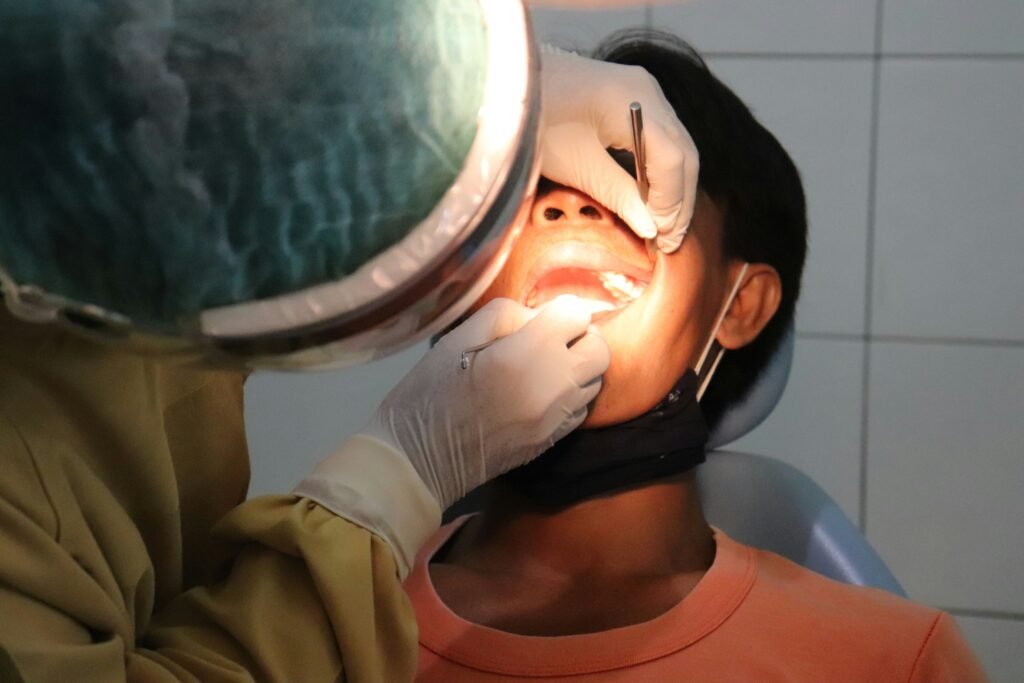
Why You Shouldn’t Forcefully Squeeze a Salivary Gland Stone
Searching for how to squeeze out salivary gland stone can easily lead to advice that treats the stone like a pimple or surface blockage. That comparison is misleading.
Inside a duct, a salivary stone may be too small to see. The tissue around the stone may be swollen or inflamed if saliva flow has been blocked.
Forceful manipulations can also result in tissue injury. Needles, tongs, pins, razors and other sharp objects pose a risk of injuries and infections.
The NHS specifically warns you not to pick at a salivary gland stone with something sharp.
Avoid these common DIY approaches
Do not:
- Puncture the tissue over the stone
- Cut the area open
- Scrape the duct
- Insert objects into the duct opening
- Forcefully squeeze a swollen gland
- Keep pressing harder because the stone has not moved
A doctor or dentist may be able to gently express an accessible stone after examining the area. That professional assessment is different from attempting forceful extraction yourself.
How Doctors Determine Whether a Salivary Stone Can Be Removed Easily
A doctor can also look in your mouth and check your jaw and salivary glands to identify if a stone is present and its location.
The stone can sometimes be felt when examined. Sometimes other investigations, including an X-ray, ultrasound scan or other scan or test, are needed to confirm the diagnosis, depending on the symptoms and the result of the examination.
The important factors include:
- Location: A stone close to the duct opening may be easier to access.
- Size: Larger stones may not pass naturally.
- Duct condition: Narrowing or inflammation can interfere with saliva flow.
- Infection: Infection may change how the problem needs to be treated.
- Number of stones: Multiple obstructions may require a more detailed evaluation.
This is why there is no single technique that works for everyone searching how to squeeze out salivary gland stone.
What Happens If the Salivary Stone Doesn’t Come Out?
If conservative measures don’t work, a dentist or ENT specialist can evaluate whether the stone requires removal.
Treatment might involve anything from the doctor expressing a stone they can reach to a minimally invasive salivary stone treatment procedure.
Sialendoscopy employs a tiny endoscope to view the salivary duct. Specific tools can then be employed to fix some stones or obstructions in the duct. Johns Hopkins calls it “a minimally invasive technique used to diagnose and treat salivary gland disorders.
This is significant because, even with an established stone, the whole salivary gland may not have to be excised.
What Is Sialendoscopy for Salivary Stones?
This procedure is known as sialendoscopy and it is a procedure for intra-ductal disease.
Doctor inserts a small camera into the duct to observe the problem. You can remove a stone or clear another obstruction with small tools, if need be.
They add that sialendoscopy can be used to visualize and extract stones, and it may help surgeons do an operation less invasive than a traditional open procedure.
This procedure is especially helpful as it enables the specialist to get an idea of what is going on within the duct rather than simply external pressure.
For someone wondering how to squeeze out salivary gland stone after home measures have failed, this is one reason professional evaluation can be more useful than continuing to manipulate the area.
When Is Surgery Needed for a Salivary Gland Stone?
Not all stones will have to be surgically removed.
Treatment is determined by the size and location of the stone, the presence and degree of symptoms, infection, and whether a less-invasive method can clear the obstruction.
Some larger or more challenging stones may need to be operated on. Johns Hopkins reminds us that even when more invasive procedures are needed, they may be able to still retain the salivary gland.
Normally, the aim is to re-establish saliva flow and to clear the blockage without impairing a healthy gland.
Signs a Salivary Gland Stone May Have Caused an Infection
A blocked duct can create conditions that allow a salivary gland infection, called sialadenitis, to develop.
Watch for symptoms such as:
- Increasing pain or tenderness
- Significant swelling
- Redness
- Fever or chills
- Pus or unusual drainage into the mouth
- A foul or abnormal taste
- Increasing difficulty opening the mouth
Medline Plus and Johns Hopkins all list fever, swelling, redness, pain, and infectious drainage as potential signs of salivary gland infection symptoms. In the event of the symptoms mentioned above, it is not recommended to attempt to force the stone out alone instead of consulting a doctor.
When Should You See a Dentist or ENT Doctor?
Schedule an evaluation if: The suspected salivary stone persists. You have pain or swelling that comes and goes. You are having trouble eating.
A doctor, primary-care doctor or an ENT specialist may be able to help you work out if the symptoms are actually caused by the salivary stone, and if imaging or specialist treatment are needed.
Get emergency care if you experience severe swelling, fever or chills, pus, increased redness or if you cannot fully open your mouth, speak, chew or swallow. Harvard Health advises a consultation with your doctor if the lump in your salivary gland is painful, red or tender, and/or you develop a fever or chills.
Severe breathing difficulty or a swelling that progresses quickly may also be an emergency.
How Long Does It Usually Take for a Salivary Gland Stone to Pass?
There isn’t a set amount of hours or days for all patients who are afflicted by salivary stone.
A small stone at or near the opening of the duct may be able to get through on its own, but a larger or more deeply lodged stone may be left until it can be extracted. Harvard Health adds to the distinction.
Watch the pattern as a whole instead of watching for how long to wait when you step up.
Are your symptoms getting better, about the same, or worse?
If pain and swelling are continuous or gets worse, this is when you should see a professional and not just apply more pressure to the area.
Can Salivary Gland Stones Come Back?
Recurrence is possible.
According to Harvard Health, others have persistent stones. The NHS says persistent stones sometimes need a more permanent solution.
If you repeatedly have episodes of swelling or pain around eating, don’t just try to help yourself by working to eliminate each of those episodes. Repeated symptoms require assessment to see if you have a chronic blockage or other issue with your salivary gland.
The other ‘general’ advice such as staying well-hydrated and maintaining good oral hygiene, are reasonable general advice, but there isn’t a home ‘sure-fire’ way to prevent all types of salivary stones.
Common Mistakes to Avoid
The most serious mistake is to treat a saliva stone as if it were just some surface object that could be just sitting there getting squeezed till it just pops out.
Mistakes we make other than those listed above are overlooking recurrent symptoms, attempting to extract stones with a needle or probe, persistent painful manipulation and failing to assume ALL lumps under the tongue are stones.
Another error is believing that a chronic stone requires surgery. Today’s assessment can determine if simple observation, express with a professional, sialendoscopy or other intervention is needed.
The correct solution varies from one obstruction to the next rather than relying on the keyword that someone on Bing entered.
Salivary Stone Removal: Home Care vs. Professional Treatment
| Approach | Main purpose | Who should perform it? |
| Drinking water | Support hydration and saliva flow | At home |
| Sugar-free saliva stimulation | Encourage saliva production | At home |
| Gentle massage | Conservative symptom/supportive care | At home when appropriate |
| Professional expression | Remove an accessible stone | Doctor or dentist |
| Sialendoscopy | Locate and remove selected stones | Specialist |
| Surgery | Treat selected difficult stones | Specialist |
This distinction is the most important takeaway for anyone searching how to squeeze out salivary gland stone. Home measures can support natural passage, but actual extraction is not something you should force.
Quick Decision Guide
If you think you have a salivary gland stone:
Mild symptoms and no infection signs
→ Stay hydrated and use conservative measures that encourage saliva flow.
Symptoms repeatedly worsen during meals
→ Arrange an evaluation because the duct may be obstructed.
The suspected stone remains or symptoms continue
→ A dentist or ENT specialist can determine its size and location and discuss removal options.
Fever, chills, pus, increasing redness, or significant swelling
→ Seek prompt medical attention because these can indicate infection.
Significant difficulty swallowing or breathing, especially with rapidly worsening swelling
→ Seek urgent medical care.
FAQs
1. Is It Possible to Gently Remove a Salivary Gland Stone Yourself?
For mild cases, the free stimulation of saliva and fluids may guide the stone to emerge naturally. Else, the dentist or ENT doctor will let you know if the stone needs to be removed.
2. How can you get a salivary stone out safely?
In mild cases, fluids and saliva stimulation may help the stone to exit on its own. If not, a dentist or ENT doctor will advise you whether the stone requires removal.
3. Can you massage a salivary gland stone?
Sourc… Gentle massage The conservative recommendations of the medical sources. Don’t turn it into a vigorous massage, a shove a very painful deeply entrapped stone in the duct.
4. Why does a salivary stone hurt when eating?
Eating stimulates saliva production. When a stone blocks the duct, increased saliva production can increase pressure behind the obstruction, causing pain and swelling around meals.
5. What happens if a salivary stone does not come out?
A doctor can look at the stone and decide whether it should be imaged or removed. Professional expression, sialendoscopy, or another treatment may be recommended, depending on where the stone is located and how large it is.
6. Can a salivary gland stone cause an infection?
Yes. A blocked salivary duct can contribute to sialadenitis. Fever, chills, redness, increasing swelling, pain, and pus or abnormal drainage can indicate infection.
7. Do salivary gland stones always need surgery?
No. Small stones will come out in the urine and some stone can be treated with less-invasive procedures. Surgery will be done if the stone is hard to get or if there is no other treatment.
Conclusion
If you are searching for how to squeeze out salivary gland stone, The safest answer is don’t poke your stone like a pimple and don’t try to force it down the duct. Some tiny stones will pass on their own, and conservative measures of hydration and saliva stimulation may help. Your doctor might be able to gently milk out a papable stone.
Don’t try to squeeze, cut, or scrape the bump. Applying pressure may cause the stone to wedge in deeper. If the swelling doesn’t go away, the bump continues to be painful, or if it becomes infected or swollen, it’s best to see a healthcare provider. Today, specialized procedures are available to remove some stones and keep the salivary gland.











