

Few household issues are as immediately disrupting to your daily routine as turning on the shower or kitchen faucet only to receive a weak, trickling stream of water. Whether it manifests as a sudden drop across every fixture or a gradual decline in a single bathroom, understanding how to fix low water pressure in house settings requires a systematic diagnostic approach rather than random guesses. Plumbing systems rely on a delicate balance of mechanical pressure, pipe volume, and unrestricted flow paths, meaning a failure anywhere between the municipal supply main and your tap aerator can diminish your water flow significantly.
Homeowners facing this problem often struggle to determine whether the root cause lies within their property lines or stems from external utility issues. When considering how to get low water pressure in house systems back up to comfortable operational levels, the first step is isolating whether the problem affects cold water, hot water, a single fixture, or the entire building structure. Trying to address a systemic pressure drop by simply replacing a showerhead will waste time and money if the real issue is a partially closed main shutoff valve or a failing pressure reducing valve near your water meter.
Restoring optimal water flow requires an organized method that prioritizes simple, cost-free adjustments before moving toward advanced plumbing repairs. This comprehensive consultant guide breaks down the diagnostic process into clear, detailed paragraphs written without complex bulleted lists, guiding you through isolation testing, mechanical valve adjustments, mineral buildup removal, main line inspection, and decisions regarding booster pump installations or professional plumbing interventions.
Differentiating Between Dynamic Flow Restrictions and Static Water Pressure
Before attempting any mechanical repair to understand how to fix low water pressure in house plumbing, you must understand the distinction between static water pressure and dynamic water flow. While people often use these terms interchangeably, they represent two fundamentally different physical properties within your piping infrastructure.
Static water pressure refers to the force exerted by water against the walls of your pipes when all faucets and appliances are completely closed, making proper residential water pressure guidelines useful when diagnosing household plumbing problems. Measured in pounds per square inch, standard residential static pressure typically ranges between forty and eighty pounds per square inch. Dynamic water flow, on the other hand, represents the volume of water moving through the pipe per minute when a fixture is opened.
If your static pressure reads at a healthy sixty pounds per square inch, but the stream instantly drops to a trickle the moment a second fixture opens, you are experiencing a flow restriction rather than a true pressure deficit. This distinction is vital when researching how to fix low water pressure in house applications because a restriction is usually caused by physical blockages, corroded galvanized pipes, or undersized supply lines, whereas true low static pressure points toward municipal main issues, faulty pressure regulators, or fully closed main shutoff valves.
Initial Diagnostic Step: Isolating the Scope of the Pressure Drop
The most effective strategy for learning how to fix low water pressure in house environments begins with a thorough isolation test across your entire property. Gathering clear information about which fixtures are affected prevents unnecessary work and narrows down the location of the restriction.
Start by checking every water outlet individually, including kitchen sink faucets, bathroom vanities, showers, toilets, hose spigots, and washing machine connections. If the pressure drop is isolated to a single fixture, the cause is almost certainly localized within that specific tap, such as a clogged aerator, a twisted flexible supply line, or a degraded faucet cartridge filled with sediment.
If the low pressure impacts every fixture simultaneously, test both the hot and cold water supplies independently. A drop that only affects hot water points directly to water heater issues, such as heavy sediment accumulation inside the tank, shutoff valves on the hot water outlet pipe being partially closed, or a clogged heat exchanger in a tankless water heater. Conversely, if both hot and cold streams are weak across the entire building, your search for how to fix low water pressure in house must shift toward the main supply entry point, shutoff valves, or pressure reducing valves.
Inspecting and Adjusting Main Water Shutoff Valves
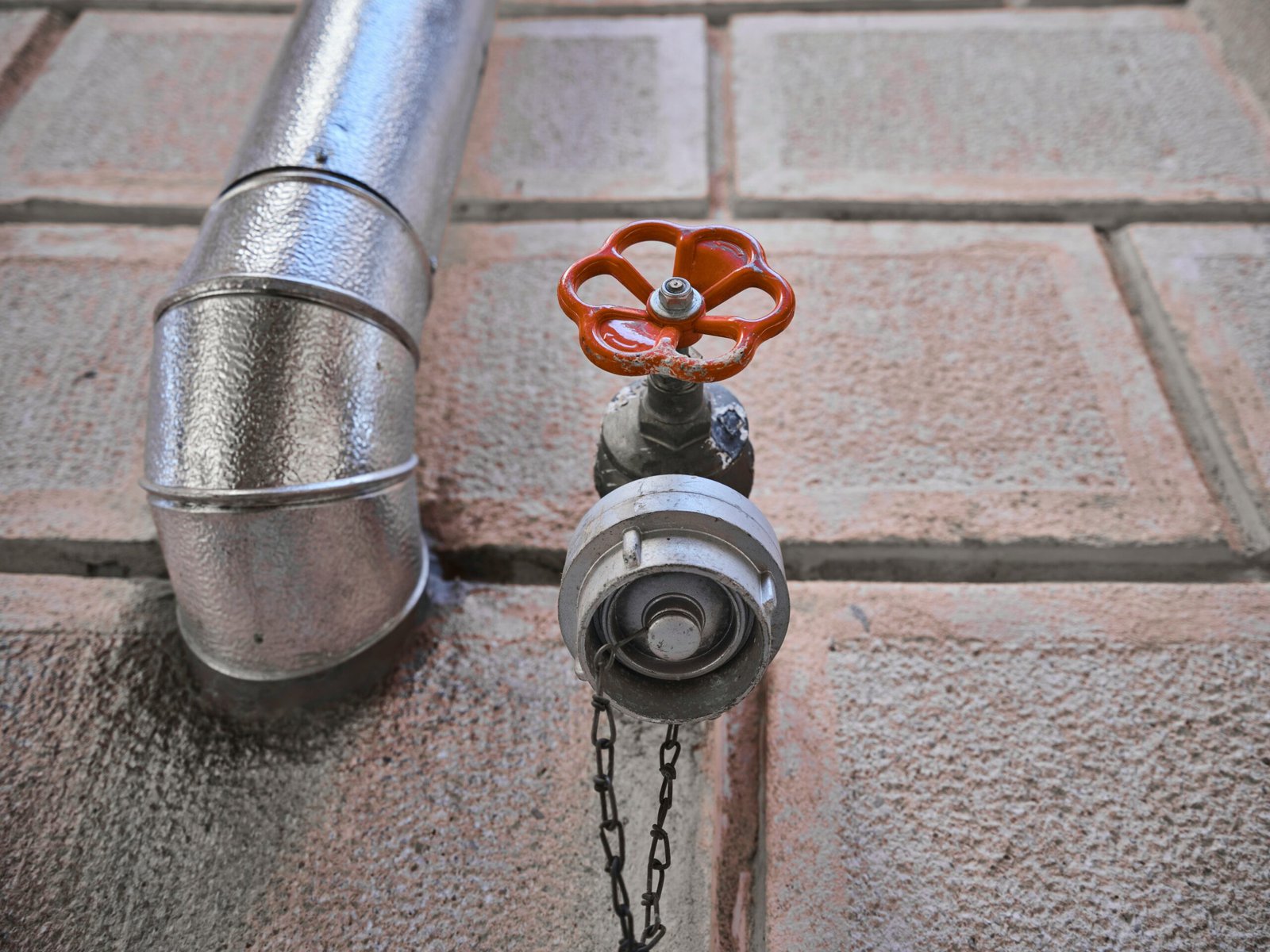
One of the most common yet overlooked solutions when investigating how to fix low water pressure in house structures involves inspecting the primary shutoff valves. Homes typically feature at least two main shutoff valves: one located at the municipal water meter pit near the street curb, and another inside or outside the home where the main line enters the building.
If recent plumbing work, meter reading, or utility maintenance occurred on your property, a technician may have turned off the main supply and failed to reopen the valve completely when finished. Even a main ball valve or gate valve that is turned just ten or fifteen percent away from the fully open position can create severe turbulence and restrict water flow dramatically across the entire residence.
To inspect your indoor main shutoff valve, locate the incoming copper, PEX, or iron pipe near your foundation or basement. Ball valves feature a straight lever handle; when the handle sits completely parallel to the pipe, the valve is fully open. Gate valves utilize a round wheel handle; turn this wheel counterclockwise until it stops turning naturally to ensure full flow capacity. If you suspect the curb stop valve at the meter pit is partially closed, contact your municipal water department to send a technician with a specialized curb key to inspect and adjust the valve safely.
Testing and Recalibrating the Pressure Reducing Valve
For homes equipped with a pressure reducing valve, a sudden or gradual drop in household water force often signals that this mechanical component is miscalibrated or failing. A pressure reducing valve is a brass fitting usually located right after the main indoor shutoff valve, designed to throttle high incoming municipal pressure down to safe residential levels to protect appliances and pipe joints from bursting.
When considering how to fix low water pressure in house systems containing a pressure regulator, you can perform a manual adjustment using a basic wrench and a screwdriver. The top of the valve features an adjustment bolt secured by a locknut. Loosen the locknut counterclockwise, then turn the central adjustment bolt clockwise in small half-turn increments to compress the internal spring, which increases the water pressure feeding into your home.
Always monitor the pressure changes using an inexpensive water pressure gauge screwed onto an outdoor hose spigot while making adjustments. Never raise residential static water pressure above eighty pounds per square inch, as excessive force damages toilet fill valves, appliance solenoids, and flexible supply lines. If turning the adjustment bolt clockwise yields no change on the pressure gauge, or if water pressure fluctuates wildly between uses, the internal diaphragm of the valve has likely failed, requiring a complete replacement of the regulator.
Clearing Mineral Buildup from Aerators and Fixture Components
When your diagnostic isolation test reveals that weak water flow is confined to specific sinks or showerheads, learning how to fix low water pressure in house fixtures involves addressing mineral scale and hard water deposits. Over time, calcium and magnesium dissolved in tap water precipitate out of solution, forming hard white or green crusts inside narrow fixture passages.
Faucet aerator – Remove the tiny screen cap screwed to the end of the spout – either with your fingers, or if you have a grip, with a pair of slip-joint pliers (use a cloth to cushion them so they don’t scratch the chrome) – and unscrew the cap from the spout counter-clockwise. Separate the inner screen from the other internal screen, the rubber washer, and the flow restrictor, remembering the order they are in – after rinsing any loose debris off, dunk everything in a small bowl of warm white vinegar for an hour or two. The vinegar will break down deposits that prevent the water from flow freely.
Just remember to reattach all of the pieces properly when you get done. – shower head – So your shower head can get nasty and clogged up with a similar sort of gunk across its rubber nipples – there is a way to fix it without taking it off!
Just fill about a third to a half full of white vinegar in a storage plastic bag, fit it around the head of the shower, making sure the rubber nozzles touch the vinegar, then just secure it in place with a thick rubber bands. Leave this in there overnight. In the morning, just remove the bag, give a scrub with your old tooth brush on all the individual nozzles and turn the hot water on for 2 minutes.
Evaluating Internal Pipe Degradation and Corrosion Restrictions
In older homes constructed with galvanized iron supply pipes, the process of learning how to get low water pressure in house systems back to acceptable levels often uncovers structural pipe aging. Galvanized iron pipes, widely installed throughout the mid-twentieth century, suffer from internal oxidation and mineral tuberculation over decades of continuous exposure to water.
As galvanized iron rusts, internal corrosion builds inward from the pipe walls, creating rough, narrow passages that severely restrict dynamic water flow even if static pressure remains high. This internal narrowing acts like a clogged artery; while pressure builds up behind the rust when taps are closed, opening a single faucet causes the stream to drop instantly as water struggles to pass through the restricted passages.
If your home still utilizes galvanized piping and you experience chronic pressure issues, chemical flushing or temporary repairs will not solve the underlying problem. The most effective long-term solution for how to fix low water pressure in house properties with aging metal infrastructure is repiping the building using modern materials such as PEX or copper tubing. Modern PEX tubing features smooth interior walls that resist mineral scaling and chemical corrosion, ensuring consistent, unrestricted water flow for decades.
Addressing Municipal Water Supply and Well System Variables
Sometimes the root cause of weak water force originates entirely outside your private property boundaries, meaning your approach to how to fix low water pressure in house settings must account for public utility conditions or private well equipment performance.
If your home is supplied by a municipal water source. Consult with your municipality’s water utility company before purchasing new plumbing equipment. They could be flushing your local water main, testingfire hydrants, repairing main breaks in your community, or experiencing high usage demands due to peak demand during hotter periods in the summer afternoons.
Additionally, the pressure delivered to your curb from the city water main might naturally be a bit lower if you have the misfortune of being located on the top of a hill or at the furthest end of your local water main distribution network.
If you get your water from a private well If you happen to be getting your water from a private well. Your low water pressure problems will most likely occur with your well pump equipment. If your house has a pressure tank situated in your basement or in the utility room, the air bladder inside needs to be pre-charged at exactly 2psi below the cut-in pressure settings on the pressure switch for your well pump. If your well pressure switch contacts appear to be burnt and pitted and the well pump is struggling due to sand, it’s time to call a certified well pump expert to check your equipment.
Installing Water Pressure Booster Systems for Chronic Low Pressure
When external municipal pressure is permanently low or multi-story home elevation reduces upper-floor water force, mechanical amplification provides the ultimate answer for how to fix low water pressure in house environments. Installing a residential water pressure booster pump system actively increases incoming water force to comfortable standards.
Most common configurations of water pressure booster systems are made of up of a centrifugal electrical pump, a threaded-in pressure sensor and a small diaphragm expansion tank. Typically connected directly to the cold water primary supply after the main valve supplying the whole house will bring the booster pump online when any faucet is turned on and the existing water pressure falls below a certain set point; the motor speed will increase as to provide constant, consistent, and controlled pressure on every floor of the house.
Before buying an electric pressure booster pump system, check local plumbing code requirements for water pressure booster installations, as it may not be allowable to put a suction pump directly on the public municipal water line without appropriate protection against back-siphonage.
Prior to installing this type of system test to make sure that present interior copper, galvanized, and etc. Pipes are in good, structurally safe condition, because it might induce a leak through an old copper joint or compromised galvanized pipe if the old system isn’t tested first.
Common Mistakes to Avoid When Attempting Pressure Repairs
When homeowners attempt to solve flow issues independently, rushing into repairs without proper diagnosis often leads to property damage or wasted money. Recognizing critical errors when exploring how to fix low water pressure in house applications keeps your plumbing system safe and functional.
A major error is cranking the adjustment bolt on a pressure reducing valve to maximum capacity without checking incoming static pressure with a dedicated gauge. Exceeding eighty pounds per square inch creates intense hydraulic strain that damages water heater tanks, ruptures washing machine hoses, causes toilet fill valves to stick open, and voids manufacturer warranties on modern dishwashers and refrigerators.
Another frequent mistake is confusing a hot water tank mixing valve issue with a total plumbing line restriction. Many modern water heaters feature thermostatic mixing valves installed on top of the tank to prevent scalding by blending cold water into the hot output line. If this mixing valve becomes clogged with sediment, hot water pressure drops dramatically while cold water pressure remains perfectly normal, a specific issue that adjusting main shutoff valves will never fix.
Finally, avoid using harsh industrial acid drain cleaners or aggressive chemical descalers inside supply pipes in an attempt to dissolve rust or hard water scale. Supply lines hold drinking water, and circulating toxic chemicals through your potable supply creates severe health hazards while accelerating metal pipe pinhole leaks. Stick to mechanical cleaning, localized vinegar soaking, or physical pipe replacement.
Frequently Asked Questions
1. What is considered normal water pressure for a residential home?
Standard residential water pressure typically falls between forty and eighty pounds per square inch. Most plumbing fixtures and household appliances are engineered to perform optimally around fifty-five to sixty-five pounds per square inch, providing strong flow without putting unnecessary stress on pipe connections.
2. Can a clogged main water filter cause low water pressure in the whole house?
Yes, a whole-house water filter cartridge that has become saturated with sediment, rust particles, or municipal debris will severely restrict water flow across every fixture in your home. Replacing the filter cartridge regularly every three to six months is often an instant fix for sudden whole-house pressure drops.
3. How do I know if my low water pressure is caused by a hidden pipe leak?
To check for hidden supply leaks, turn off all faucets, showers, and water-using appliances across your property, then inspect your main water meter for signs of a hidden plumbing leak. If the meter leak indicator dial is spinning or the digital numbers increase over a two-hour period while no water is actively being used indoors, a hidden underground or in-wall pipe leak is bleeding off system pressure.
4. Will replacing my showerhead fix low water pressure in the shower?
Replacing your showerhead will only improve pressure if the original fixture was clogged with mineral scale or contained an overly restrictive flow limiter. If low pressure affects every faucet in the bathroom equally, replacing the showerhead will not resolve the underlying supply line or main valve restriction.
5. Why does my water pressure drop significantly when two faucets are used at once?
When you notice considerable pressure loss when a second faucet is turned on, you’re dealing with a flow restriction that varies dynamically throughout your supply lines, not merely the utility pressure itself. Commonly contributing factors are undersized main supply piping, closed shutoff valves, significant mineral accumulation in the walls of your iron supply piping, or a malfunctioning pressure regulator.
6. Do I need a permit to install a whole-house water pressure booster pump?
In many municipal jurisdictions, installing a water pressure booster pump directly onto the main water supply requires a plumbing permit and the installation of an approved backflow prevention assembly to protect the public water supply from potential back-siphonage. Always check local building codes before beginning installation.