


A pimple can seem like a minor skin problem until you have one that stays red, swollen, or painful for days. It is natural to wonder how long does it take for pimples to go away, especially when you have an event coming up or the blemish seems to be getting worse instead of better.
Every single pimple doesn’t have a single schedule. An acne on the surface of your skin can clear relatively quickly, but a deeper, inflamed zit can linger for a long time. And the type of treatment you go for, be it a spot treatment or simply picking at it repeatedly, can also influence the duration you see skin damage.
Pimple types are also important, of course. A whitehead, pustule, papule, and nodule don’t all have the same cycle. And more often than not, mild breakouts clear on their own and don’t need treatment, while persistent and/or deep acne often will need the help of a dermatologist. According to the American Academy of Dermatology, acne treatments can take between four and six weeks to work.
How Long Does It Take for Pimples to Go Away?
A small whitehead may settle within a few days but there’s no clear answer for how long this takes. Some pimples pop up quickly, but inflammatory pimples can take a couple of weeks or more to disappear.
The type of bump makes a big difference – as does whether you’ve tended to the site. For example, a superficial whitehead may behave quite differently from a painful, deep cystic pimple. If you’ve been picking at or squeezing a blemish, that may also prolong it’s course, since you’ve brought additional injury and inflammation to the skin.
You might find a difference between the pimple going away and how the skin appears after a pimple. For instance, the pimple might flatten but you’re left with a brown or darker stain. That’s not the pimple, it’s the skin coloration that remains after the pimple has gone.
A simple timeline to keep in mind
- Small surface pimple: May improve within several days, although individual healing varies.
- Inflamed papule or pustule: Can remain noticeable longer, particularly if irritated.
- Deep painful nodule or cyst-like lesion: May persist for weeks and has a greater risk of scarring.
- Dark or red mark after a pimple: Can remain after the active inflammation has settled.
- Recurring acne: Usually requires an ongoing treatment plan rather than waiting for individual pimples to disappear.
These are general patterns rather than guarantees. Your skin can heal faster or slower depending on the type and severity of the breakout.
Why Do Some Pimples Take Longer to Heal?
What causes pimples? When oil, skin cells, and other debris accumulate and clog a hair follicle, pimples result. When the inflammation occurs further into the skin, the resulting lesions are red and swollen and are considered inflammatory acne.
The deeper the inflammation, the more noticeable and persistent the lesion may be, especially with inflammatory skin conditions.
The type of pimple matters
Whitehead. A blocked pore that remains closed at the skin’s surface. Blackhead.
An open comedone, or blackhead, can darken because of a chemical reaction of its contents with oxygen in the air; the pigment is not dirt.
Papule. An inflamed, raised bump that usually has no visible head or center. Pustule. Similar to a papule, but with a visible head or “head” of white or yellowish pus.
Deep nodules and cystic lesions form deep underneath the skin’s surface.
These tend to be painful and may have a greater risk of scarring. The AAD recommends dermatologist assistance for these types of breakouts over store-bought treatments.
Inflammation can extend the healing process
A small clogged pore may be relatively subtle. Once significant inflammation develops, the area can become swollen, tender, and red.
That inflammation does not necessarily disappear as soon as the clogged pore is cleared. The surrounding skin still has to recover.
Picking can make a pimple last longer
Gently squeezing a pimple may be quick and easy, but it can also scar and lead to more inflamed skin. It can also transfer bacteria from your hands and further inflame the skin. The NHS specifically recommends you resist squeezing and picking acne as this can cause scarring that is permanent.
Does Popping a Pimple Make It Go Away Faster?
Usually, popping is not a reliable way to speed up the overall healing time. You may be able to remove some material from the surface temporarily, but that doesn’t mean the inflammatory process is over. Squeezing can also traumatize the skin or increase the likelihood of scarring or discoloration.
There’s one other practical consideration: How do you know for sure that a specific lesion is ready to drain?
A cystic lesion may not have an opening on the surface at all. You can’t force it to open without risking more inflammation or creating a wound. If a lesion is tender and located deep in the skin, steer clear of pinching. For a pustular blemish on the surface of the skin, the AAD recommends an acne treatment that might be more appropriate than squeezing.
A hydrocolloid patch can also help prevent you from touching or picking at the spot while it heals.
How to Help a Pimple Heal More Quickly
You cannot safely make every blemish disappear immediately, but you can avoid behaviors that prolong inflammation and use evidence-based acne ingredients appropriately.
Keep your skin routine simple
Wash the area carefully without scrubbing the spot with too much pressure. The skin may be inflamed already and too much unnecessary rubbing can cause further skin irritation. Use acne care skin products and do not keep changing them to strong medications repeatedly.
Consider benzoyl peroxide
Benzoyl peroxide is a tried-and-true acne treatment that decreases the bacteria linked to acne and can also be used to treat inflamed spots. The American Academy of Dermatology recommends topical benzoyl peroxide as one of the options available for treating acne. People with sensitive skin should use a lower strength to minimize irritation.
The AAD states that some adult patients with mild acne may be able to start with a strength of 2.5% benzoyl peroxide.
Always use products as directed by the packaging, rather than slathering a thick coating to try to get a more rapid effect.
Consider salicylic acid
Salicylic acid helps unclog pores and gently exfoliate the skin.It can be useful for whiteheads and some pimples, particularly when clogged pores are part of the problem.
Again, more product does not necessarily mean faster healing. Irritation can make the area look worse.
Adapalene can help prevent future breakouts
Adapalene is a prescription retinoid that can help prevent pores from clogging. It’s best used as a piece of a comprehensive acne treatment plan rather than an overnight fix for a solitary pimple. Since retinoids work by modifying how your skin cells function, the benefits of using them won’t appear overnight–it will take some time for your pimples to disappear entirely.
If you are pregnant or trying to conceive, check with your doctor before beginning any acne treatments, as some treatments are off limits when you’re expecting.
What Can You Do for a Deep, Painful Pimple?
How to treat a deep pimple unlike a smaller blemish on the surface All three of the doctors recommend applying a clean washcloth that is warm and slightly damp on a deep painful pimple for approximately 10 to 15 minutes, three times daily. The warmth may make the lesion more comfortable and coax it to the surface of the skin so it can heal. Never use water that is so hot that it could burn your skin: a warm, comfortable compress will do the trick.
Once the skin surface is ready for treatment with a topical acne medication, benzoyl peroxide, salicylic acid, adapalene, or azelaic acid may be used depending on the acne type.
Don’t squeeze a deep lesion again and again just because it is still there after a few days. If the lesion is large, painful, recurrent, or scar-forming, dermatologist-based treatments that are appropriate for deeper acne may be applied.
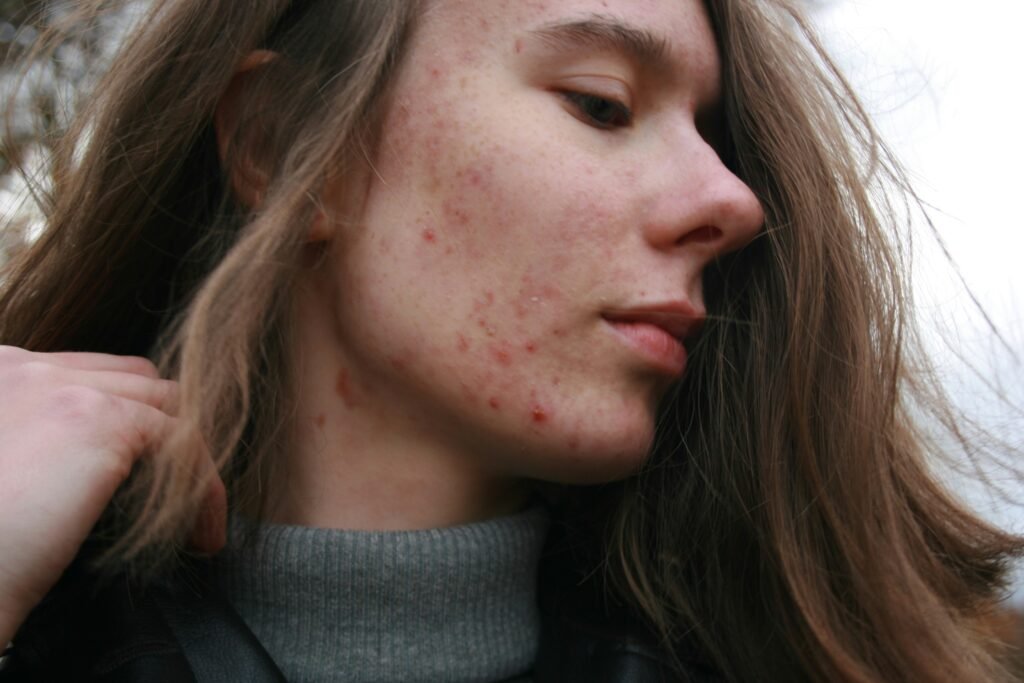
Why Does a Pimple Leave a Mark After It Goes Away?
At times if the bump has flattened you might think that a pimple is still there because it looks red or dark.
That might be the remnants of post-inflammatory hyperpigmentation, especially if your skin is more likely to leave dark marks after inflammation. The AAD says acne inflammation is one factor that can lead to hyperpigmentation.
The active pimple is a different problem than the residual pimple.
This means that an area can appear to be healing very slowly even though the acne lesion underneath has gone. Picking and squeezing can slow this process down as well as further inflame and damage the skin.
Sun protection can help protect acne-prone skin from ultraviolet exposure. Exposure to ultraviolet light can sometimes make certain types of discoloration more obvious and longer-lasting. The AAD recommends broad-spectrum sunscreen SPF 30 or higher for acne-prone skin.
Can Skin Care Products Make Pimples Last Longer?
Yes. Certain cosmetic and skin-care products that clog pores or irritate the skin can lead to continued breakouts. Choose cosmetics and skin-care products labeled oil-free, non-comedogenic or something similar.
Such labels can help people with acne-prone skin minimize exposure to ingredients that may cause clogs.
Don’t forget to pay attention to hair products. Oils and styling products can lead to small bumps around the hairline, forehead, or at the back of the neck. If a hair product is causing the bumps, eliminating the product might allow the breakouts to resolve, but it can take several weeks to see the results, according to the AAD. Wearing makeup doesn’t always cause breakouts.
What’s important is the makeup product and how it interacts with the skin.
Remove makeup correctly and wash anything that repeatedly comes into contact with the face, such as pillowcases, hats, or headbands, if those items become coated with greasy product.
Common Mistakes That Can Delay Healing
Trying to make a pimple disappear immediately can lead to habits that actually prolong the problem.
Scrubbing aggressively
Scrubbing harder does not remove acne faster. It can irritate the skin and increase redness.
Using too many active ingredients
Applying benzoyl peroxide, salicylic acid, retinoids, exfoliating acids, and other products all at once can overwhelm sensitive skin.
A consistent routine is generally more useful than constantly adding new treatments.
Using toothpaste
Toothpaste is not an appropriate acne treatment. The AAD specifically advises against using it on pimples and recommends proven acne ingredients instead.
Repeatedly touching the area
Touching, squeezing, scratching, or checking the pimple throughout the day can irritate it and make healing more difficult.
Changing treatments too quickly
Acne medication needs time. The AAD advises giving a treatment at least several weeks to work rather than changing products every few days. Frequent switching can irritate the skin and make it harder to determine what is actually helping.
A Simple Routine for a New Pimple
If you notice a new blemish, a straightforward routine is often better than trying several remedies at once.
Morning
- Gently cleanse your skin.
- Apply your chosen acne treatment as directed.
- Use a non-comedogenic moisturizer if needed.
- Apply broad-spectrum sunscreen.
During the day
Avoid touching or squeezing the pimple. If you are prone to picking, a hydrocolloid patch may provide a physical barrier.
Evening
- Cleanse gently.
- Apply your acne medication according to its instructions.
- Moisturize if your skin becomes dry.
If the lesion is deep and painful, a warm compress may provide additional comfort. The AAD recommends short warm-compress sessions several times a day for deep painful pimples.
The goal is not to force the pimple to disappear overnight. It is to reduce inflammation, prevent additional irritation, and give the skin a chance to heal.
When Should You See a Dermatologist?
A single occasional pimple usually does not require professional treatment. Persistent or severe acne is different.
Consider seeing a dermatologist if you have:
- Deep, painful nodules or cysts
- Acne that is leaving scars
- Frequent breakouts that do not improve
- Acne that has not responded to appropriate over-the-counter treatment
- Significant dark marks after breakouts
- Acne that is affecting your confidence or daily life
Deep acne should be managed carefully as it can lead to scarring. The AAD suggests seeking dermatologist-based treatment for nodules and cysts, instead of relying solely on nonprescription products.
A dermatologist can help diagnose if another condition may be mimicking the appearance of acne. Folliculitis and perioral dermatitis, for instance, can look like acne but need treatment in other ways.
If your acne is moderate to severe or over-the-counter medications are not working, you should consider consulting a doctor.
What If Pimples Keep Coming Back?
If the right pimple has gone away only for a new one to pop up in the same spot, the issue may not be that pimple itself. You may have persistent acne. There are many factors that influence the development of acne, including hormones, oil, plugged follicles, inflammation, genetics, medications, cosmetics, and more.
For some patients, the hormonal aspect can be significant.
This explains why addressing the pimple on a case-by-case basis can be frustrating. Preventive treatment for persistent acne generally makes more sense. Your dermatologist can provide additional guidance, including topical retinoids, benzoyl peroxide, salicylic acid, azelaic acid, or combinations of remedies based on your unique needs. For more severe acne, you will need prescription medications.
It’s also essential to be patient: it may take weeks before you notice fewer pimples, and months before you notice truly clear skin.
Final Takeaway
If you are asking how long does it take for pimples to go away, there is no universal countdown. Small pimples may settle relatively quickly, while inflamed or deep lesions can remain much longer. Picking, squeezing, aggressive scrubbing, and constantly changing treatments can make the skin more irritated and increase the risk of marks or scars.
The best thing to do is stick with your usual skin care routine, and apply a suitable acne treatment like benzoyl peroxide, salicylic acid, adapalene or whatever ingredient your doctor recommends and give it time to work instead of demanding overnight results. If your pimples are deep, sore, recurring, lasting for long periods and leaving scars, a dermatologist can help with diagnosis and provide a more effective course of action.

FAQs
1. How Long Does It Take for Pimples to Go Away?
Small pimples may improve within a few days, while larger or more inflamed breakouts can take one to several weeks to fully clear. Deep acne can last even longer.
2. Why do some pimples take longer to heal?
The type and depth of the pimple matter. Surface-level whiteheads and blackheads often clear sooner, while deep, painful nodules or cysts can remain under the skin for weeks.
3. Does popping a pimple make it go away faster?
Usually not. Popping or squeezing can increase inflammation, delay healing, introduce bacteria, and raise the risk of scarring or dark marks.
4. What can help a pimple go away faster?
A gentle skin-care routine and appropriate acne treatments such as benzoyl peroxide, salicylic acid, adapalene, or azelaic acid may help, depending on the type of acne.
5. Why is there still a dark spot after my pimple is gone?
The pimple may have healed even though the skin remains discolored. Post-inflammatory dark spots can take considerably longer to fade than the original breakout.
6. Do acne treatments make pimples disappear overnight?
Most acne treatments do not work overnight. Consistent use over several weeks is generally needed to see meaningful improvement.
7. When should I see a dermatologist about pimples?
Consider professional care if acne is deep or painful, keeps returning, leaves scars, or does not improve with appropriate over-the-counter treatment.
8. Can stress make pimples last longer?
Stress may contribute to acne flare-ups in some people, but it is not the only factor. Hormones, oil production, clogged pores, inflammation, and skin-care habits can also affect breakouts.
Conclusion
The answer to how long does it take for pimples to go away depends largely on the type and severity of the breakout. A small surface pimple may settle within several days, while deeper or more inflamed acne can take weeks to heal. If needed, pressing, pinching, or scrubbing vigorously should be avoided to prevent further irritation and trauma.
Using a basic, gentle skin-care routine with targeted anti-acne ingredients may help reduce breakouts, but most acne treatments take time to work rather than overnight results. If pimples are painful, severe, leave scars, or do not get better, see a dermatologist to find the underlying cause and a better treatment plan.











