

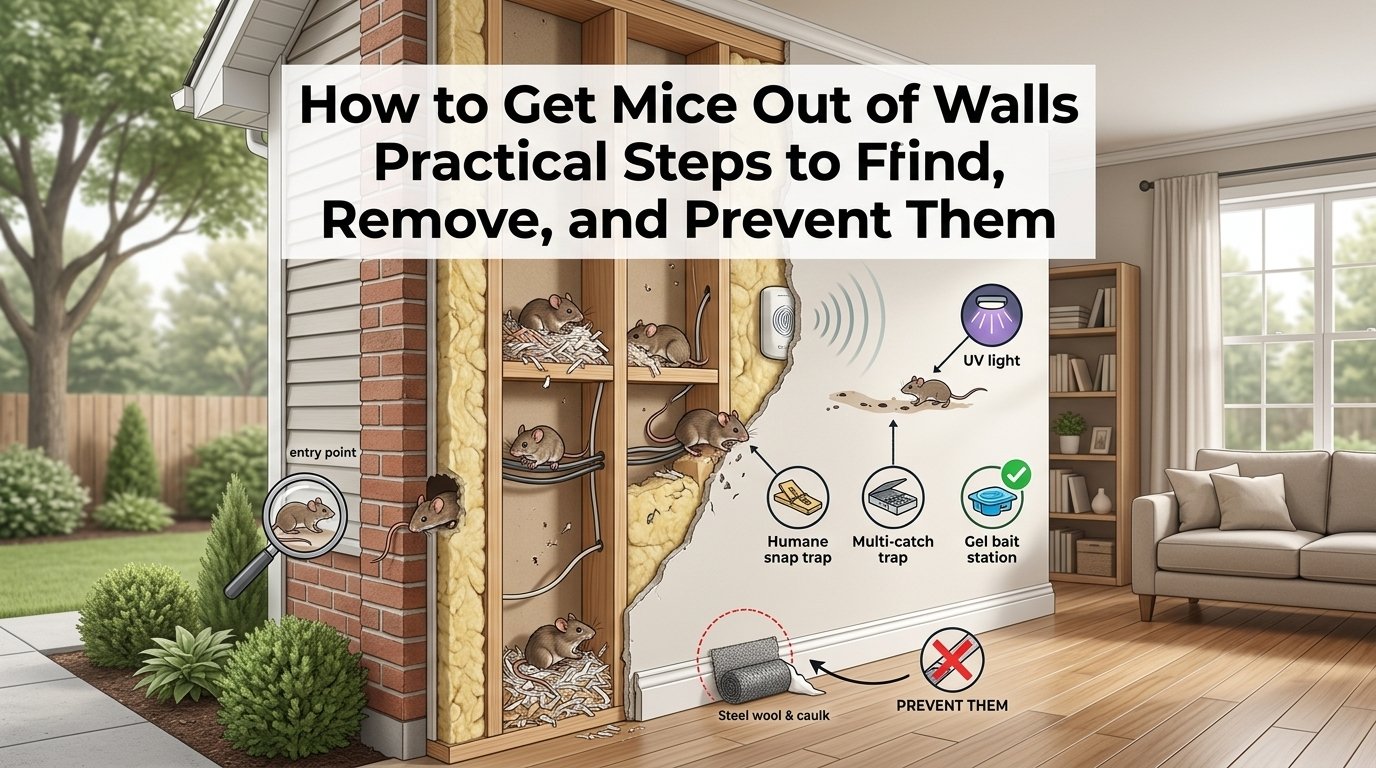
The sound of scratching, squealing or fast scurrying within your wall can be disconcerting during the stillness of the night. Mice are able to travel along even the tiniest passageway and utilize wall cavities as safe passageway from a food source, through a water source, and to their nest. But the question of noise is not the main concern; mice within a wall are sure to leave fecal matter, ruin insulation, gnaw on wires, or wiring. Eventually, mice will discover entry ways to the interior living space within the wall cavity.
If you are trying to figure out how to get mice out of walls, the most effective approach is usually not to simply chase them away. We need to determine how they are entering, where they are traveling, either kill or trap and remove appropriately, then block any points of entry. Room placement is important also as the mouse that is in the wall isn’t accessible from the room in the house.
What Does It Mean When You Hear Mice Inside a Wall?
When mice nest inside walls, it is typically to navigate through the chambers, spaces around pipes or wires, or around joints and beams. Drywall alone will not keep mice from spreading from room to room or story to story; inside of a wall often is one continuous area.
Short answer: The most effective means of controlling mice in a wall are to locate their entry routes and, as long as bait is available at other suitable points within the wall, to provide suitable traps along the paths frequented by the mice and near accessible openings in the wall; eliminate any potential food sources and nesting material then seal entry and exit gaps in internal and external walls once control is attained.
Common signs include:
- Scratching or rustling sounds, particularly after dark
- Small droppings near cabinets, appliances, or wall edges
- A musky or stale odor
- Gnaw marks on materials
- Shredded paper, fabric, insulation, or other nesting material
- Greasy marks along frequently traveled surfaces
- Mice appearing in kitchens, basements, garages, or utility areas
The sound alone does not always prove that mice are present. Other small animals can also create movement inside walls. Look for physical evidence before cutting into drywall or making major changes.
Why Mice Choose Wall Cavities
Cavities within walls provide everything a mouse wants, including: a hidden place to be, darkness, safety from humans, security from predators, access to multiple areas within a building structure. Mice are particularly adept at taking advantage of gaps around plumbing and electrical penetrations in a wall. A mouse may enter a building from the exterior through one of these openings, and then migrate through the rest of the structure instead of remaining near the point of entry.
Common entry points
The outside of a building is worth inspecting carefully. Pay particular attention to:
- Gaps around utility pipes and cables
- Openings around vents
- Damaged siding or foundation areas
- Gaps beneath doors
- Spaces around garage doors
- Cracks near the foundation
- Roof or attic openings
- Areas where different building materials meet
Inside the home, check beneath sinks, behind appliances, around cabinets, and near plumbing penetrations. A hole that looks too small to matter may still provide an access route for a mouse.
Food can keep the problem going
It does not take a great number of food source for mouse. Crumb, dog food, garbage without proper covers, dry goods from the pantry, bird seed and even remnants about the appliances could stimulate to carry on doing something.
For this reason, simply trapping could only offer a temporary measure. If source of access along with food supply has not been provided, a new mouse could even traverse the same avenue.
How to Find Where the Mice Are Entering
Before setting traps around the whole area, take some time to find out where you’re hearing/seeing the highest concentration of rodent activity. This way you can narrow down their predicted path.
Start by listening at varying times of day; mice tend to be more active in the darkness and might show evidence of passage which cannot be seen when listening in the daytime.
Then search both sides of the wall where you hear activity. Watch for droppings,gnaw marks,odor, or other sign. Say you’re hearing scratching on the back side of a kitchen wall; search nearby cupboards, plumbing access panels or wall gaps, and behind/under appliances.
Check also the basement, crawl space, attic, garage and building exterior where the activity appears concentrated. While you might hear activity next to a wall of one room, a mouse may have come in from elsewhere.
Follow the evidence rather than the noise
Noise can transmit easily through framing and drywall so it can be quite difficult to really find the precise location of an animal. What may appear to be a scurrying noise that sounds like it’s coming from one point could actually be coming from several feet away.
The more useful information for locating the travel paths of mice are the physical cues. Droppings or gnawings that seem grouped together can be helpful in telling if routes are being taken by the mice.
Don’t automatically start cutting holes in the walls just because you are hearing motion in a specific area, since that can just damage things further and still doesn’t help ensure you will expose a mouse.
How to Get Mice Out of Walls
After establishing a path where your mice are traveling, try and “get them out” before blocking off everything possible. If you have a living mouse in a wall and block him inside a wall cavity; you’ll either have him clawing forever to get out and living then dying inside the structure and/or finding new ways to get into your house.
1. Remove accessible food sources
Begin by reducing the “attractiveness” of your building’s surroundings to rodents. Keep stored dry foods in sealed containers, promptly clean up food spills and messes, keep all refuse in tightly sealed receptacles, and do not leave pet food out continuously.
Don’t forget often unnoticed sources like spilled bird seed in your garage, or food crumbs under the refrigerator.
Removing food sources alone does not necessarily kill mice, but does help to lessen the building’s appeal through proper home pest prevention.
2. Use traps along accessible travel routes
Where mice can be seen traveling out of the wall or outside the wall cavity may be accessible and a trap can be installed there.
Snap traps are the typical answer to a domestic house mouse problem. Refer to the product directions for best performance of snap traps and place them where mice travel, rather than randomly in the middle of the floor.
Do not put traps where children, small pets can play or get their paws in and do not put traps where one can step on them with bare feet.
If you have other type of trap in mind, please learn their disadvantages. A trap will only get the mouse you catch and will never repair the reason why mice get into your wall at first place.
3. Check whether the activity continues
Do not assume the problem is solved after one quiet night. Continue monitoring for scratching, droppings, odors, or new gnaw marks.
If signs continue, there may be more than one mouse or an overlooked access point.
Mice can reproduce quickly, so persistent signs deserve attention rather than prolonged observation through effective rodent control.
4. Seal entry points after activity is addressed
After a degree of certainty is obtained that the live mice have been removed or eradicated, seal up all points of entry that would permit any other mice to get in. Select a material to suit the location-the repair must not wear or rot with exposure to the weather and the gnawing. Expanding foam alone usually works a while until the mice can chew their way through. With bigger gaps, the actual building materials are likely to have to be repaired or replaced as opposed to just plugged.
What If the Mouse Will Not Leave the Wall?
There are cases in which the animal remains in the living area in a void or a box with no accessible opening. This is when working to solve the issue from the perspective of inside the living area will become problematic. Avoid repeatedly banging on the walls of the cavity, shouting, or pour substances into an opening to try and coax the animal out – none of these are foolproof.
These solutions usually provide little return on their efforts.
An inspector or a professional may be able to assess if trapping or other remove procedures will work if there is access to the inside of the living space. Working to get the animal out relies a good deal on what the building is made out of. It is really depending on where the mouse is located inside. It is often better to leave these problem animals to an expert inspector if they are seemingly trapped inside a wall without readily accessible opening instead of ripping large holes into drywall when unsure as to what might be behind the wall.
How to Keep Mice From Coming Back
Removing the current mice is only half the job. Long-term control depends heavily on exclusion.
Inspect the exterior
Walk around the entire outside of the building and look for potential openings. Check around:
- Doors and windows
- Foundation joints
- Utility penetrations
- Vents
- Garage doors
- Roofline areas
- Pipe entrances
- Damaged siding
- Crawl-space openings
A flashlight can help reveal gaps that are difficult to see in shaded areas.
Pay special attention to places where pipes, cables, and other utilities pass through walls. These penetrations often create openings that are easy to overlook.
Improve food storage
Food items stored in the pantry, such as cereal, grains, and pet food should be kept in airtight containers. The floors and countertops should be kept clean, and free from food crumbs, especially where food is prepared or consumed.
Garbage should be kept in containers with tight lids.
Good hygiene can decrease the rewards offered by an intruder rodent, but does not eliminate the need for structural exclusion.
Reduce clutter and nesting material
Loose stacks of paper, card board, fabric and other materials can offer a readily available source for nesting materials. Well organized storage area’s will show obvious signs of rodents and have less places where they will feel they can take up a nest. This is ideal for garage, basement, attics and storage rooms.
Common Mistakes People Make
Several seemingly logical responses can make a mouse problem harder to manage.

Sealing every hole immediately
Finding a hole and filling it may feel like progress, but if mice are still actively inside the structure, sealing the wrong opening can prevent them from leaving through their existing route.
First determine whether the opening is an entrance, an exit, or simply part of the animal’s travel path.
Relying on ultrasonic repellents
Products marketed as ultrasonic rodent repellents are often appealing because they promise a simple, non-trapping solution. Results can be inconsistent, and they should not be considered a substitute for exclusion and proper rodent control.
A persistent infestation requires attention to the physical conditions allowing the mice to remain in the building.
Using poison casually
Rodenticide can also become especially tricky when mice gain access to the insides of in-accessible walls or spaces. Should an animal pass away inside of a wall there may be no way of accessing the carcas for removal, this can lead to unpleasant smells within your dwelling. Furthermore, poisons will have a risk to the owner or pets within the household should be handled and placed carefully.
For these two reasons do not instantly reach for rodent poison to take care of walls.
You should follow all respective instructions provided by the label, and when a circumstance is beyond safe controlseek professional services.
Cutting into drywall too soon
Cutting into the wall often adds another repair job but may not deal with the underlying infestation. Consider why there is a reason before you cut in; such as if there is obvious damage to wiring and is an infestation with recurring problems.
Assuming one trapped mouse means the problem is over
Catching one animal is useful evidence, but it does not prove that the building is mouse-free. Continued monitoring is important, particularly if you have already found multiple signs of activity.
Special Situations That Need Extra Attention
Some circumstances make DIY control less straightforward.
Mice in an apartment or rental
If the rodents seem to be running through walls, ceilings, utilidor space, etc within a multi-apartment dwelling. The problem may not be exclusive to your apartment.
Contact the landlord or management if this is the case. Treating just one apartment may not eliminate a problem occurring within the “walkways.”
Mice near electrical wiring
All types of rodent are capable of gnawing through materials such as the insulation on electrical wiring. If you notice frayed electrical wiring, exposed wire and any burning smell, sparks, or unusual electrical faults or problems, do not attempt to repair the faulty wiring if you have no prior experience and are trained to do so.
You could ask an electrician to give estimate on the damage sustained and the cost of repair and use a pest specialist for the rodants.
A strong odor develops inside the wall
A persistent foul smell that is present afterrodent activity may be caused by the animal that is lying dead in an unreached place. Airfreshenerswill be temporarily masking the odor, but the root cause is still within the dwelling/structure. It might be necessary to call in an animal control professional if the odor source can’t be located without opening walls etc. And has the ability to take the odor’s source out of the building/structure, which is a more effective approach to deodorizing.
You continue hearing movement after trapping
Persistent activity can indicate additional mice, another entry point, or an incorrect assumption about where the animals are traveling.
At that stage, broaden the inspection rather than simply adding more traps.
When to Call a Pest Professional
A professional pest-control service can be especially useful when the infestation is persistent, the entry route cannot be identified, or the animals are occupying inaccessible structural spaces.
Consider getting professional help if:
- You repeatedly hear rodents inside walls despite using appropriate control measures.
- You find substantial amounts of droppings or evidence of nesting.
- Mice are entering from inaccessible areas.
- You suspect an infestation extends into an attic, crawl space, or multiple parts of the building.
- You cannot safely inspect or repair the suspected entry points.
- There is evidence of electrical damage.
- You live in a multi-unit building and suspect shared structural spaces are involved.
- You are unsure how to use traps or rodent-control products safely around children or pets.
A good professional should focus not only on removing existing rodents but also on identifying and correcting the conditions that allow them to enter.
Cleaning After Mice Have Been Removed
Clean any contaminated areas once activity has ceased in a careful manner, endeavoring to avoid direct contact with nesting material or feces. State-specific public health guidelines for cleaning and decontaminating rodent-infested sites are available and should be followed if contamination is suspected or known.
Avoid sweeping or vacuuming dry rodent excreta in areas where the droppings might produce contaminated dust. Wear the necessary protective measures and cleaning protocols that have been prepared to use against a contaminated environment.
Professional cleaning might be required in the event that areas are heavily contaminated. This typically includes attics and crawling spaces or other spaces that are prone to reduced ventilation. This also includes damaged insulation where nesting or damage is severe enough that that particular nesting material must be replaced.
A Practical Order of Operations
For most household situations, the process works best when handled in a logical sequence:
- Confirm the signs. Look for droppings, gnaw marks, nesting material, odors, and nighttime movement.
- Locate the likely travel route. Inspect the rooms and structural areas surrounding the suspected wall.
- Remove food incentives. Secure food, pet food, garbage, and other accessible sources.
- Trap mice in accessible locations. Position appropriate traps along likely travel routes and follow product instructions.
- Monitor activity. Continue checking for new signs instead of assuming the first catch solved everything.
- Inspect entry points. Examine both interior and exterior openings once active rodents have been addressed.
- Seal vulnerable areas. Repair gaps with durable materials suitable for the location.
- Clean contaminated areas safely. Address droppings, nesting material, odors, and damaged materials.
- Keep monitoring. Watch for renewed signs so a new infestation can be addressed early.
The order matters because exclusion is most effective when you understand how the rodents are using the building.
Final Takeaway
Learning how to get mice out of walls is less about forcing an animal out of a cavity and more about controlling the conditions that let it live there. Start by confirming the signs, tracing likely travel routes, removing accessible food, and using appropriate traps where the mice can safely be reached. Once active rodents have been dealt with, inspect the building carefully and seal the openings that allowed them inside.
In order for noise, random sealing, or informal poisoning to not be used as quick and short-term solutions-either as responses to this problem, or when it reoccurs, or if a hole can not be reached, or electrical damage, or structural damage is evidence, a professional may actually be the easiest (in terms of the time invested) way for this situation to be overcome. The solution to this-and all similar situations-is removing, keeping out, cleaning, and checking.
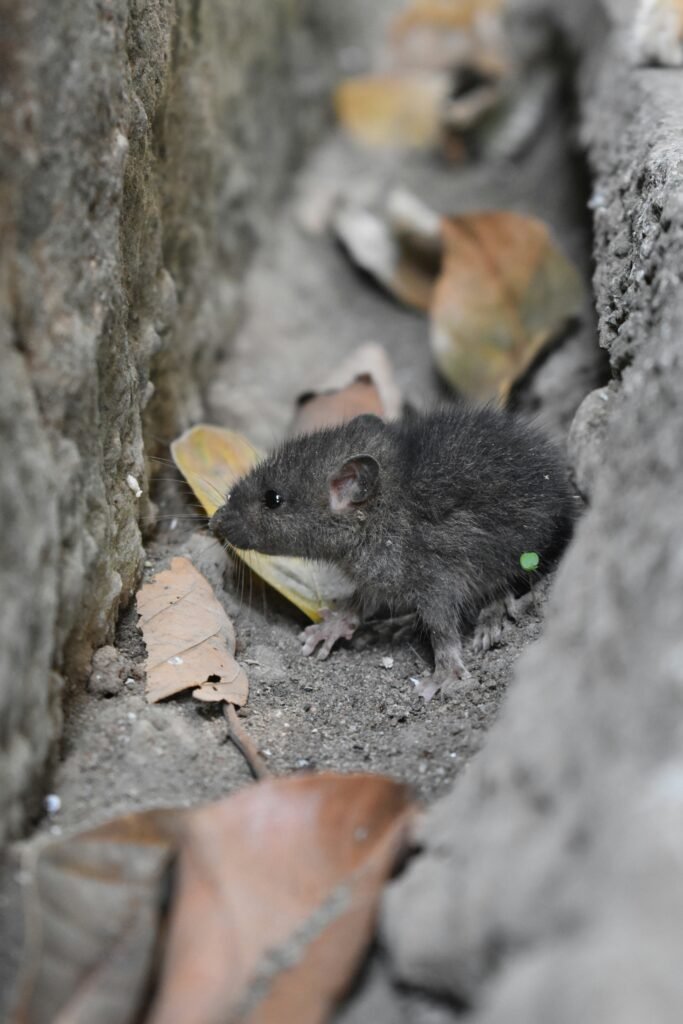
FAQs About How to Get Mice Out of Walls
1. How do I know if mice are inside my walls?
Scratching, squeaking, or scurrying sounds at night can indicate mice inside a wall cavity. Other signs include droppings, gnaw marks, nesting material, unusual odors, or mice appearing near cabinets and appliances. Physical evidence is more reliable than sound alone because noise can travel through wall framing.
2. Can mice leave a wall on their own?
They can if they have an accessible route into another part of the home or outside, but simply waiting for them to leave is not a dependable solution. If food, shelter, and entry points remain available, mice may continue using the wall as a protected travel and nesting area.
3. Should I seal the hole immediately if I hear mice inside the wall?
Not necessarily. If mice are still inside, sealing an active opening without understanding the situation can prevent them from leaving through an existing route. First identify where they are traveling and address the active infestation. Afterward, seal gaps and holes to prevent additional mice from entering. The CDC recommends inspecting both the inside and outside of the home for potential rodent entry points.
4. What is the best trap for mice near walls?
Traditional snap traps are commonly recommended for household mouse control. Place them in areas where there is evidence of mouse activity, such as along walls, behind appliances, or near cabinets, while keeping them inaccessible to children and pets. Follow the manufacturer’s instructions when setting and checking traps.
5. Will mice come back after they are removed?
They can if entry points remain open. Effective long-term control requires more than removing the mice currently inside. Inspect around doors, windows, pipes, vents, utility lines, foundations, attics, basements, and crawl spaces, then seal appropriate gaps with durable materials. Mice can enter through openings roughly the width of a pencil.
6. Should I use poison for mice inside walls?
Using poison inside an inaccessible wall cavity can create problems if a mouse dies somewhere you cannot reach. It can also pose risks to children and pets if products are misused. For persistent infestations, follow applicable product directions and consider professional pest-control assistance rather than placing bait randomly inside walls.
7. What should I do if I find mouse droppings near the wall?
Do not dry-sweep or vacuum rodent droppings. The CDC recommends wetting droppings with an appropriate disinfectant, allowing it to soak as directed, and then wiping them up with paper towels while wearing gloves. This reduces the chance of contaminated particles becoming airborne.
8. When should I call a pest-control professional?
Professional help is appropriate when activity continues despite trapping and exclusion, the mice are inaccessible, there is extensive contamination, or you suspect rodents have reached difficult areas such as ventilation systems. Professional assistance is also useful when you cannot determine where the animals are entering or when there may be damaged electrical wiring.
Conclusion
The most productive approach to a mouse-in-the-wall infestation is to manage the situation both for removal and prevention purposes. Note evidence of activity, find an entry point you can safely access, set traps as needed and, all the while, make sure that mice are not supported by shelter and food available in the house. Once you feel that you have eliminated active mice, make an effort to thoroughly inspect the house and seal potential entry points around the foundation, around doors and windows, holes around plumbing and utility lines that enter the house, and gaps surrounding vents, etc.
If scratching noise is present and new droppings appear after following the above suggestions, there may be a much larger problem or it may be hidden behind an inaccesssible section of structure. Professional pest control operators can then assist in discovering these sources and ensuring a return elimination.











