

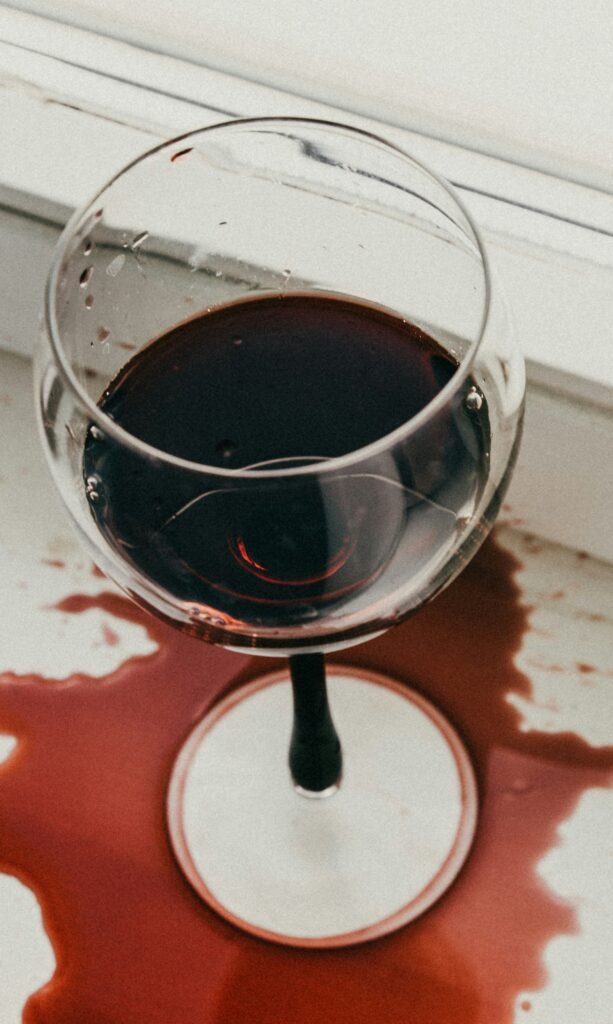
Carpet cleaning experts see red wine stains on carpet that seem more serious than they really are, particularly when that dark colored liquid settles into a broad area. When it comes to treating a red wine spill, the best approach is not to scrub furiously. Instead, it’s to act fast, blot, and select a carpet cleaning approach that’s appropriate for the carpet.
If you’re wondering how to get red wine out of carpet, start by removing as much liquid as possible before it has time to penetrate deeper into the fibers and backing.In most cases, fresh wine stains can be cleaned with a clean white cloth or paper towel, cool water, and an appropriate cleaning solution. It may take multiple applications to remove a stubborn older or deeply absorbed stain. Dried or delicate carpets may be better left to a professional cleaner.
Why Red Wine Can Leave a Difficult Carpet Stain
Red wine contains naturally occurring color compounds that can cling to carpet fibers. The liquid also contains water and other substances that can spread through absorbent materials.
When learning how to get red wine out of carpet, the longer a spill sits, the farther it may travel below the visible surface. Even a stain that begins as a small spot will be more difficult to clean if you rub the stain into the pile or if the wine dries up. Carpet fibers can also affect how a stain responds to cleaning, making carpet fiber characteristics important when choosing a treatment method. Wool, cotton, nylon, polyester, olefin and blends of fibers will all respond differently to different cleaning agents. Some carpets even have stain treatments that can be altered or removed by harsh cleaning solutions and excess water.
Not all carpet dyes are alike and stain removal solutions can impact the carpet color as well as the quality of the dye.A powerful cleaning solution may remove the wine stain but could also alter the color of your carpet.That’s why stain removal is not about using the strongest cleaner but the mildest that will do the job.
Fresh Spills Are Usually Easier to Treat
Why a New Spill Is Better You want to take advantage of the fact that the wine is still in close to the surface and your first goal is absorption, not cleaning. Lay a clean, absorbent white cloth over the stain and apply firm pressure. When that area of the cloth becomes soaked, move on to a dry section of the cloth.
Repeat until almost no stain comes up on the cloth.
Do not rub back and forth. Friction will just spread the spill out and farther into the carpet.
What You Need Before Cleaning the Spill
You do not need a complicated collection of carpet-cleaning products for a typical fresh spill. Gather the following:
- Clean white cloths or plain white paper towels.
- Cool or room-temperature water
- A small bowl
- Mild liquid dish soap
- A clean spray bottle, if desired
- A soft-bristled brush for suitable carpets
- A vacuum cleaner for the final cleanup
Choose white products; since they are coloured, the towels may leach dye onto the damp carpet. Always, before using any cleaner, follow the carpet manufacturer’s care instructions where published as part of proper carpet care. The cleaning process may differ if the carpet has a special finish, is antique, or is made from sensitive natural fibres.
Always, test on a small inconspicuous area before using any home-made or commercial solutions. Wait for the test area to dry before judging the new product as safe for the main visible part of the carpet.
How to Get Red Wine Out of Carpet Step by Step
The key is to work from the outside of the stain toward the center while keeping the amount of moisture under control.
1. Blot the Wine Immediately
Use a dry white cloth or several layers of white paper towel. Press firmly but gently against the affected area.
Do not scrub.
Lift it away and note how much wine has moved into it and do the same with a fresh piece of cloth. Do until the cloth is receiving very little wine. If you have a large spill, change out saturated cloths, rather than trying to “blot” the whole space with one damp towel.
The idea is to pick up the wine from the carpet and transfer it into an absorbent cloth.
2. Add a Small Amount of Cool Water
As much wine as you can, after absorbing it, use a little cool water to moisten the entire area. Pouring a copious amount of water directly on the carpet can cause excess moisture to carry the stain further and absorb into the backing, making it more difficult to dry. Once again, blot the floor after adding water. You want controlled rinsing rather than soaking.
3. Apply a Mild Cleaning Solution
A tablespoon of lightly dilute dish soap with water can loosen residues left on many washable synthetic rugs. Dilute a little light-duty dish soap, then moisten a cloth with just enough solution to moisten carpet fibers where stained. Don’t immerse the whole area; use a clean cloth to moisten just the fibers. Gently work from the outside towards the center.
4. Blot Instead of Scrubbing
Press a dry cloth to the sample and lift it back up again. You might try blotting and using a little bit of solution alternately. Be patient; a hard-to-remove stain can fade over multiple passes, rather than vanish on the first.
If you see the color of the carpet itself show up on your cloth, you’ve used too much of the cleaning solution and should stop. That means the dye isn’t stable or it has bled.
5. Rinse Away Cleaning Residue
After the stain has improved, use a clean cloth lightly dampened with plain water to remove remaining soap.
Again, use a small amount of moisture.
Soap left behind can attract dirt once the carpet dries, leaving a dull or sticky patch that becomes noticeable later.
Blot repeatedly with a dry towel until the area is only slightly damp.
6. Dry the Carpet Thoroughly
Place a dry towel over the treated area and press down to absorb remaining moisture.
You can also improve air circulation with a fan. Avoid walking across the damp spot until it has dried.
Once completely dry, gently vacuum the area if the carpet’s care instructions permit it. This can help restore the appearance of the pile after cleaning.
Should You Use Baking Soda on Red Wine?
Baking Soda If you’ve heard baking soda is a great at-home stain remover, that’s true, but it’s not a magic potion. One strategy people swear by is applying it to a blotch as the powder can draw moisture. If you do decide to try it, don’t sprinkle the baking soda in a puddle of wet carpet, and don’t treat the powder as an alternative to blotting the wine away.
When learning how to get red wine out of carpet, a better approach is to first absorb the liquid thoroughly. Once the area is only damp, a small amount of baking soda may be used cautiously on suitable carpets. Allowing it to dry before vacuuming can help with residual moisture, but results vary depending on the carpet and stain.
Always check the manufacturer’s instructions first, particularly with specialty carpeting.
What About Vinegar, Salt, or Hydrogen Peroxide?
Several household ingredients are frequently suggested for wine stains. They are not equally appropriate for every carpet.
White Vinegar
Diluted white vinegar can be useful for certain household cleaning tasks, but applying an acidic solution directly to carpet without checking its compatibility can cause problems.
When learning how to get red wine out of carpet, if vinegar is used, it should be appropriately diluted and tested in an inconspicuous location first. Never assume that because a solution is common in household cleaning, it is automatically safe for every carpet.
Salt
Salt may absorb some liquid when sprinkled over a fresh spill, but it does not magically remove the pigments responsible for a wine stain. It can also leave residue that must be thoroughly removed.
Blotting the spill promptly is generally more useful than relying on salt alone.
Hydrogen Peroxide
Hydrogen peroxide deserves more caution. It has oxidizing properties and may lighten or alter some carpet dyes.
When learning how to get red wine out of carpet, peroxide should not be applied casually to a colored carpet simply because it is recommended in a household stain-removal tip. If a product containing peroxide is considered, follow the carpet manufacturer’s instructions and perform a hidden-area test first.
For valuable, dark, brightly colored, or delicate carpeting, professional advice is often safer.
How to Handle a Dried Red Wine Stain
Dried stains should be approached with a different perspective. You cannot mop up the initial solution since most of it has already been absorbed by the carpet. Remove any crumbs or loose dust from around the stained area using a vacuum.
Lightly spray water on the affected fibers with a suitable carpet cleaning solution, and follow the manufacturer’s instructions for additional action.
Blot rather than scrub.
When learning how to get red wine out of carpet, several gentle treatments may be safer than one aggressive attempt. If the stain has penetrated the carpet backing, repeated household treatment may have limited results because the visible discoloration can return as moisture moves through the material.
Do not keep adding cleaner simply because the first application did not completely remove the mark. More product does not necessarily mean better cleaning.
Different Carpets Need Different Approaches
A cleaning method that is reasonable for a synthetic area rug may not be appropriate for wool or another natural fiber.
Synthetic Carpet
While most carpets are constructed to withstand normal cleaning, it does not necessarily mean all chemicals are safe. Gentle cleansers and minimal moisture is frequently an acceptable starting point when allowed in the carpet’s care instructions.
Wool Carpet
Wool is a more sensitive fiber. Too much moisture, harsh chemicals, vigorous agitation or an incorrect drying method may harm the fibres or alter the look of your carpet.
If a spilled wine event occurs on a fine wool carpet then you might want to consider calling out the professionals to remove the stain.
Vintage or Handcrafted Rugs
Dyes and materials in the rug may react in unexpected ways when placed in a strong solution. Don’t experiment on a high-quality rug. Take your delicate rug to a professional cleaner who will understand the fabric and dye construction.
Common Mistakes That Make Wine Stains Worse
The instinct to attack a red stain immediately is understandable, but some reactions create additional problems.
Scrubbing Aggressively
Scrubbing can spread the wine and disturb carpet fibers. It may also push the liquid deeper into the pile.
Blotting takes longer but gives you much more control.
Using Too Much Water
Flooding the carpet can cause the stain to migrate beyond its original boundaries. It can also make the backing and padding excessively wet.
Use small amounts and remove moisture between applications.
Applying Too Many Products
Mixing several cleaning products is risky and unnecessary. Chemical combinations can create unwanted reactions, and multiple products may leave residues that are difficult to remove.
Use one appropriate method at a time.
Using Colored Towels
A red, blue, or dark-colored towel may release dye when wet. Use white towels whenever possible so you can see exactly what is being removed.
Ignoring the Carpet’s Care Label
The manufacturer’s cleaning instructions are more useful than a generic internet remedy. Some carpets have specific restrictions concerning moisture, solvents, bleach, or other chemicals.
What If the Stain Leaves a Ring?
A visible ring after cleaning can occur when the moisture migrates into the surrounding fibers and evaporates unevenly, a common concern in carpet stain removal. It can also be caused by cleaning residue that can be trapped around the spot. If your carpet is washable based on cleaning care instructions, gently cleaning a larger area around the original spot may give a more uniform result.
The cleaning should be tightly controlled and not diluted to flood the entire carpet.
Then rinse with a lightly damp cloth and dry thoroughly. If a ring continues, having a professional clean the entire carpet may be less “fiddly” than spot cleaning multiple times.
When Home Cleaning Is Not the Best Choice
Some wine spills are better handled by a professional from the beginning.
Consider professional help if:
- The carpet is expensive or difficult to replace.
- The material is wool, silk, or another delicate fiber.
- The rug is antique or handmade.
- The stain covers a large area.
- The wine has soaked deeply into padding.
- The carpet’s dye transfers during your test.
- Household treatment leaves discoloration or a noticeable ring.
- You are unsure which cleaning chemicals are safe for the material.
Or, dry cleaning could assist if the stain appears to be returning once it has been removed. That suggests bacteria or debris it beneath the surface, instead of an impression on the fibers’ surface.
How to Prevent Permanent Carpet Damage
The most effective form of stain removal is ultimately avoiding damage in the first place. Minimize the cleaning area as much as possible. Lightly blot rather than aggressively scour. Keep excess water to a minimum and allow plenty of time for the carpet to dry.
In the case of a commercial grade carpet stain remover, always adhere to the manufacturer’s instructions and don’t go overboard with the quantity. Most importantly, test new products in an inconspicuous location; a small closet or low-profile edge of carpet can be good test sites to observe how the carpet reacts.
If you own a high-end, rented, or newly installed carpet and potentially expensive rug, it might be worth photographing the stain and the cleaning process so you can document what you did in case you need to hire a professional.
A Simple Method to Remember
For most fresh spills on suitable carpet, remember this sequence:
Blot → Dilute lightly → Treat gently → Blot again → Rinse lightly → Dry completely.
Early as they say, it’s the best. Shave off as much wine as possible right away to improve the likelihood that subsequent cleaning steps will be successful. If this doesn’t do the trick, then avoid the temptation to apply a stronger chemical or scrub harder. Reevaluate the type of carpet or fabric, and see if the fabric care instructions recommend calling in the professionals.
Frequently Asked Questions
1.Can I remove a red wine stain from carpet after it has dried?
Yes, a dried wine stain can sometimes be reduced or removed, but it is usually more difficult than treating a fresh spill. Start gently and avoid soaking the carpet. Multiple controlled treatments may work better than aggressive scrubbing.
2.Does cold water remove red wine from carpet?
Cool water can help dilute and lift some of the remaining wine, particularly after the initial spill has been blotted. It is most useful as part of a broader cleaning process rather than as the only treatment.
3.Should I scrub a red wine stain?
No. Scrubbing can spread the stain and push the liquid deeper into carpet fibers. Blotting with a clean white cloth gives you better control and reduces friction on the carpet.
4.Is hydrogen peroxide safe for colored carpet?
Not necessarily. Hydrogen peroxide can affect some dyes and may lighten carpet fibers. Always check the manufacturer’s instructions and test an inconspicuous area before considering a peroxide-based product.
5.How do I remove the smell after cleaning?
If an odor remains, make sure the carpet has dried completely first. Lingering moisture can contribute to unpleasant smells. If the odor continues, especially after a large spill, the liquid may have reached the padding and professional cleaning may be needed.
6.Can baking soda remove a red wine stain?
Baking soda may help absorb moisture, but it should not be relied upon as the primary stain remover. Absorb as much wine as possible first and use a carpet-safe cleaning method appropriate for the material.
Final Takeaway
Knowing how to get red wine out of carpet is largely about responding quickly without over-treating the material. Blot the spill instead of rubbing it, use small amounts of moisture, choose a mild carpet-safe cleaning method, and rinse away residue before allowing the area to dry thoroughly. Fresh spills are generally easier to manage than dried ones, but even an older mark may improve with careful treatment.
Let your carpet be your guide It’s unlikely all carpets need professional cleaning, especially if you use good-quality synthetic, but consider a cleaning service for vintage, quality wool or if the dye is bleeding excessively or the stain persists after multiple treatments with weaker household chemicals.
CONCLUSION
The faster you can get to it, the better your chances for removal. Do NOT rub-blot the red wine to lift up the excess-then use a small amount of water and a mild, carpet-safe cleaning solution (again, test first, or use professional cleaning). Work from the outer edges of the stain inward, rinse well to remove all of the solution, then repeat.
A wool carpet or one that is vintage, handmade, or expensive is best treated by a professional.
Don’t panic and don’t go for the quick fix; patience and multiple gentle treatments are the best way to keep your carpet looking good.











